Sermon for 3 Epiphany
John 1:35-51 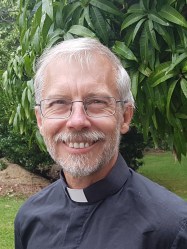
St Peter’s Lutheran Church, Port Macquarie
With today’s text we come to the end of the first chapter of John’s gospel. We have seen the revelation of who Jesus really is, the Word made flesh. We have been introduced to John the Baptist, whose preaching prepared the way for Jesus’ ministry. We saw John announce that Jesus was the Lamb of God, and that he was the one people must now look to. And now, we find two brief accounts of the calling of Jesus’ first disciples.
Some of you may have seen some of the episodes of the series The Chosen. It is well worth the effort if you are not familiar with it. The focus of the series is on the disciples of Jesus, including the many women like Mary of Magdala who followed Jesus during his earthly ministry. They are portrayed as interesting and diverse people, with very real fears and hopes. The series has helped raise interest in Jesus’ disciples. And through following the experiences of the disciples, the viewers are led to think more about Jesus himself.
In first-century Palestine it was a big deal to become the student or disciple of a rabbi, especially a prominent one. Most rabbis would have one or two disciples at most. Enough to replace them. Some, who were more famous, had more. John the Baptist, though not technically a rabbi, had a similar authority. He seems to have had a number of disciples. The disciples of a rabbi were meant not only to assist the rabbi, but also to learn the rabbi’s craft by watching him and then doing the things themselves that their rabbi did. That was the ultimate goal of the disciple.
Normally a rabbi’s disciples would seek out the role of disciple, much like one today might apply for an apprenticeship. They were young men who had done well in their religious instruction classes and often brought a strong reference or endorsement from their home rabbi. Jesus departs from this practice in two key ways. First, the disciples he calls, for the most part, are men who would never have sought such a role. And if they had, they would not have been considered remotely qualified to become a religious disciple, a rabbi in training. Second, Jesus appears to have sought out his disciples, often from unlikely places, and accepted them with no interview, references or trial period. Anyone familiar with the practice of discipleship from the period would realise from these very early stories of the calling of Jesus’ disciples that Jesus was no ordinary rabbi.
In the first of the two stories of the calling of Jesus’ first disciples an important point is made about the transition of attention and authority from the forerunner, John the Baptist, to Jesus. This is beautifully done with John’s proclamation, on two successive days, that Jesus is the Lamb of God (1:29 and 36). The second time John says this two of his own disciples take notice and turn to follow Jesus. John’s repetition of the exclamation: ‘Look! The Lamb of God’ ties the first calling story to the scene of John and Jesus at the river Jordan when John witnesses the Spirit of God descending upon Jesus.
When Jesus sees these two young men following him he asks them what they are looking for. It was not uncommon for a rabbi to ask a potential student what their motivation is for wanting to learn from him. Even in the modern world famous teachers, gurus and elite groups often ask those who desire join them what their motivation is. Sometimes the potential disciple or student is given some time, even days, to consider their answer. Many times a teacher would reject the initial answer, forcing the student to think more deeply. A thoughtful, even profound response, was a promising sign. But if we are expecting the answer of Jesus first two disciples to be something exceptionally profound, we are disappointed. What we get seems almost mundane. ‘Where are you staying?’ They might as well as asked what Jesus had had for lunch, or what the harvest had been like last year in Galilee. It strikes us as small talk.
But what is exceptional is Jesus’ response. He does not ask them to think again about what they are looking for. He does not ask them any questions about their motivation or background. He does not ask John the Baptist whether these are his best students, or simply a couple of left-overs. Instead, he simply says; ‘Come and see.’ Remember these words. Along with ‘Look, the Lamb of God,’ ‘come and see’ is one of the key phrases used to connect these three small sections together.
And the two young men begin here to act like disciples. The rabbi says come and see, and they ‘came and saw.’ More than that, they stayed with Jesus the rest of that day until it was four in the afternoon.
For the modern reader, this might seem an odd detail. For those familiar with first-century Judaism, the significance of this detail is immediately clear. It was most likely the day before the Sabbath. Because on no other day was the time of 4 p.m. significant. But on the eve the Sabbath, at 4 p.m., a traveller was required to stay in the place or home they were at to keep the Sabbath. So the act of Jesus allowing the two to remain until 4 p.m., and their remaining this long, is a signal that both parties were willing to spend the Sabbath together. It is a sign that the relationship was to be a significant and lasting one.
Now what do we know about these first two disciples? First, we know that they had been disciples of John. So they are the only of the twelve disciples Jesus eventually calls who have any real discipleship experience. Their transfer of allegiance to Jesus, and John’s apparent endorsement of this, is a sign to all who were observing these events that there was a transfer of authority and ministry taking place. John is passing the baton to the one whose coming he was preparing.
We know also that one of these disciples was named Andrew. The other is not named. This is odd, as by the end of the next section there will be five disciples, and the other four are all named. The most likely explanation is that that the second of the first two disciples was John the Evangelist, the writer of this account. It was customary for writers not to name themselves directly. Hence John’s reference to himself in the later parts of the Gospel simply as ‘the disciple whom Jesus loved.’ It would also explain how John knew a detail of this early encounter as specific as the fact that the first two disciples stayed with Jesus until 4 p.m. He knew this because he was there. Our writer, as a former disciple of John the Baptist, appears to be giving us an eyewitness account of the life and ministry of Jesus from the time Jesus appears at the banks of the Jordan to meet John the Baptist.
We also know that these first two disciples were convinced that John the Baptist had pointed them to the long-awaited Messiah. For Andrew goes to find his brother Simon, and tells him, ‘We have found the Messiah.’ There is no doubt or question in these words. He does not say, ‘We have found a great teacher’ or, ‘We have found a man who might just be the messiah’ but, ‘We have found the Messiah.’ And so here we find another key element of discipleship: A true disciple cannot help but bring others to their teacher and his teaching. So now the disciples number three. And Andrew’s brother Simon, also without any apparent interview, is welcomed by Jesus and named Cephas, or Peter.
The next few verses tell us the story of the next two disciples. This account stands out from the first in that Jesus finds these two on his own. He does not simply pick up more of John’s disciples. Jesus is not taking over John’s ministry. He is beginning his own unique ministry.
This second disciple calling story begins, like the previous two sections, with the words, ‘the next day.’ As we pointed out last week, this language is a literary device meant to show the speed and pace at which things were now happening. Bethany on the Jordan, about 9 kms north of the Dead Sea, would have been well over a 100 km walk to Galilee. Jesus and his disciples were certainly very fit, but not that fit! It would be a big effort for a modern distance runner on a flat trail with running shoes and no pack to make. But walking over hilly terrain in sandals and with a bag for a change of clothes, along with food and water … well, it isn’t going to happen. And the readers would see this straight away and recognise that the writer was not trying to tell them that they all literally showed up the next day in Bethsaida in Galilee.
And it is Bethsaida where they seem to end up. This is where Andrew and Simon Peter are from, so it makes sense they would make a stop there. They likely will want to explain to their families what has happened to them. And Philip is from the same town, so this likely where Jesus meets him. Perhaps Simon Peter introduced him to Jesus, having himself been introduced to Jesus by his brother Andrew. However it happened, the Evangelist tells us that Jesus finds Philip. The point is that it is the rabbi who finds and choses his disciples.
Importantly, we find two key repetitions, in this section. First, Just like Andrew found his brother Simon and told him about Jesus, now Philip goes and finds his friend Nathanael and tells him about Jesus. And the second repletion from the previous section is of the words ‘come and see.’ But this time they are spoken by Philip when he invites the skeptical Nathanael to come and see Jesus for himself. The disciples are already acting like disciples. They are telling others about Jesus, and they are doing what their rabbi does. Jesus invited the first two disciples to come and see. Now it is one of his own new disciples giving this invitation.
Now there is an important point about famous teachers. Their students or disciples hung off their every word. In this first chapter of John’s gospel Jesus is a man of very few words. So the reader who wants to be a follower of Jesus will be listening very closely to every word Jesus says. Especially the first words that are recorded. And while brief, Jesus first four recorded sayings are profound. But they are profound. Take a look at today’s reading. Have you spotted them? ‘What are you looking for?’, ‘Come and see,’ you will be called Peter, the rock,’ and ‘follow me.’
In these first four saying we find a summary of what it means to be a disciple, especially a disciple of Jesus.
First, Jesus asks the disciple to consider what is they are seeking. ‘What are you looking for? We considered the significance of this question last week, picking up as it does on the multiple repetition of the various forms of the verb ‘to see’ in this text. The first question for any of us who seek to follow Jesus is an introspective one. What are we looking for? What is it we seek? What is it that we need.
Second, continuing the theme of ‘seeing’ Jesus invites the disciple ‘come and see’ for themselves. He doesn’t ask the disciples to sign on to the program blindly without asking any questions. He invites them instead to come and see what he does and who he is.
Third, Jesus transforms completely those who follow him. Such a transformation is symbolised by giving someone an entirely new name, you will be called Peter, Jesus says to Simon, just like God gave Abram and Jacob new names. When we follow Jesus, we will be transformed.
Fourth and finally, Jesus invites the disciple to follow him. This invitation, this challenge, comes only at the end of the series, not the beginning. Here Jesus invited the disciples to act on what they have thought about, what they have seen, the change they have experienced through Jesus’ teaching. So, too, we are challenged today, after experiencing the transformation of Jesus in our lives, to take up the call to follow him, to be a disciple of Jesus, inviting others to come and see Jesus, and act like Jesus, doing and saying the things we have learned from him.
It is only after these four short discipleship saying that Jesus begins to teach, and to tell the disciples they will indeed see much more than expected. They will see heaven opened. They will see the Son of Man. And Jesus does not cease teaching the disciples throughout the remainder the rest of John’s Gospel.
By telling us the story of these first five disciples, by telling us his own story, John invites us into the story of discipleship. We are challenged to look to the Lamb of God who takes away our sins, to come and see Jesus, to follow Jesus, and to tell others about Jesus. This is what every disciple is called to do. It is what Jesus calls each of us to do.
Amen.
Pastor Mark Worthing.
 St Peters Lutheran Church Port Macquarie