Palm Sunday: John 12:12-36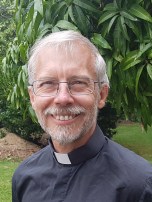
That last Sunday before Passover in Jerusalem was quite a day. People had been talking about little more than the famous preacher and miracle worker, the one who just a few days earlier had even called a man named Lazarus from the grave. They wondered whether he would actually show up in the city for Passover. The chief priests and other leaders were so worried about the following he was gaining that they had put our orders for his arrest. And Jesus himself had not been seen for several days. Not since he raised Lazarus.
That’s when the rumours began. Jesus was back. He was outside of Jerusalem, in the village of Bethany with Lazarus. And he would be coming into Jerusalem the next morning! Well, no one wanted to miss that. In fact, so many thousands turned out to see Jesus that the authorities could not get near him. And if they did, they would have been beaten by the crowds if they tried to arrest him. So the chief priests and the Pharisees and even the Roman soldiers all stayed away that morning. But no one else stayed away. It seemed that the entire city had turned out to welcome Jesus. People threw their coats down on the ground so Jesus would have a soft path. They cut down palm branches and held them up to shield him from the sun as he passed by. They welcomed him just like a king would be welcomed returning from a great victory in battle.
But Jesus didn’t look anything like a triumphant king. He wore the simple robes of a travelling preacher. His guard of honour was not armed soldiers, but his students. And he was not riding in a chariot. He was not riding a war horse. In fact, he was not riding a horse at all. Instead, he came into the city sitting on a young donkey, his feet lifted so as not to drag on the ground, as the beast slowly made its way up the road that led from Bethany to Jerusalem.
This did not seem like any king the people had seen before. But for those who paid close attention to such things, they would have reembered that a king sometimes did ride a donkey into a new or conquered city to show that he was coming in peace. Certainly this was a good sign. Others, who knew the scriptures well, would have recalled the passage from the prophet Zechariah that proclaimed concerning the messiah, ‘behold, you king is coming, sitting on a donkey’s colt’ (Zechariah 9:9). This is perhaps part of what spurred on the crowd to shout, ‘Hosanna! Blessed in the one who comes in the name of the Lord, the king of Israel’ which is another messianic text from Psalm 118 (vv 25 and 26). And just after these verses that John quotes the psalm reads that these words would be shouted with ‘branches in hand, in festive procession to the horns of the altar’ (v. 27).
The expectations on Jesus at this moment could not have been higher, nor more clearly messianic. And among the crowd were many who had witnessed the raising of Lazarus. And they were cheering loudly and continuing to tell everyone what Jesus had done (v. 17).
The Pharisees, who had been conspiring with the chief priest to have Jesus arrested, felt the sting of defeat. ‘Look,’ they said, ‘what can we do? The whole world had gone after him’ (v. 19).
For those waiting for the messiah to come and set them free, to show up and throw out the Romans and reestablish the throne of King David, the entry of Jesus into Jerusalem on the back of a donkey was the sign they had been waiting for. The moment, they believed, had finally come.
Then, before John continues the story, there is an interesting and unexpected interlude. Normally we pass over it without much thought. But is deserves a closer look.
When Jesus enters the city, at the point at which everyone expected him to head for the Roman garrison and throw out the soldiers. Or perhaps straight to the temple and overthrow the corrupt high priests, we instead find him pausing and talking to the people.
It was then that John tells us that there were some Greeks who were in Jerusalem for the festival. Now we don’t know if they were actual Greeks. For many Jews in Jesus’ time this was the name they gave to all non-Jews because Greek was the common language that most foreigners spoke. In fact, the men in question were probably not even non-Jews. The fact that they were there to worship suggests they were either Jews from a foreign land, or converts to Judaism. But what is clear is that these men were strangers to the city. Perhaps they had heard about Jesus in their home country. And now that they were in Jerusalem, they were very keen to see what was going on with this famous preacher called Jesus. But they couldn’t get near Jesus for the press of the crowds. They probably couldn’t even get a glimpse of him. Many of us have had the experience of being in a big crowd when someone famous passes by. And at the last moment so many people press in and jump up onto shoulders that we end up see nothing at all.
But these Greek visitors desperately wanted to see Jesus whom they had heard so much about. So they found Philip. Why Philip? John reminds us Philip was from Bethsaida, which we were told in chapter one. Bethsaida was culturally a very ‘Greek’ town, so Philip would have been fluent in the language and aware of the culture. Perhaps this is why they sought him out to help them gain an audience with Jesus. For some reason, Philip goes to Andrew, who was also from Bethsaida. And together they go to Jesus with the request from the newcomers.
Again, we recall the first chapter of John’s gospel and the account of the first disciples. Remember, it was Andrew (along with John) to whom Jesus first said ‘come and see’. And it was Philip who said to Nathaniel, ‘come and see’. John does not want us to miss the point that new people are still coming to Jesus. And their request is reminiscent of the theme from the first chapter of John’s Gospel. ‘Sir,’ they say to Philip, ‘we want to see Jesus’ (v. 21).
Jesus has been saying, ‘come and see.’ And now these men have arrived in Jerusalem and want to see Jesus. And we think we know where the story will go from here. Jesus, of course, will take the time to meet these newcomers, to let them ‘come and see’ for themselves.
But that’s not what happens.
Jesus, who often does not do what we expect, or at least not in the way in which we might expect him to do it, seems to ignore the request.
Instead, Jesus begins to talk about his death and his glorification. He tells his disciples and all who are listening how troubled he is in his very soul about what lays before him. But he stands firm in his intention and prays, ‘Father, glorify your name.’ And the Father responds audibly with a voice form heaven saying, ‘I have glorified it and will glorify it again.’ The crowd was confused about what they heard. Was it thunder? Was it an angel speaking to Jesus? Jesus simply responds that it was for the sake of those listening, and not for his own sake, that the Father spoke. Just as at his baptism, it is a confirmation of who Jesus is.
Then, speaking about his impending death, Jesus says, ‘When I am lifted up from the earth, I will draw all people to myself’ (v. 32).
And here is the answer that the Greeks sought. It is the response, somewhat delayed, to the question that Jesus appeared to ignore. In the very last week of his life, yet more people are discovering Jesus. They too want to come and see him. Perhaps they are also hoping to become his disciples. But instead of inviting them to come and see by following him, as he did with Philip, Andrew and the other disciples, Jesus tells them and all who are in the crowd to look up. If they want to see Jesus, they will soon enough have the chance, for he will be lifted upon from the earth for all to see. And then he will draw all people, both Jew and Greek, to himself.
If you want to see me, he says, if you want to see the king being glorified. Just watch. You will see me lifted up, and from there, I will draw everyone to me.
At the end of Jesus’ life the invitation to ‘come and see Jesus’ is extended to all people, Jew and Greek, and to people of all times. If we want to see Jesus, if we want to see the king, the one who entered Jerusalem in peace on the back of a donkey, we need only look up to the cross. For Jesus made the cross his throne. And from there he calls us all to come and see what he has done for us.
Amen.
Pastor Mark Worthing.
 St Peters Lutheran Church Port Macquarie