Easter Sunday

Matthew 27:57-66, 28:1-20
The Resurrection

Readings for Easter Sundaybible

27:57 As evening approached, on the day of preparation, there came a rich man from Arimathea, named Joseph, who had himself become a disciple of Jesus. 58 Going to Pilate, he asked for Jesus’ body, and Pilate ordered that it be given to him. 59 Joseph took the body, wrapped it in a clean linen cloth, 60 and placed it in his own new tomb that he had cut out of the rock. He rolled a big stone in front of the entrance to the tomb and went away. 61 Mary Magdalene and the other Mary were sitting there opposite the tomb.

62 The next day, the one after Preparation Day, the chief priests and the Pharisees went to Pilate. 63 “Sir,” they said, “we remember that while he was still alive that deceiver said, ‘After three days I will rise again.’ 64 So give the order for the tomb to be made secure until the third day. Otherwise, his disciples may come and steal the body and tell the people that he has been raised from the dead. This last deception will be worse than the first.”

65 “Take a guard,” Pilate answered. “Go, make the tomb as secure as you know how.”  66 So they went and made the tomb secure by putting a seal on the stone and posting the guard.

28:1       After the Sabbath, at dawn on the first day of the week, Mary Magdalene and the other Mary went to look at the tomb.

‍2‍ There was a violent earthquake, for an angel of the Lord came down from heaven and, going to the tomb, rolled back the stone and sat on it.  ‍3‍ His appearance was like lightning, and his clothes were white as snow.  ‍4‍ The guards were so afraid of him that they shook and became like dead men.

‍5‍ The angel said to the women, “Do not be afraid, for I know that you are looking for Jesus, who was crucified.  ‍6‍ He is not here; he has risen, just as he said. Come and see the place where he lay.  ‍7‍ Then go quickly and tell his disciples: ‘He has risen from the dead and is going ahead of you into Galilee. There you will see him.’ Now I have told you.”

‍8‍ So the women hurried away from the tomb, afraid yet filled with joy, and ran to tell his disciples.  ‍9‍ Suddenly Jesus met them. “Greetings,” he said. They came to him, clasped his feet and worshiped him.  ‍10‍ Then Jesus said to them, “Do not be afraid. Go and tell my brothers to go to Galilee; there they will see me.”

 16‍ Then the eleven disciples went to Galilee, to the mountain where Jesus had told them to go.  ‍17‍ When they saw him, they worshiped him; but some doubted.  ‍18‍ Then Jesus came to them and said, “All authority in heaven and on earth has been given to me.  ‍19‍ Therefore go and make disciples of all nations, baptizing them in the name of the Father and of the Son and of the Holy Spirit,  ‍20‍ and teaching them to obey everything I have commanded you. And surely I am with you always, to the very end of the age.”

Acts 10:34-43 Summary of Jesus’ life and ministry

10:34 Then Peter began to speak: “I now realize how true it is that God does not show favoritism  35 but accepts those from every nation who fear him and do what is right.  36 You know the message God sent to the people of Israel, telling the good news of peace through Jesus Christ, who is Lord of all.  37 You know what has happened throughout Judea, beginning in Galilee after the baptism that John preached—  38 how God anointed Jesus of Nazareth with the Holy Spirit and power, and how he went around doing good and healing all who were under the power of the devil, because God was with him.

39 “We are witnesses of everything he did in the country of the Jews and in Jerusalem. They killed him by hanging him on a tree,  40 but God raised him from the dead on the third day and caused him to be seen.  41 He was not seen by all the people, but by witnesses whom God had already chosen—by us who ate and drank with him after he rose from the dead.  42 He commanded us to preach to the people and to testify that he is the one whom God appointed as judge of the living and the dead.  43 All the prophets testify about him that everyone who believes in him receives forgiveness of sins through his name.”

Sermon for – Easter Sunday

The Grace and Peace of our Lord Jesus Christ be with you all.   Paul writes to us, and the church at Colossae, ‘Since we have been raised with Christ, set our hearts on things above, where Christ is seated at the right hand of God.’

david3
David:0414521661

Let’s join in a word of prayer: God our loving Father and Father of our Lord Jesus Christ; today, our hearts are filled with awe and wonder over your mighty plan for all creation.  Your son suffered for our sin, and died the cruel death on a cross. You raised your Son to life eternal on that first Easter morning, and we can be sure of your promise to raise us to eternal life with him, because of the faith you put into our hearts. Gracious heavenly Father, we offer our humble thanks and praise, as we set our hearts on your kingdom, where Christ is seated at your right hand, and pray in the name of our risen Lord,  Amen.

It was a beautiful Autumn day, and a sense of peace stayed with a young pastor as he left the central city church on Easter Monday morning.

He paused for a moment on top of the steps leading to the avenue, now crowded with people rushing to the street-side cafes for a late morning snack. Sitting in her usual place inside a small archway was the old flower lady. At her feet corsages and boutonnieres were displayed on top of a spread-open newspaper.

 The flower lady was smiling, her wrinkled old face alive with some inner joy. The young pastor said, “I started down the stairs—then, on an impulse, turned and picked out a flower.  As I put it in my lapel, I said, ‘You look happy this morning.’” 

To which she replied with a sparkle in her eye,  “Why not? Everything is good.”  She was dressed in a shabby coat, with a threadbare blanket covering her legs, and seemed so very old that her reply startled me.  Once again, the young pastor smiled through his reply, “You’ve been sitting here for many years now, haven’t you? And always smiling. You wear your troubles well.”

 “You can’t reach my age and not have troubles,” she replied. “Only … it’s like Jesus and Good Friday.” After which, She paused for a moment.

“Yes?” the young pastor prompted.

“Well, when Jesus was crucified on Good Friday, that was the worst day for the whole world. And when I get troubles I remember that, and then I think of what happened only three days later—Easter and our Lord arising.  So when I get troubles, I’ve learned to wait three days . . . somehow everything gets all right again.”

The young pastor smiled his good-bye. But her words still followed him whenever he experienced difficult troubles. And he thought, “Give God a chance to help . . . wait three days.”   (SOURCE: By Patt Barnes, March 1995 issue of Guideposts, adapted by David Thompson.)  For us,  in this conavirus crisis, we can take that advice to heart.  Give God a chance to help.

 As Paul tells us, when we are facing the most difficult days, we can endure, giving God a chance to help, ‘setting our minds on things above, where Christ is seated at the right hand of God’, not on earthly things.  Even as I wrote this, I discovered how pious this sounds.  But if we think about this for just a bit, practical Christian living comes alive, when we set our hearts on Christ Jesus. Trusting in his care, even in the midst of our frailty, our challenges, our changes in life, family and home, we can approach these changes with a sense of courage and peace in our heart.

 As Martin Luther reminds us, “When everything around you is turning to dust, just remember your baptism, make the sign of the cross, and trust in the promises of Christ.”

I hear Paul telling me that ‘I have died and my life is now hidden with Christ in God. When Christ, who is my life, appears, then I also will appear with him in glory.’  It almost seems that he is telling us to just shrug our shoulders, and distance ourselves from the challenges we face. That ‘she’ll be right’   But the reality of Paul’s words strike this indifference with a double edge sword.  As we live through the challenges we face, we have a wonderful ally to engage with the challenge, not to escape it.   We have a Saviour who promised “surely I am with you always, to the very end of the age.”  

When Jesus was taken down from the cross, and laid in the tomb, I can feel the dismay and despair of the disciples.  As I watched the beginning of the  short series’ AD’ on Easter Saturday, I gained a sense of their feelings of failure and doubt.  But just as the flower lady proposed “wait three days and things will turn our all right”. 

During their wait over that first Easter Saturday, they relied upon the very words of Christ Jesus.

 “We are going up to Jerusalem, and the Son of Man will be betrayed to the chief priests and the teachers of the law. They will condemn him to death and will turn him over to the Gentiles to be mocked and flogged and crucified. On the third day he will be raised to life!”  (Matthew 20:18–19 NIV)

God was true to his promise.  Jesus was raised to life eternal, in his eternal glory, and he remains with us surrounding us with his love, filling us with his Spirit, and encouraging us with his words recorded in our precious Gospels.  Because of that first Easter morning, we can live Easter every day.

As Paul tells us, we are truly ‘raised with Christ’ and we can ‘set our minds on things above, where Christ is seated at the right hand of God’. 

As Paul tells us in one of his other letters, ‘what I received I passed on to you as of first importance: that Christ died for our sins, according to the Scriptures, that he was buried, that he was raised on the third day according to the Scriptures’ and he appeared.  (1 Cor 15:3–4 NIV)

 And on that first Easter morning, as I read again and again the account of the resurrection, my heart races with the Disciples, as they are greeted by the living Son of God, Messiah, Saviour, precious Lord.  And through the Gospels, Jesus Christ appears to me, brightening my spirit, bringing joy to my heart, and a renewed outlook, as I face the reality of life in our broken world.  It is my prayer today that you may also gain this excitement of the resurrection.  To see life in Christ as something so precious, so wonderful, so meaningful, that our faith in Jesus Christ is not misplaced. 

On Good Friday, we read from Hebrews, the words,  ‘Without wavering, let us hold tightly to the hope we say we have, for God can be trusted to keep his promise. … And let us not neglect our meeting together, as some people do.’  

Every time we meet, whether on Sunday, or in our midweek, or in homes and hospitals, we extend and continue our remembering of the death of Jesus, and our celebrating of the resurrection of the “Saviour of the World”.   Even by phone conversations and social media.

Every Easter, God gives each of us a truth worth trusting.  It’s the sure truth we see in the Gospel reading, where the angel said to the women, “Do not be afraid, for I know that you seek Jesus who was crucified. He is not here; for He is risen, as He said.  Come, see the place where the Lord lay.”

Every Easter, God gives each of us a life worth living.  A life filled with joy and purpose, a life filled with energy and excitement!  It’s the kind of life we see on display in the Gospel reading. “go quickly and tell His disciples that He is risen from the dead.”   We can feel the excitement as the truth sinks in: “They departed quickly from the tomb with fear and great joy, and ran to bring His disciples word.”    To bring us the reality  that  Jesus is alive! — That great news gives life to everyone who believes!  Life that overcomes our tears, our fears, and  our failures.

Every Easter, God gives each of us a Lord worth loving.  As the women went to tell His disciples, Jesus met them. “Greetings,” he said. They came to him, clasped his feet and worshiped him.  Then Jesus said to them, “Do not be afraid.” 
They came and held Jesus by the feet. It was a sign of their reverence, but also a sign of their great love. They loved the Lord. And so can we, because Jesus loves us more than anyone else in the world. He showed that love when He died on that cross for our sins.

Every Easter, God gives each of us a future worth finding.   There is no hope for a future without Jesus Christ.  But with Jesus we have a guaranteed future of eternal perfection. The angel gave those women a small glimpse of the future when he said: “go quickly and tell his disciples: ‘He has risen from the dead and is going ahead of you into Galilee. There you will see him.’”  Because of the faith in Jesus that God puts into our hearts, we too will one day see our Saviour! We will see Him face to face! And we will live with Him forever in Eternity.  Where he has gone ahead of us.  We have a future worth finding.

Every Easter, God gives each of us a story worth sharing, a reality worth living.  As Christians, we have the story worth sharing!  We can hear Jesus saying: “Do not be afraid. Go and tell.” God wants every believer to be prepared to give a witness of the faith we have and the joy we share. We have a simple message to share! God loves each of us. He sent His Son Jesus to die on the cross for each of us. And Jesus gives us the victory of everlasting life, because He is risen from the dead!

Jesus is risen!   He is alive!

May the grace and peace of God keep our hearts and minds in Christ Jesus, our living Lord and Saviour.   AMEN.

Rev David Thompson.

Good Friday

Readings for Good Friday

First Reading: Isaiah 52:13-53:12 The Suffering Servant of God

13 See, my servant will prosper; he will be highly exalted. bible14 Many were amazed when they saw him—beaten and bloodied, so disfigured one would scarcely know he was a person. 15 And he will again startle many nations. Kings will stand speechless in his presence. For they will see what they had not previously been told about; they will understand what they had not heard about.
53 Who has believed our message? To whom will the LORD reveal his saving power? 2 My servant grew up in the LORD’s presence like a tender green shoot, sprouting from a root in dry and sterile ground. There was nothing beautiful or majestic about his appearance, nothing to attract us to him. 3 He was despised and rejected—a man of sorrows, acquainted with bitterest grief. We turned our backs on him and looked the other way when he went by. He was despised, and we did not care.
4 Yet it was our weaknesses he carried; it was our sorrows* that weighed him down. And we thought his troubles were a punishment from God for his own sins! 5 But he was wounded and crushed for our sins. He was beaten that we might have peace. He was whipped, and we were healed!

Sermon – Good Friday

The Grace and Peace of our Lord Jesus Christ be with you all.  Let’s  join in a word of prayer: Loving God and Father, today we gather with all those who mourn over the fall of humanity. 

david3
David:0414521661a

Our Lord Jesus counseled the Apostle Thomas after  his resurrection “Because you have seen me, you have believed; blessed are those who have not seen and yet have believed.”   (John 20:29 NIV)

The Epistle of Hebrews encourages us that ‘faith is being sure of what we hope for and certain of what we do not see. This is what the ancients were commended for.  They were all commended for their faith, yet none of them received what had been promised.  God had planned something better for us so that only together with us would they be made perfect.’ (Hebrews 11:1-2,39–40 NIV)

And Hebrews goes on to say that ‘ since we are surrounded by such a great cloud of witnesses, let us throw off everything that hinders and the sin that so easily entangles, and let us run with perseverance the race marked out for us.  Let us fix our eyes on Jesus, the author and perfecter of our faith, who for the joy set before him endured the cross, scorning its shame, and sat down at the right hand of the throne of God. (Hebrews 12:1–2 NIV)

Then the Apostle Peter wrote ‘To those who through the righteousness of our God and Saviour Jesus Christ have received a faith as precious as ours:  Grace and peace be yours in abundance through the knowledge of God and of Jesus our Lord.’  (2 Peter 1:1–2 NIV)

So here we are together, honouring the sacrifice of our Lord and Saviour Jesus Christ, Son of the Living God.  We haven’t seen him teaching and healing in the Temple.  We haven’t seen him being questioned by the religious leaders, and the Roman Governor.  We haven’t seen him being whipped for our transgressions.  We haven’t seen him ridiculed by the pagan soldiers.   We haven’t seen him hanging on a cross.  But we believe.

We have learned from the ancients of faith, that God prepared the world through his prophets for the arrival of a Saviour and Messiah.  The arrival they only hoped for, but we have heard about from the Scriptures that witness what we have not seen, but believe.

We have received the encouragement that the faith we have in our Saviour is as precious, as valid, as powerful, as important as the faith of the Apostles, the Prophets, the Ancients of the Faith.  Even our nearer forefathers of the Reformation who quoted the reality of Scripture that we are in a right relationship with God our Father, through the faith we have in Christ Jesus who sacrificed himself on the cross of crucifixion. 

When Jesus whispered from the cross that “It is finished,” we can be assured that it was the end of the beginning of God’s presence among us, and the beginning of life in the presence of God’s eternity.

In the game of chess, there are three distinct patterns of the game.  The opening, the middle game and the end game.

The opening when chess pieces are moved into place with purpose and plan, containing distinct advantages and weaknesses. The middle game when pieces are exchanged, and vulnerabilities are capitalized upon while advantages are championed.  And the end game when the ultimate conclusion is played out with a sense of predestination, that both sides really expect.     

Life is certainly not a game, but life does have similar patterns. We see from Scripture the opening pattern of life – with creation, then failure then flood then re-creation.

 We see the middle pattern with selection of a man of faith, Abraham, and a covenant relationship with a nation, again failure and judgment and revival, played out over generations with the foresight of prophets and the actions of kings.  Empires and nations rising and falling.  We see the conclusion of the middle game with the birth, life and crucifixion of God’s Son, who entered humanity to usher in a new covenant between God and the people he loves so much. 

And we see the beginning of the end game pattern with the resurrection, the call to discipleship, and the unfolding of history into the future from Apostles to modern Christianity. 

All with a sure conclusion of utter defeat on the part of the devil and people of unfaith; and the ultimate victory of God’s plan.  A  plan for those through time and place who received Christ Jesus, those who believed in his name, those to whom God gave the right to become his children.’

We are part of this end-game strategy of life that God has willed when he scooped some dust together and breathed life into humanity.  Because Jesus Christ fulfilled God’s plan for salvation, as he cried, “My Father, if it is possible, may this cup be taken from me. Yet not as I will, but as you will.”

For us now, in our generation, in our time, and in our place, we are called to be faithful in living the faith we have received by the Holy Spirit working in word and sacrament. 

We are warned from Hebrews, ‘Without wavering, let us hold tightly to the hope we say we have, for God can be trusted to keep his promise. Think of ways to encourage one another to outbursts of love and good deeds.  And let us not neglect our meeting together, as some people do, but encourage and warn each other, especially now that the day of his coming back again is drawing near.’

As we approach the conclusion of our age, and the revealed victory of God’s plan for life, we are given the task to hold onto the faith we have received.  To witness that faith by our actions, our attitudes and our words, as we play out our part of life as children of God who can be trusted.

To encourage each other, as we all face those times when we are tempted to doubt that final victory lies with those who believe.

To find enjoyment, fulfillment, and purpose in meeting together in fellowship as our hearts sing together the praises of our Saviour who died for us.

This is especially important now that we are closer to our Lord’s return than ever before in history.  When we witness events and hostilities that surely point to the end of times.  And yet, we realize as Jesus tells us clearly that only the Father knows when he will wrap up our game of life, close up his board of this age, and invite us to his after party at the great feast before he reveals whatever next he has instore for us.  And it will be wonderful. 

Because of Good Friday, we can hear the words of Hebrews with a new direction in our life,  ‘dear brothers and sisters, we can boldly enter heaven’s Most Holy Place because of the blood of Jesus. This is the new, life-giving way that Christ has opened up for us through the sacred curtain, by means of his death for us.’

As we face every difficulty in our lives, our Saviour is calling us to respond by recognising his presence with prayer, and  living our salvation;  by loving each other, and caring for those around us;  by reaching out to someone who hasn’t yet confronted the death of our Saviour.   Who hasn’t yet accepted the salvation that our Saviour offers from his glory through his resurrection.

And so, today, as we grieve the suffering and death of our Saviour, and we prepare to celebrate His awesome resurrection, let’s hold onto these words of Hebrews, ‘without wavering, let us hold tightly to the hope we say we have, for God can be trusted to keep his promise.’   And may the grace and peace of God keep our hearts and minds in Christ Jesus.   AMEN.

Rev David Thompson.

Maundy Thursday

Gospel Reading:  John 13:1-17,31b-35  Jesus washes his disciples’ feet

13 Before the Passover celebration, Jesus knew that his hour had come to leave this world and return to his Father. He now showed the disciples the full bibleextent of his love.* 2 It was time for supper, and the Devil had already enticed Judas, son of Simon Iscariot, to carry out his plan to betray Jesus. 3 Jesus knew that the Father had given him authority over everything and that he had come from God and would return to God. 4 So he got up from the table, took off his robe, wrapped a towel around his waist, 5 and poured water into a basin. Then he began to wash the disciples’ feet and to wipe them with the towel he had around him.

6 When he came to Simon Peter, Peter said to him, “Lord, why are you going to wash my feet?”

7 Jesus replied, “You don’t understand now why I am doing it; someday you will.”  8 “No,” Peter protested, “you will never wash my feet!”  Jesus replied, “But if I don’t wash you, you won’t belong to me.” 9 Simon Peter exclaimed, “Then wash my hands and head as well, Lord, not just my feet!”

 10 Jesus replied, “A person who has bathed all over does not need to wash, except for the feet,* to be entirely clean. And you are clean, but that isn’t true of everyone here.”  11 For Jesus knew who would betray him. That is what he meant when he said, “Not all of you are clean.”  12 After washing their feet, he put on his robe again and sat down and asked, “Do you understand what I was doing? 13 You call me ‘Teacher’ and ‘Lord,’ and you are right, because it is true. 14 And since I, the Lord and Teacher, have washed your feet, you ought to wash each other’s feet. 15 I have given you an example to follow. Do as I have done to you. 16 How true it is that a servant is not greater than the master. Nor are messengers more important than the one who sends them. 17 You know these things—now do them! That is the path of blessing.”

31 “The time has come for me, the Son of Man, to enter into my glory, and God will receive glory because of all that happens to me. 32 And God will bring me into my glory very soon. 33 Dear children, how brief are these moments before I must go away and leave you! … 34 So now I am giving you a new commandment: Love each other. Just as I have loved you, you should love each other. 35 Your love for one another will prove to the world that you are my disciples.”

Gospel Reading:  Matthew 26:17-31  The Lord’s Supper

17 On the first day of Unleavened Bread the disciples came to Jesus, saying, “Where do you want us to make the preparations for you to eat the Passover?”     He said, “Go into the city to a certain man, and say to him, ‘The Teacher says, My time is near; I will keep the Passover at your house with my disciples.’ ”      So the disciples did as Jesus had directed them, and they prepared the Passover meal.

20 When it was evening, he took his place with the twelve;          and while they were eating, he said, “Truly I tell you, one of you will betray me.”   And they became greatly distressed and began to say to him one after another, “Surely not I, Lord?”        He answered, “The one who has dipped his hand into the bowl with me will betray me. The Son of Man goes as it is written of him, but woe to that one by whom the Son of Man is betrayed! It would have been better for that one not to have been born.”     Judas, who betrayed him, said, “Surely not I, Rabbi?” He replied, “You have said so.”

26 While they were eating, Jesus took a loaf of bread, and after blessing it he broke it, gave it to the disciples, and said, “Take, eat; this is my body.”        Then he took a cup, and after giving thanks he gave it to them, saying, “Drink from it, all of you; for this is my blood of the covenant, which is poured out for many for the forgiveness of sins.  I tell you, I will never again drink of this fruit of the vine until that day when I drink it new with you in my Father’s kingdom.”

30 When they had sung the hymn, they went out to the Mount of Olives.

Special Reading:   Luke 22:39-54a  Jesus in the Garden of Gethsemane

39‍ Jesus went out as usual to the Mount of Olives, and his disciples followed him.  ‍40‍ On reaching the place, he said to them, “Pray that you will not fall into temptation.”  ‍41‍ He withdrew about a stone’s throw beyond them, knelt down and prayed,  ‍42‍ “Father, if you are willing, take this cup from me; yet not my will, but yours be done.”  ‍43‍ An angel from heaven appeared to him and strengthened him.  ‍44‍ And being in anguish, he prayed more earnestly, and his sweat was like drops of blood falling to the ground.

‍45‍ When he rose from prayer and went back to the disciples, he found them asleep, exhausted from sorrow.  ‍46‍ “Why are you sleeping?” he asked them. “Get up and pray so that you will not fall into temptation.”

47‍ While he was still speaking a crowd came up, and the man who was called Judas, one of the Twelve, was leading them. He approached Jesus to kiss him,  ‍48‍ but Jesus asked him, “Judas, are you betraying the Son of Man with a kiss?”

‍49‍ When Jesus’ followers saw what was going to happen, they said, “Lord, should we strike with our swords?”  ‍50‍ And one of them struck the servant of the high priest, cutting off his right ear.

‍51‍ But Jesus answered, “No more of this!” And he touched the man’s ear and healed him.

‍52‍ Then Jesus said to the chief priests, the officers of the temple guard, and the elders, who had come for him, “Am I leading a rebellion, that you have come with swords and clubs?  ‍53‍ Every day I was with you in the temple courts, and you did not lay a hand on me. But this is your hour—when darkness reigns.” 54‍ Then seizing him, they led him away.

Sermon for Maundy Thursday

The Grace and Peace of our Lord Jesus Christ be with you all.    

   ‘Jesus got up from the table, took off his robe, wrapped a towel around his waist, and poured water into a basin. Then he began to wash the disciples’ feet and to wipe them with the towel he had around him.’

david3
David:0414521661

The Servant King, Christ Jesus, demonstrated the way of salvation, and the right relationship we have with our Saviour in this living parable. 

     ‘When he came to Simon Peter, Peter said to him, “Lord, why are you going to wash my feet?”  Jesus replied, “You don’t understand now why I am doing it; someday you will.”  “No,” Peter protested, “you will never wash my feet!”  Jesus replied, “But if I don’t wash you, you won’t belong to me.”   In his pride, Peter resisted the simple act of love and compassion of our Lord Jesus Christ.  So many in the world today show that same pride, even among followers of Christ Jesus.  I hear words just like Peter’s.  “I don’t need to read the Bible to be a Christian.”  “I don’t need to worship to be a part of the Church.” “I don’t need to pray to be in a relationship with God.”   “I don’t need to be baptized to go to heaven.  After all, I’m a Christian and a good person.”

Yet, I say, if we do not receive the gift of salvation, renewal, and eternal life, with humility before our Saviour, we will have no part of him.  From the earliest gathering of followers, they devoted themselves to the Apostle’s teaching of the words of Jesus, they devoted themselves to fellowship living their faith in community, they devoted themselves to prayer strengthening their relationship with God the Father, God the Son and God the Holy Spirit, and they devoted themselves to the sacraments of Baptism and Holy Communion to receive the fullness of Christ’s presence with humility before the Lord and confidence before the world.  Even in our isolation this year, we are still a community of faith, devoting ourselves to the teaching of the Apostles, and sharing our fellowship by phone and electronic media.

But then,  Simon Peter exclaimed, “Then wash my hands and head as well, Lord, not just my feet!”  To which, Jesus replied, “A person who has bathed all over does not need to wash, except for the feet, to be entirely clean. And you are clean.”

In the waters of Baptism, we are washed clean from the sin we inherit from Adam.  In the faith we receive by the work of the Holy Spirit, we are given the right to be called Children of God. 

But still we gather upon us the failures and sins of our broken world around us, just as a traveler picks up the dust of the earth on his journey. 

And just as Jesus washed this dust from the Disciples’ feet, he removes the stain and guilt of our sin each time we come to him in repentance to remember the forgiveness we received at the cross of Christ.  But we must come before him in humility to receive the grace and mercy that he so eagerly wants to bestow upon us.  Just as the Disciples allowed their master and Lord to wash their feet.  

And then we are prepared to receive the fullness of Christ’s presence in his body and blood.  Not because we deserve it, not because we have earned it, but just because it is freely given by the one whom God sent out of his great love, and the whom we have received out of our simple faith.

We come to the Lord’s Supper recognising our need for Christ Jesus. We come not deserving but accepting. We come to his presence in body and blood to remember Christ’s sacrifice and celebrate Christ’s victory, and ours. We come, because we are invited by God through Christ to join together in fellowship, to eat and drink, and give thanks.

 We come as people who are reminded of the presence of Christ Jesus in our lives every day.

The Lord knows how short our memories are, so throughout the Bible we find Him reminding us of things again and again, and even doing things to help us remember.  Jesus used parables and items around Him in those parables, to help people remember what He taught; but in the whole Bible there is no reminder more important or significant than the one He established the night before His crucifixion. It is Holy Communion, the Lord’s Supper, our shared Meal, when we receive the real presence of our Lord’s body and blood. In verse of the passage we shared this evening, Jesus said, “Do this in remembrance of Me.”

As we join Jesus at the table of his grace tonight, to receive his body and blood,  and we prepare to confront the suffering and death of our Saviour, as well as His awesome resurrection, may the grace and peace of our Triune God, keep our hearts and minds in Christ Jesus.   AMEN.

Rev David Thompson.

Palm Sunday

We are united in Christ, now in His suffering and humiliation, then finally in His resurrection and exaltation; let His life be yours.


Philippians 2:5
Let this insight be in you, which was in Christ Jesus.

Palm Sunday, that beautiful remembrance of Christ’s procession as the coming king into the city of God and to the altar of His temple. pastordThe beginning of the last week of His life, as He fulfilled the promises to the people of old; the king come to be crowned, yet with thorns on the throne of the cross (Isaiah 23:5); the priest to offer the final sacrifice on the altar, the sacrifice of the true Pascal lamb by which those trusting would be saved (Psalm 110:4; Isaiah 53:7); the servant who would bring salvation to all the nations, by His suffering, death and His resurrection and exaltation to God’s right hand, to His almighty power (Isaiah 49:7). And you are with Him in this. You know you are joined with Christ through baptism by the Holy Spirit, that we together are members of His body, that we share in His life, and so as the apostle says ‘let this insight be in you, which was in Christ Jesus’ let His life be yours.

And what is this insight? The Spirit teaches us with this ‘Christ hymn’ that the Second Person of the Trinity, the pre-incarnate Son, didn’t consider the almighty power and authority He possessed as God as something to be clung to, as we might clutch at good health, wealth or safety. His status as equal with the Father was not something He prioritised, like we might prioritise our position at work, or our status as citizens. Rather He gave of Himself taking the form of a servant to serve others though He is truly Lord of all and rightfully all should be serving Him, yet He came as a servant. He was incarnate, He took on our humanity in its fullness. He humbled Himself, from Lord of all to be a servant for all, from creator of all to be not just a human, but a human embryo, taking on our humanity from its beginning. And having become obedient, or in the Greek more ‘truly listening’ or ‘under to what is heard’, listening to His Father even to death, His excruciating passion flogged, shamed, and crucified.

Now we’ll take a break before going on. That insight of Christ is to not cling to the things this fallen world values, to power or authority, rather to fully listen to our Heavenly Father and live that out. Today I’m not going to highlight the truth of our sinfulness, and our helplessness. Instead I pray that the Holy Spirit has already done His Work, through the liturgy and the Word, that you who have been arrogant in your sin have been crushed, that God’s law has shown you that you fail to live with Christ’s humility and obedience. But now broken sinners do not despair, hear again God’s promise to you that, ‘you were united with Christ Jesus by baptism into a death like His, and shall certainly be united with Him in a resurrection like His.’ (Romans 6:4-5). But what was His resurrection like? We’ll go back to the text.

Jesus humbled Himself, incarnated and died in obedience with God’s Word, fulfilling His promises. Therefore God highly exalted Him, He put everything under Christ’s feet, His power. He graced Jesus with the name or reputation above all others, that when all things, from the highest archangel to the lowest worm, when all hear Him we will glorify and praise Him, truly and rightly honouring Him and confessing together that Jesus Christ is Lord, master and king of all; to the glory of God the Father. This is an incredibly dense text, and where is the good news for us here?

The first half tells us what Jesus did, humbled, took on our humanity, died in accord with the promises. Then the second half tells what our Father in Heaven did in response, exalted Him above all things that all recognise Jesus as Lord. But why is this Good News for us? We’re told to let this way of life to be our way of life, to always live as Christ lives; how can we hope to measure up to what Jesus did, how much He loved all people, even those hating Him? Well it’s like St Paul, who was a murderer of Christians, writes elsewhere and honestly throughout his letter here, it is no longer I who live but Christ who lives in me (Galatians 2:20). We have been joined with Christ, He came to God’s city as King, came to the temple the earthly altar and sacrificed Himself destroying our sin and reconciling us to our Father. And we participate in this, are joined with Him, as we eat and drink His body and blood (1 Corinthians 10:16). Holy Communion is a foretaste of the wedding feast of the slain Lamb at the end of time (Revelation 19:6-9); when Christ marries us His church, a full and completely, perfect union of us lowly humans with God Almighty, our evil already dealt with, and then only the pure and beautiful love of God between us all.

Our common union together with Christ is what Holy Communion is, that’s where we’ve got the words. That we will be exalted and unified with Christ, reigning together with the power of God, Paul tells us later in this letter, ‘God will transform our bodies to be like Christ’s most glorious body’ (3:21). That humanity can attain such heights is proclaimed again in this hymn. The pre-incarnate Son emptied Himself, or came down to become a lowly human, to take on our humanity, eat, sleep, poop, and to die for us. Our Father exalted Him according to His humanity, giving Lordship over all creation to Jesus according to His humanity, because according to His divinity He already had it. Now you and I, joined into the God-man Jesus Christ can be assured that we too will rise with Him, exalted by our Father in our bodies to His glory. This is who you are in Jesus Christ. God has spoken, His word is sure. So now hear again, and truly listen to the Word of God, ‘let the life of Christ be your life.’

And until our full communion comes, the peace of God which passes all understanding guard your hearts and minds in Christ Jesus. Amen.

Pastor Joseph Graham.
Dubbo.

Fifth Sunday of Lent

Text: Luke 7:36-50

Theme: “Love of Another Kind” (Part 3)

love


rob2“Love of another Kind” – that’s been the theme of our sermon series over these last 2 weeks, and today we’re going to complete this series.  In a nutshell, the purpose of the series has been to show us the kind of love that transforms lives and that transforms churches.  It’s the kind of love that Jesus showed, and it’s the kind of love that he asks us to show to each other.


 So far we’ve looked at different facets, different aspects of this love of Jesus.  We’ve seen that it is a love that has no limits, no filters and no conditions.  And we’ve seen that it is a love that doesn’t get fazed by interruptions.  Rather, it’s a love which is open to a change of plans, a love which seeks opportunities to serve in the midst of interruptions.

 And that brings us to the last facet of Jesus’ love that we’re going to be looking at in this series.  As we heard earlier in the passage from Luke 7, Jesus is invited to the home of a religious leader . .  but this leader doesn’t want to show kindness to Jesus.  He wants to get into an intellectual debate with him.  Why?  So that he might catch Jesus saying something inappropriate.  He’d then report this to the authorities so Jesus could be discredited.

 Now Jesus, he’s reaching out to anyone he can, so he says, “Yes, I’ll come to your home.”  So he goes to the house of the Pharisee.  A lot of people are waiting outside.  They want to watch, to listen in to see if Jesus puts his foot in his mouth.  Well Jesus, he goes inside, sits down, and just as dinner is about to begin, the neighbourhood hooker, the neighbourhood prostitute – everybody knows her, they know the street corner she hangs out on – she comes in, falls down at Jesus’ feet, and starts crying.  And she’s got some perfume, and she opens it up and starts pouring it onto Jesus feet.  And Jesus is stuck there.  And it’s awkward.  Really awkward.

 What do you do when you get stuck in one of those awkward situations, when you’re confronted by the undesirable or the disreputable?  It happened to me.  I remember the time when Beryl and I were on holidays in Fiji.  We had gone to the capital – Suva – and as we got off the bus – we were accosted by a whole group of young kids who were begging for money.  They were dressed in rags and they looked undernourished and they looked up at us with pleading eyes.  And it was awkward.

 And what about for you?  What do you do when needy people get in your way and you can’t disentangle yourself?  What do you do when there’s a moral foul-up?  What do you do when someone has abused grace, and they’ve fouled up – not once or twice or three times – but plenty, and you’re sick of it?  What do you do with Christians who say that they’re going to clean up their act and who don’t?  What do you do with fellow members who go around undermining your work for God?  What do you do when you’ve straightened out that kid or that person for the 5th time, and they foul up again?  Does your grace have a limit?  Do you say – “That’s enough!  I’m outa here!”

 Well, it’s interesting in this situation here in our text.  Here’s the neighbourhood hooker.  And we note that Jesus doesn’t pry her away.  He doesn’t shove her to the side.  He doesn’t moralize.  He doesn’t give her a sermon.  The Bible says in Luke 7 that he discerns that her tears of repentance are genuine.  And you know what he says?  “You’re forgiven. It’s over.  It’s done.”

 Folks, that’s love of another kind.  That’s a 70 times 7 love.  That’s the love of someone who truly understands grace.  And yet . . . and yet how often don’t people, don’t Christians take that grace in vain.  How often don’t they respond to God’s amazing grace to them with a condemning attitude towards others.  Remember that classic parable in Matthew 18 where this bloke owes his master a fortune, and one day the master comes and says, “Pay all of it!”  And the bloke says, “I can’t.”  So the master says, “Fine.  You and your family are going to gaol for good.”  And as he’s being led out, he gets this little wry grin on his face and he says, “You wouldn’t be in the mood for being merciful, would you?  I know it’s a long shot, but you wouldn’t feel like being merciful, would you?”  And the master says, “OK.  I’ll cancel the whole thing.  I’ll absorb the entire debt.  Paid in full.  You’re free to go.  Go, tell the wife and kids.  Have a celebration.”

 You know what he does?  He goes home, tells the wife and kids.  And then his neighbour goes by who owes him $5.   And he says, “Hey you!  Come here!  Pay me what you owe me!”  The neighbour says, “Well I don’t have it on me right now.  I could probably go across the street and raise the cash.”  “No, no”, the bloke says, “You’re going to gaol!”  And he throws him in the slammer.

 And then the master finds out about it.  Not good.  NOT GOOD!  You can read about it in Matthew 18.  The master hauls him back, and he says, “Excuse me. . .  excuse me, can I ask you a question?  Weren’t you the fella who owed me a fortune?  Weren’t you the fella who was going to be thrown into the slammer – with your family – forever?  You didn’t have a ghost’s chance to repay me.  And I cancelled the whole debt and set you free!  I took the burden off your shoulders.  And you go out and you throw a bloke in the slammer for $5!!!?  Something didn’t register in your heart the way it should have.  Had it registered properly, you would have gone back and forgiven any debt anyone owed you.  And there’d be a pattern of forgiveness and grace for the rest of your life.”

 Folks, human love  . . love of a human kind  operates like that.  It keeps saying, “You’d better not foul up.  Better do it right.  Better not let me down.  Better not hurt me.  You’d better impress me with your goodness, ‘cause if I catch you slipping up  . .  I’m going to slam you!”

 That’s love of a human kind.  And here’s Jesus  . .  and he looks at this lady who’s slipped up big-time – this neighbourhood hooker – and he discerns that her tears of repentance are real, so he says, “It’s over.  Grace for you.  What I’ll do on the cross will be applied to your life.  And you are free.  You’ve never been so free.  Free from the sins of your past.  Free to start anew.  Free to enjoy this life.  Free to enjoy eternity.”

 You know how you can tell when love of another kind is present, operating in a church?  It’s when each person walks around overwhelmed by the nature of grace  . . just overwhelmed by it.  Where grace just doesn’t get old.  Where we say to each other, “Do you know what I’ve been forgiven from?  Do you have any idea of what I’ve been released from?  Do you have any idea of the mountain of debt that has been erased in my life through the cross?”   And where we freely share that love and grace with the undesirables, with the disreputables who come our way  . . .  because we know that – in God’s eyes – we are just as undesirable, just as disreputable as they are . . .  and that they need God’s grace just as much as we do.

 And that brings us to the end of this sermon and of the sermon series.  What a Saviour we have  . .  a Saviour who loves us with love of another kind.  And if that love is operating in the hearts and lives of each one of us, this community will be awesome.  It will have that feel of the love of Christ about it.  It will have grace at the core.  It’ll be that kind of community that breathes life into people.  That kind of community that looks for the hand of God in upsets, in interruptions.  That kind of community that doesn’t have limits or filters to put people through.  That kind of community that is always looking for new ways, more ways to show love to others.

 May you, may we be known as people, as a community that radiates love of another kind.  Amen.

Pastor Rob Paech.

Fourth Sunday of Lent

Text: Luke 7:11-15

Theme: “Love of Another Kind” (Part 2 in sermon series)  

love


rob2

How do episodes of TV soapies begin?  Like “Home and Away”, or “The Bold and The Beautiful”?  I’m told – I mean, I wouldn’t know from personal experience – but I’m told that they begin with a 1 minute compilation of the previous episode.  10 second grabs of the previous episode are shown – one after another – so that, even if you missed that episode, it gives you enough of the action to make sense of the present episode.

Since we’re in a sermon series – this is the 2nd in the series – I thought that a 1-minute compilation might be helpful. That way – if you missed the previous sermon – you should still be able to make sense out of this one.

Well, in the first message we saw that love is at the heart of an extra-ordinary church, that when a church is alive and effective and impacting, you can be sure that love is flowing through the lives of its members.  Not an ordinary kind of love.  Not a human kind of love.  But love of another kind.  The kind of love that Jesus showed as he rubbed shoulders with people.  And we looked at the first person in Luke chapter 7 that Jesus rubbed shoulders with – the Roman soldier who had a sick servant.  And the main point we learnt was that – while human love is so often limited, bound up by filters and conditions – Jesus’ love, the love he wants us to show, it’s unlimited, filter-less, unconditional.

That pretty much brings us up to speed and to day’s message.  The 2nd person in Luke 7 that Jesus rubs shoulders with almost happens by accident.  Jesus is going on a journey, and he gets 1 suburb away, and he’s got plans and he’s going somewhere, but his path is interrupted by a funeral procession.  Did you ever have your path, your journey cut short because you had to wait for a funeral procession?  It’s what happened to Jesus.  He’s going through a little town called Nain, and he comes across this funeral procession with a woman walking behind a casket.

What do you do when you’re in a hurry, when you’ve got some important business to attend to  . .  and somebody interrupts your plans?  What do you do?

I probably shouldn’t say this – because it doesn’t reflect too kindly on me – but I remember some time ago when I was interrupted by a funeral procession.  I was in a side street and I wanted to turn out onto the main road, and this funeral hearse drove slowly past.  And I remember looking down the line of cars to see how many friends this person had, hoping he or she didn’t have many . . . ‘cause I had to get to the office to talk to some people about Jesus . . . .  Curious, isn’t it!!  I got impatient, upset  . .  because I got interrupted by that funeral.

That’s . . .  that’s me at times.  What about you?  When you’re leading a busy life, when you’ve got appointments or a job and people expect you to be efficient and punctual  . .  what do you do when interruptions and complications and delays come your way?  What happens to your heart and mine, what happens to love of a human kind when something or someone gets in our way?  This is what often happens to our heart.  If our heart is normally this big, when someone interrupts our plans, our heart shrinks real fast.  In a matter of seconds, we can go from being calm and kind to being irritable and selfish.

Want an example to test this out?  Let’s suppose, let’s imagine that you’re at Woolies and you’ve gone there to stock up on some extra supplies in case the Covid-19 really runs rampant.  And you’re making your way up and down the aisles when a voice comes over the store intercom: “New stocks of toilet paper have just been put on the shelves.  But there is only a very limited supply.  Enough for the first 30 customers only.  Oh, and it is first come, first served.”  And you just happen to be standing right in front of those newly stocked shelves.  And you know there are at least 100 other people in that store.  And you know you probably don’t need any more rolls; you’ve got dozens stockpiled at home.  But you can hear the stampede coming your war.  And you can sense their urgency.

Now, what’s going to happen to the size of your heart?  Is your heart going to get big?   Are you going to step aside and say; “Oh please, you . . .  you go first.  Your need is greater than mine”  Probably . . . . probably many of our hearts would be shrinking.  Probably we’d be jumping forward and grabbing a pack with our right hand.  And then grabbing another pack with our left . . .  just in case!  And that would be love of a human kind  . . love of a human kind.

What did Jesus do in Luke chapter 7?  He’s busy.  He’s heading somewhere.  He’s just given his tremendously successful Sermon on the Mount, and lots of people thought that he was a big-time star.  So, he’s going along, and he gets interrupted by this funeral procession, and there’s some woman walking behind the funeral casket.  What does Luke 7 say Jesus did?  Jesus stopped  . . and he saw that woman’s broken heart.  Her son – her only son – was in that casket.  Vs 13 says, “When the Lord saw her, his heart went out to her.”  In a sense, his heart grows.  And then you know what he did?  He made his way into that procession and he touched the casket and he raised her son, and he gave him back to his mother. 

Now it takes a lot of power to pull off a resurrection!  But what really hits me in this story is not Jesus’ power, but his love.  What really stirs me is the love behind this miracle.  Jesus didn’t let this interruption shrink his heart.  Instead, he saw this interruption as an opportunity to expand his heart, to share his love with someone in need.  And that’s a powerful, powerful lesson for people like you and me.  Jesus is showing us – by example – that if you’re busy, if you’re going through the day and someone throws a spanner in the works, somebody interrupts you, there’s a complication  . . and you have love of another kind operating in your heart – then you look for the person or the people or the opportunity in the middle of that interruption.  What’s first on your mind is not “What am I going to miss out on now?”, but “Who might need my love right now?  How might I show it to them?”  Instead of shifting up a gear and trying to escape the interruption, you find yourself open to a change of plans.

I realize only too well that this is no small ask.  The pace of life for most of us these days – even for those of us in retirement – is frantic  . .  and we need interruptions like a hole in the head.  But there are times each week when I’m convinced that God arranges things, when he puts us in situations with other people who need the kind of love that we can uniquely give.  They are ‘divine interruptions’, ‘divine opportunities’.  And if we have Jesus’ love operating in our hearts, we can make such a difference to people’s lives, we really can.

Can I – in closing – can I ask you this week – each day this week – can I ask you to be on the lookout for interruptions, for complications.  And the numbers of those are certain to escalate in the times ahead as the tentacles of Covid-19 reach further and further out.  When those interruptions, those complications occur, can I encourage you – before your heart shrinks and you get hot under the collar – can I encourage you to ask yourself these questions: “Lord, is this an opportunity for love of another kind?  Is this one of your divine interruptions?  Did you arrange it?  Lord, should I be putting my plans on hold here and focus on the person?  How can I show love to this person right now?”

They’re mighty important questions when interruptions come our way.  And if we can respond to those interruptions with love of another kind – with Jesus’ love – we can bring some mighty important blessings into people’s lives.

May God bless you in your interruptions this week.  Amen.

Pastor Rob Paech

Third Sunday of Lent

Love of another kind – Series Theme Introduction

15th March, 2020


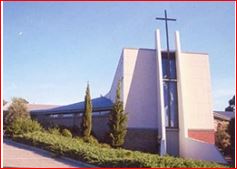
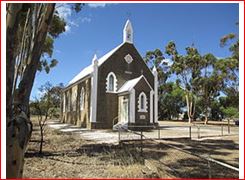
Over my 40 years in parish and locum ministry, I’ve come across many, many churches.  Large churches and middle size churches and small churches.rob  Inner city churches and suburban churches and rural churches.  And – at least this is my experience anyway – there is one factor that sets some churches apart from others.  A factor that raises them above the category of “ordinary” and places them in the “extra-ordinary” category.  And this factor, it’s got nothing to do with church size or location.  I’ve found these “extra-ordinary” churches in large, urban centres, and also in small country congregations.
church3church2


church120180311_103505 (1)


So, what is this critical factor that sets some churches apart?  It’s LOVE!  Love!  Love is at the heart of every vibrant, impacting church that I know!  Bar none!  Churches can have the best location and plant and multiple staff members, but if they don’t have love beating strongly at their core, they will never be the “salt and light” church that God calls them to be.

And what is this love?  It’s the critical factor, the essential ingredient to an “extra-ordinary” church, but what is it?  What does it look like?  Where can you find it?  Well, you won’t see it on TV – on “Home and Away”, or on “The Bold and the Beautiful”.  You won’t see it demonstrated in the corporate or business world.    Nor in the various levels of government.  To see this kind of love, you need to go to another place.  Or – more correctly – to another person.  You need to go to Jesus.  To Jesus.  Because it’s another kind of love that he shows.  It’s another kind of love that he offers.  The only kind of love that makes a lasting difference in people’s lives.  The only kind of love that can truly transform churches and communities. love

So, can I invite you to join with me today – and over the next 2 Sundays – to journey through the 7th chapter in Luke’s Gospel and see Jesus interacting with various people.  And as we journey with Jesus in these interactions, we’ll see clearly what this love looks like.  And we’re going to do this under the sermon series theme of “Love of Another Kind”.


Love of another kind #1

Luke 7:1-10

15th March, 2020


In introducing the theme for this sermon series at the beginning of the service, I made this statement: “love is at the heart of an extraordinary church!”  And that statement is so true!  “Love is at the heart of an extraordinary church!”  When a church is alive and effective and impacting, you can be sure that love is flowing through the lives of its members.  And this love, it’s not an ordinary kind of love.  It’s not a human kind of love.  Rather, it’s “love of another kind”.  The kind of love that Jesus showed as he rubbed shoulders with people as he went about his daily business.

And that brings us to the first person in Luke chapter 7 that Jesus rubbed shoulders with.  He was a Roman soldier who had a sick servant.  So this Roman soldier – who the Jews hated – he approaches Jesus and says; “I don’t have a problem, but my servant does.  Would you consider healing him?”

Now let me ask you a question; what do you do when somebody you don’t know who has a friend of a friend of a friend comes to you and asks for a favour?  What do you do?  If you live a hectic sort of life – and many of us do – of if you’re an important kind of a person – your first reaction might well be to think to yourself; “I don’t have time to be bothered with this.”  And so you’ll say; “I’ll have my people call your people.  I’ll have someone in my organization contact someone in your organization.” …. Or what do you do when your neighbor gets a truckload of dirt dumped on his front lawn and he asks you to help him cart it round the back? …. Or when you’re asked to help some person in need in the community who you’ve never even met?  What do you do?  What do you do when you’re important or busy and people want some of your time?

Well, what did Jesus do?  Did he fob this Roman soldier off?  Did he ask one of his disciples to deal with him?  You could excuse him if he did.  I mean, Jesus is an important person.  And he’s on an important mission.  He’s on about his heavenly Father’s business.  And there’s so much for him to do.

So, what did Jesus do?  Jesus says; “Oh, there’s a hired hand you want healed?  No problem!”  And he heals him.

I’ve got to be honest; that’s not my natural way of operating.  If somebody comes to me for help, I’m likely to throw up some filters and conditions.  I don’t try to, but it just happens sometimes.  I can find myself saying; “OK, let me check these people out.  They’d better be legitimate.  They’d better be this.  They’d better be that.  And if they fit through all these conditions and filters that I put up and run them through, well, I might respond positively to their request”.

My love …. my love at times can be so limited, so restricted.  And then there’s Jesus’ love, and it has no filters or conditions.  In its scope, it is unlimited and unrestricted.  Jesus performs no background check to find out his credentials.  He disregards conventional prejudice about this person’s race and occupation.  He just helps him.  In the midst of his important schedule, he shows “love of another kind”.

I suspect that I’m not the only one who struggles with giving love, with giving time and energy and care to those who come in need.  Many people struggle with it.  They say; “I’ll love people if they’re white.  I’ll love people if they’re middle class.  I’ll love people if they’re educated.  I’ll love people if they vote the right way.  I’ll love people if they have the right tastes in music or in fashion.  I’ll love people if they’re young, or if they’re old.  I’ll love people if, if, if, if, if”.  And it affects, it limits the quality of relationships we have with others.

For starters, it limits our relationships within the family unit.  “If you put out the garbage, or if you do this job for me, then I’ll love you.”  But that kind of conditional love, it stunts relationships between husbands and wives.  It cripples relationships between parents and children.

 What our families need, what they desperately need, is mums and dads and teenagers and children who have “love of another kind” … who love unconditionally – without filters or limits.  Because when that kind of love is present in a family, people blossom and relationships deepen.  It makes all the difference when kids and teenagers know that – despite their way-out hair style or clothes or body piercing, … that even if they bomb out in school or drop out of uni or mess up their relationships – it makes all the difference when kids and teenagers know that their parents still love them with everything they’ve got,  … and that they’ll never stop loving them…..   It makes all the difference when spouses know that – even if they’re depressed or out of sorts or if they’ve failed their spouse big time – it makes all the difference when a spouse knows that their partner will keep on loving and loving and loving them. 

Not only does love of a human kind limit relationships in the family, but it also limits relationships in our community.  Love of a human kind responds to pop stars and movie stars and sports stars.  It makes time for the rich, the powerful, the popular.  But if you don’t fit into any of these categories, then that’s just bad luck.  If you happen to be unemployed or uneducated, if you happen to belong to the underclass or deviate from the socially accepted norm, it’ll probably mean that you’re going to be by-passed, over-looked, under-loved by the community.

What our community needs is “love of another kind”. … where people are treated equally – irrespective of their social standing … where people are given equal opportunity – irrespective of who they know or don’t know … where people are valued for who they are, not just for what I can get out of them … where people are respected and cared for because they’re people, not inconveniences or anonymous entities … where people can come to us with their requests – as did that Roman soldier – and we say – as Jesus did; “No problem.  I’ll help!”

And then there is the church community.  And where church communities run only on love of a human kind, they can be pretty tough places to exist in.  I’ve been privileged to be connected with some wonderfully loving and caring churches in my time.  But I’ve also seen the damage that happens in churches where the “in crowd” excludes the “out-crowd” or the new-comers ….  where the hand of fellowship is extended only as long as people are prepared to conform …. where people place all sorts of conditions on their support.

This is the 3rd year that Beryl and I have been coming for a stint here at St Peter’s Lutheran Church, Port Macquarie.  And I’ve got to say that we have felt welcomed and embraced and valued from day 1!  You have something special here!  But this church family – like any church family – needs to constantly be looking at the mirror and asking questions like: How serious are we about building relationships with those in our various communities so that we can share ourselves and our Saviour with them?  Like, how open are we to newcomers when they do come?  How much are we prepared to give, to serve, so that they might come to know Jesus and what it means to be a part of his family?    Like, how prepared are we to put aside hurts and disappointments from fellow members so that we can move on to health and wholeness?

What’s needed in our families?  What’s needed in our community?  What’s needed in our church?  It’s “love of another kind”.  It’s Jesus’ love.  It’s the sort of love he showed to that soldier’s servant, to that hired help.  A love that has no filters, no conditions.  It’s a risky kind of love, an unpredictable kind of love, because you don’t know who’s going to come around the corner, you don’t know who’s going to come your way with a request, a problem, a hurt.  But if that “love of another kind” is operating in your heart and life, it’s awesome!  It’s awesome!  It makes an immeasurable difference to the quality of life in our homes and in our community and in our church.

This “love of another kind”, it comes from Jesus.  And it’s available to you today.  Over the next 2 Sundays we’re going to look at it more closely, but you don’t have to wait till then to receive it.  It’s available to you right now.  All you need to do is to ask Jesus for it … to acknowledge that your human love is too limited, too filtered, too conditional …. and that you need his unconditional love to fill you and to flow through you.

It’s worth thinking about and asking for, wouldn’t you agree?

Pastor Rob Paech.


Second Sunday of Lent

The Text: John 3:1-17

God’s Family and Our Family

How often do you stop to think about what God is like? As far as eternity is concerned, what you believe about God is the most important thing about you. Knowledge of God is the most important knowledge you can possess.dhuff Knowledge of God is momentous knowledge because of its power to change lives in so many wonderful ways. The better you know God personally, the stronger will be your convictions on moral matters and the keener you will be to act on these convictions. The Bible says, “The people who know their God will stand firm and take action (Daniel 11:32).”

 A group of university students were asked for their definition of God. Some gave very complicated definitions; others gave very vague definitions. Finally a normally quiet, shy girl said with a big smile on her face: “God is the One without whom I cannot exist!” What we believe about God makes all the difference to how we live from week to week. God wants to be our refuge and strength amid the stresses and strains of daily life. Our Triune God isn’t remote or aloof from contemporary life, but is deeply involved in what’s happening in our lives now. Our God is behind all the things that go right in our lives each week.

 In His Son Jesus Christ, God has all the time in the world for individuals. In today’s Gospel about Nicodemus’ conversation with Jesus, we have the first of many conversations Jesus has with individuals on a one to one basis. What’s more, many of the greatest truths Jesus ever told were shared with individual men and women. Perhaps this is Jesus’ way of saying that these priceless messages of good news are meant for each one of us personally.

 Nicodemus comes to Jesus at night-time, fascinated by the miracles Jesus performed. In those days, religious issues were often debated at night-time, even on a roof-top to take advantage of a refreshing evening breeze. Nicodemus has come to question Jesus. Instead, He ends up being questioned by Jesus. Nicodemus begins by paying Jesus a compliment, and is taken aback by Jesus’ unexpected reply. Jesus ignores the compliment and focuses instead on the new birth we all need in order to join God’s Kingdom. Jesus says, “No one can see the Kingdom of God without being born again.”

 Poor Nicodemus! He, almost humorously, takes Jesus’ words literally. He naively comments that no adult can enter their mother’s womb a second time. Jesus takes the focus from Himself and gives it to the Holy Spirit when He says, “No one can enter the Kingdom of God without being born of water and the Spirit.” This is an example of the selfless way the three members of the Trinity operate. They honour each other by pointing to the work the other members of the Trinity do.

 God the Father points to the saving work of His Son Jesus and glorifies Him. Jesus takes the focus from Himself and glorifies His heavenly Father, while the Holy Spirit points us to Jesus and all that Jesus has done for us. God is no single person, but a social being, a Family of three persons. Just as it takes three persons to make a family, so the Trinity models family life for us. At the beginning of creation, God said, “It is not good that anyone should be alone (Genesis 2:18).” God never meant us to be alone, but rather to find our purpose and meaning in life and our fulfilment in relationships with one another.

 Our Father in heaven has given all authority, wisdom and love to our Saviour Jesus.  Jesus, in turn, is totally committed to doing His Father’s will. He says, “My food is to do the will of the Father who sent me (John 4:34).” The Holy Spirit reveals the Father and the Son to us and does all He can to bring them praise and glory. The chief characteristic of the Triune God is that of a community reaching out to include us in their love for each other. They want us to enjoy the fellowship they have with each other. You cannot have one member of the Trinity without also having the other two.

 None of us is self-made. We all began life in a triangular relationship with a mother and father. Most of us are involved in a threefold set of personal relationships. For example, I am a husband to my dear wife, a father to my children and a brother to my own siblings. Jesus says to each of you, “As the Father has loved Me, so I have loved you (John 15:9).” When the Bible says “God is love”, it affirms God’ social and Trinitarian nature, for love needs both a giver and a receiver.

 True love is mutual. Yet it is also more than mutual. Its outgoing nature is eager to bless as many other persons as possible. Self-sacrificial love is love at its best. Out of love for the whole world, God the Father sacrificed His dearest possession, His only Son, for us. This was the most glorious act of love by the Father in heaven. The glory of John 3:16 is in the special relationship between the Father and His Son. Jesus is God’s greatest gift of love to us, given to us so that we won’t perish. To “not perish” means that our lives won’t be wasted, but will enjoy life forever with the Father, Son and Holy Spirit.

 This hope that is ours through faith in Christ Jesus is a robust and resilient hope offered without limit. TV advertisements sometimes tell us “This offer is limited” or “Available only as long as supplies last”. Into our world of limited resources, limited time and limited opportunities Jesus tells us of God’s limitless love for the whole world. It would have been mind-blowing for Nicodemus to learn that God loves the whole world and that the very person he was listening to was proof of this love. “If God is for us, who can be against us? He who did not withhold His own Son, but gave Him up for all of us, will not God with Him also give us everything else? (Romans 8:31-32)” When we believe this with our whole being, then our lives become radiant with an indestructible hope.

 Rachel, a secondary school student, is an example of this. Seventeen-year-old Rachel wrote to her cousin, “If you had to make a list of the top 5 things most important to you, what would you put? Here’s mine: (1) God, (2) Family, (3) Friends, (4) My future, (5) Myself.”

 For Rachel and many other believers, God is No. 1 and all else is secondary. Rachel grew in grace and love. Her remarkable journal and her letters show that she understood what it meant to put God first in everything. She exhibited a deep spiritual life and wrote about her faith, her awareness of the fragility of life and the strength of God.

 Soon after, Rachel became one of fifteen victims in a tragic massacre at Columbine High School in America. Her attacker asked, “Do you believe in God?” She responded, “You know I do”, whereupon he said, “Then go be with Him”, and shot her.

 Earlier, Rachel had faced difficulties because of her faith and wrote, “I am not going to apologize for speaking the name of Jesus, I am not going to justify my faith to them, and I am not going to hide the light that God has put into me. If I have to sacrifice everything … I will. I will take it. If my friends have to become my enemies for me to be with my best Friend Jesus, then that’s fine with me.”

 What a heroic faith in a teenage girl, and what an inspiration for Christians of all ages. As the Lord’s Prayer reminds us, our Father in heaven is at the centre of everyday life, there to bless it and fill it with meaning. The Triune God can be found in our hospitals, our welfare centres, and near to the sick and dying. Jesus is on the side of the poor and needy, and we will discover Him there when we minister to them.

 God has created us so that we thrive in the company of others and they in turn bring out the best in us. It’s in our relationships with each other and with those closest to us that we find our true identity. It’s been said that a happy home life is our greatest source of satisfaction here on earth. God has given us families to teach us something about His own threefold Family. Healthy family living is other-centred in nature, where we’re more concerned to show love than to receive it. As the Prayer of St. Francis says, “It is in giving that we receive”; we receive the joy of blessing others with our gifts of love.

 “We love because God first loved us (1 John 4:19).” God’s love for us, given to us in richest measure in His Son Jesus Christ, is the best foretaste of Eternity we will experience in this life. And we look forward to eternal life when we will be “lost in wonder, love and praise” of God the Father, Son and Holy Spirit.

 “O, the depth of the riches and wisdom and knowledge of God! How unsearchable are His judgments and how inscrutable His ways! … From Him and through Him and to Him are all things. To Him be the glory forever. Amen.” (Romans 11:33, 36)

First Sunday in Lent

The Text: Matthew 4:1-11


Lord Jesus, your word has power to heal and restore, as we meditate on your word, enlighten our hearts and minds and transform us by your Spirit. Amen.

Matthew 3 to Matthew 4 gives us one of the biggest contrasts that exists in the gospels.20180311_103505 (1)

Jesus goes from the cool waters of the Jordan; now into the wilderness.

From the huge crowds into isolation.

From the Spirit resting upon him like a dove to being driven by the Spirit into the wilderness.

From the voice of the Father calling him “Beloved Son” to the voice of the tester.

It is as if over the course of these two chapters we get a reimaging of the incarnation. When Jesus was born to walk this earth, he stepped out of all the heavenly Glory, placed in the womb of a young nobody girl from the backwaters of Nazareth. When we celebrate Christmas we celebrate that there is the deliberate choice by Jesus to honour his Father and leave his heavenly kingdom to dwell on earth and every step would have been a reminder of what he had given up.

And just as the incarnation was the conscious decision of Jesus to leave Heaven, so now in the transition between Matthew 3 and 4 we see on the one hand the beauty of the relationship of the Godhead, three in one, only to see the Spirit again sending Jesus away from that into something strange and unfamiliar.

In the incarnation and in the wilderness, Jesus is not there by mistake. With the test to come from the devil, Jesus is not caught unaware. When Jesus enters the wilderness, he is on a mission to find the devil and pass the test. But it is the God of the universe who sets this test to reveal who Jesus truly is. When we read Matthew 4, we need to think in terms of the testing of Jesus, not the temptation. Temptation speaks of trying to trap someone to sin.  A test exists to make plain what is really true.  Therefore when the Spirit drives Jesus into the desert to be tested, it’s not to work out whether Jesus can resist evil, but for Jesus to be revealed as to who he is as the Son of God.

Our text says that Jesus went out to face the test, but it took 40 days for the devil to show up. The devil wasn’t going to face Jesus when he was energised and primed—that would just be crazy. The devil waits until Jesus has begun to experience what a world broken by sin can truly feel like. Hunger, thirst, fatigue, pain, disorientation.  And in steps the devil to test Jesus. Each of the three tests are the product of a disordered creation.  Each of the three tests are luring Jesus with the very things that the wilderness has taken from him.

So it begins.  The first temptation is harmless enough:  if you are the Son of God, command these stones become bread.  A victimless suggestion, an easy way to assert his identity- no one is hurt, no command is broken is it?  Well almost.  Remember, why was Jesus in the wilderness?  Because the Spirit sent him there. It is where Jesus is supposed to be and if the Father has withheld food from Jesus then that is well enough, to make food for himself is to assert himself against his Father’s will in a place where he has chosen to instead submit to it.

Jesus responds by quoting from Deuteronomy 8:2-5, where Moses spoke to the people of Israel (Deuteronomy 8:2-5):

And you shall remember the whole way that the Lord your God has led you these forty years in the wilderness, that he might humble you, testing you to know what was in your heart, whether you would keep his commandments or not. And he humbled you and let you hunger and fed you with manna, which you did not know, nor did your fathers know, that he might make you know that man does not live by bread alone, but man lives by every word that comes from the mouth of the Lord. Your clothing did not wear out on you and your foot did not swell these forty years.  Know then in your heart that, as a man disciplines his son, the Lord your God disciplines you.

The wilderness and the hunger isn’t an end in itself.  God’s people spent 40 years out there so that God would test them and know their hearts.  They were humbled, they looked to the hand of God to provide for them.  But the goal, the purpose, was so that they would learn reliance on the Lord alone to provide for them.

Now the people of Israel did not do so well.  In the desert they complained against God. When he provided they doubted and took extra just in case, and how long after they left the desert did it take before they again relied on themselves and not every word that comes from the mouth of the Lord?

So this test by the devil seems harmless on the surface. But Jesus sees right through him.  This was so much more.  It would not be enough for Jesus to remedy his suffering for himself.  He did not come to simply soothe the pain of a broken world and make it a little more bearable.  He had come to restore it, by triumphing over sin, death and Satan himself.  He has come to be what the people of Israel were meant to be and failed. And so even if the father sent him to a place where he felt impact of our broken world through the wilderness, he knows that his circumstances do not define him, but his relationship with the Father does.

So the Devil tries something new. He takes Jesus to the heights of the Temple and says ‘“If you are the Son of God, throw yourself down, for it is written, “‘He will command his angels concerning you,’ and “‘On their hands they will bear you up, lest you strike your foot against a stone.’”  Jesus isn’t the only one who can quote the Bible!  But like all good lies that contain about 90% truth, this test is designed to subtly redirect the intent and purpose of the word of God.  The devil quotes Psalm 91, and it seems to make sense, God will protect you Jesus, you won’t get hurt.

Yet there are in fact two fundamental flaws.

The first is that a Psalm of trust and confidence in God is transformed into a method to get God to do what you think you want or need. Psalm 91 is a beautiful Psalm of trust that helps us understand our circumstances especially when we are afraid or unsure. The devil tried to turn it into a means of forcing the Father’s hand. So instead of proclaiming unfailing trust in God, this test seeks to create doubt in the mind of Jesus and push him to force God to demonstrate his love on Jesus’ terms.  It becomes the exact opposite of the original meaning of the Psalm.

The second flaw stands out really clearly once you see it.  By saying that the Father won’t let Jesus be hurt, the devil trying to redefine the nature of the relationship between Jesus and the Father.  ‘If you are the Father’s only Son, surely he doesn’t want you to be hurt…’  the problem is: that’s precisely why Jesus had come- not to be hurt in some fickle experiment, but to bear the brunt of all hurt and all pain and all suffering.

To suggest that the Father would not allow Jesus to feel pain if he truly loved him seeks to test whether Jesus would truly obey the Father in all things regardless of the cost.

And Jesus sees right through him, quoting Deuteronomy 6: “you shall not put the Lord you God to the test.”

It is no one’s prerogative to assume that God is there to act when we tell him, to intervene when we demand it.  Even Jesus, the perfect Son, would not assume to flip this story on its head.  It is the Father testing him to reveal the truth of who Jesus is, it is not for Jesus to test the Father to try and determine his motives or his character.

Israel failed that test, they questioned God’s goodness, they doubted his provision, they dismissed his love and grace over and over again.  Jesus on the other hand demonstrates total trust in the Father, without having to get the Father to perform for him.  He trusts the Father’s goodness even when the path included pain and suffering. Jesus had come to go to the cross, pain was his path and he knew it was the goodness and grace of God that demanded it. He would not escape it, he would faithfully submit to his Father’s will and endure it—for us.

The devil has one more attempt.  If the path Jesus was on meant willingly going without food, meant not forcing the Father to intervene to avoid suffering, and indeed meant suffering, then the last test is simple- choose a different god.  Leave this one and instead of the wilderness you can have the world.  Exchange the God of the Cross and inherit the world.

Did the devil even have the right to offer this gift?  Of course not, the earth is the Lord’s and everything in it!  And Jesus saw right through him.

In the wilderness, the Israelites failed this test, they worshipped other God’s, they looked for an easier path, but Jesus’ character is revealed in this test.  Even knowing what it would mean to follow the Father, he would not turn away.

The Father was placing all things under Jesus and through the cross he becomes the Saviour of the world. Where Israel failed, Jesus triumphs.

Jesus tells Satan ‘Go!’ and Satan leaves.  The Father’s test is over and Jesus’ character has been revealed.

Where Israel could not be faithful, Jesus takes their place and fulfils it on their and our behalf.

From this point on evil wears the face of defeat.  All evil is now powerless in the presence of Jesus.  Jesus’ ministry begins by overcoming evil in these tests.  It reaches its climax when Jesus overcomes evil by the cross; it will end when Jesus comes again and finally and fully restores all creation—which includes us, too.

Amen.

Ash Wednesday

Jesus tells us, “This is the only work God wants from you: Believe in the one he has sent.”

(John 6:29 NLT)

Through the Scriptures, we are witnesses that Jesus entered humanity and took our sin to the cross so that we can be in a new relationship with God.

david3
David:0414521661

  A relationship that is characterised by God’s forgiveness of us and our acceptance of God’s love. Today, as we gather on this Ash Wednesday, may the grace and peace of our Lord, Jesus Christ, be with us always.  

Let’s join in a word of prayer: God our loving Father, on this occasion, we gather to remember the life and teaching of Your Son who was born into humanity for our salvation.    By your Holy Spirit, open our hearts and minds to the words of our Saviour, as we experience your love for us demonstrated every day of our lives. Gracious heavenly Father, hear our prayer for the sake of our risen Lord.  Amen.

Jesus tells us, “This is the only work God wants from you: Believe in the one he has sent.” Jesus affirms that many would come to Him in faith, because of the Father’s grace.

The weakness we experience in our lives and our faith from time to time will never keep God’s grace from working. When we come to Jesus, we find that God does not turn us away, nor cast us aside.

One young lady, Charlotte Elliott, learned an important lesson about Jesus one sleepless night in 1834. She was an invalid, so when her family held a bazaar in Brighton, England to raise money to build a school, she could only watch from afar.

That night she was overwhelmed by her helplessness and could not sleep. But her sadness turned to joy when she realized that God accepted her just as she was.

Her experience inspired these well loved words: “Just as I am, without one plea but that Thy blood was shed for me, and that Thou bidd’st me come to Thee, O Lamb of God, I come! I come!”  

(Source: from Dennis Davidson, “What Bread Are You Seeking, 7/27/08)

When we begin thinking that we are unworthy of God’s care and concern, we are approaching dangerous temptation. It is probably the most dangerous thinking that leads to the temptation to doubt God, and his love for us.

For a person to stand before God and say, “I am not worthy of your love”, it’s incompatible with our Christian faith.  And yet we know from Scripture that we are only worthy of God our Father’s grace and love because of the faith that we have in the one whom God has sent to us.   

It’s pretty clear to us that a Christian is someone who stands before God and says “there’s everything wrong with me. But your Son, Jesus Christ my Lord,  has overcome all that is wrong in me.”   The only work God wants from us: “Believe in the one he has sent.”

Once again on this Ash Wednesday, we confront all that is wrong with each of us and all that is right about God’s love for us expressed in his Son, our Lord Jesus Christ.

The message of Ash Wednesday is all about turning our attention away from our self-centred thinking that we are unworthy to focus on God our Father and Jesus Christ our Lord.  On the wondrous gift to us that removes every doubt and fear; that gives us courage to live in the protection and love God our Father has for us:   Jesus Christ our Lord.

The message of Ash Wednesday is also about turning our attention away from our spiritual weakness and helplessness to the power and authority of the Holy Spirit.

The message of Ash Wednesday is about turning our attention away from our misguided actions and attitudes, to focus on the life, teaching, and sacrifice of our Savour, Jesus Christ.

For us tonight, we hear the words of Jesus Christ “To love God with all your heart, with all your understanding and with all your strength, and to love your neighbour as yourself is more important than all burnt offerings and sacrifices.” We hear his words, and we receive an uplifting of our faith in a Saviour who loves us, accepts us, and forgives us.

For us tonight, we also discover the wisdom of Paul to the Church at Corinth, ‘We implore you on Christ’s behalf: Be reconciled to God. God made him who had no sin to be sin for us, so that in him we might become the righteousness of God.’

Yes, tonight, we set our hearts to refocus our attention during Lent.  To focus on God’s Son who has made all that is wrong in us to be a witness for our need of a Saviour.  To allow the Holy Spirit to work in us to overcome all that is wrong so we can be more and more like Jesus. 

We turn away from our sins of fear, anxiety, and doubt to accept the forgiveness received because of God’s own sacrifice. 

And then we focus on Jesus.  Filling our lives with acts of faith, of hope, of kindness, with joy in our hearts that God our Father is so kind to us.

The ashes of our celebration tonight remind us of the presence of Jesus Christ in our lives.  Each time we touch our forehead and feel the grit of the ash we remember the sin that brought Jesus to sacrifice himself.  We also remember that we have the sign of Jesus over us.  We are his and he is ours.  We live under the banner of our faith with words, actions and attitudes that line themselves to the will of God our Father.  An outward sign of the inward repentance and renewal received by God’s acceptance and forgiveness. 

So we receive the ashes on our forehead in the sign of the cross to be a sign to us and to each other that we are accepted and forgiven by the sacrifice of Christ Jesus on the cross of crucifixion.

Throughout the journey of the next 40 days leading to Easter, we will focus on all that Jesus gives us, that makes all the difference in our lives. 

The grace and peace of God keep our hearts and minds in the calm assurance of eternal salvation in our living Lord, Christ Jesus.   Amen.

David Thompson.