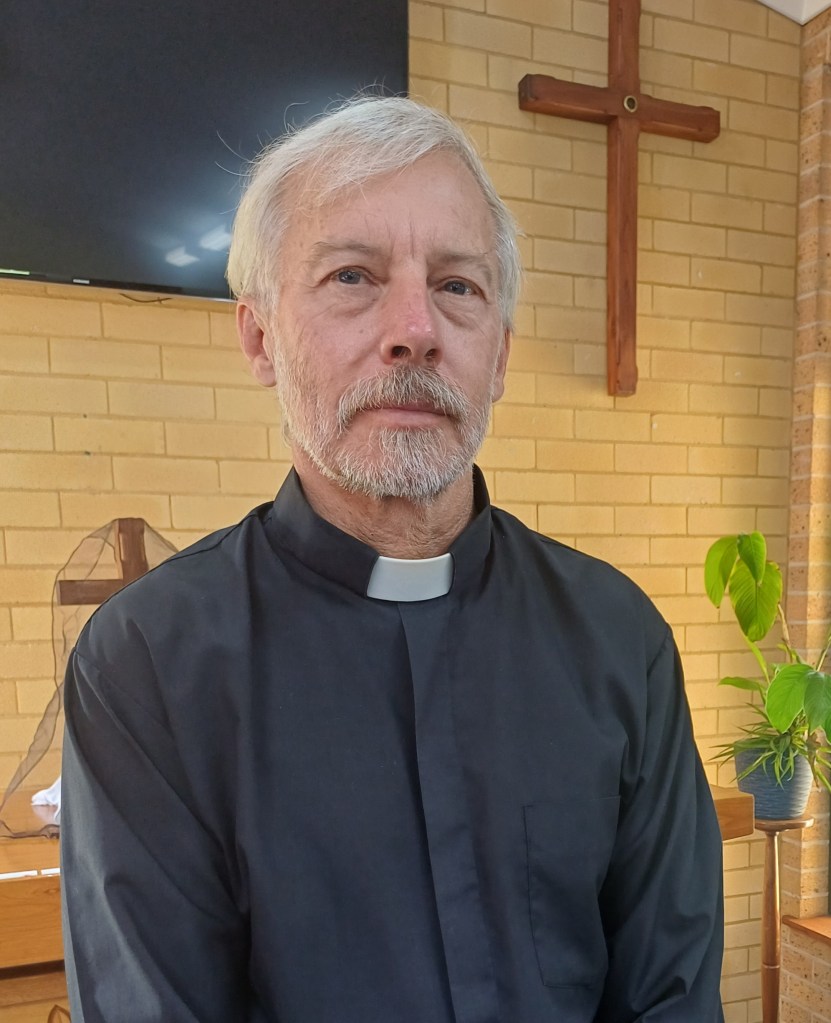
Good Friday Sermon by Pastor Mark Worthing.
St Peters Lutheran Church Port Macquarie
Inspiring people to LIVE a purposeful LIFE, growing TOGETHER in JESUS CHRIST
Good Friday Sermon by Pastor Mark Worthing.
Maunday Thursday Sermon by Pastor Mark Worthing.
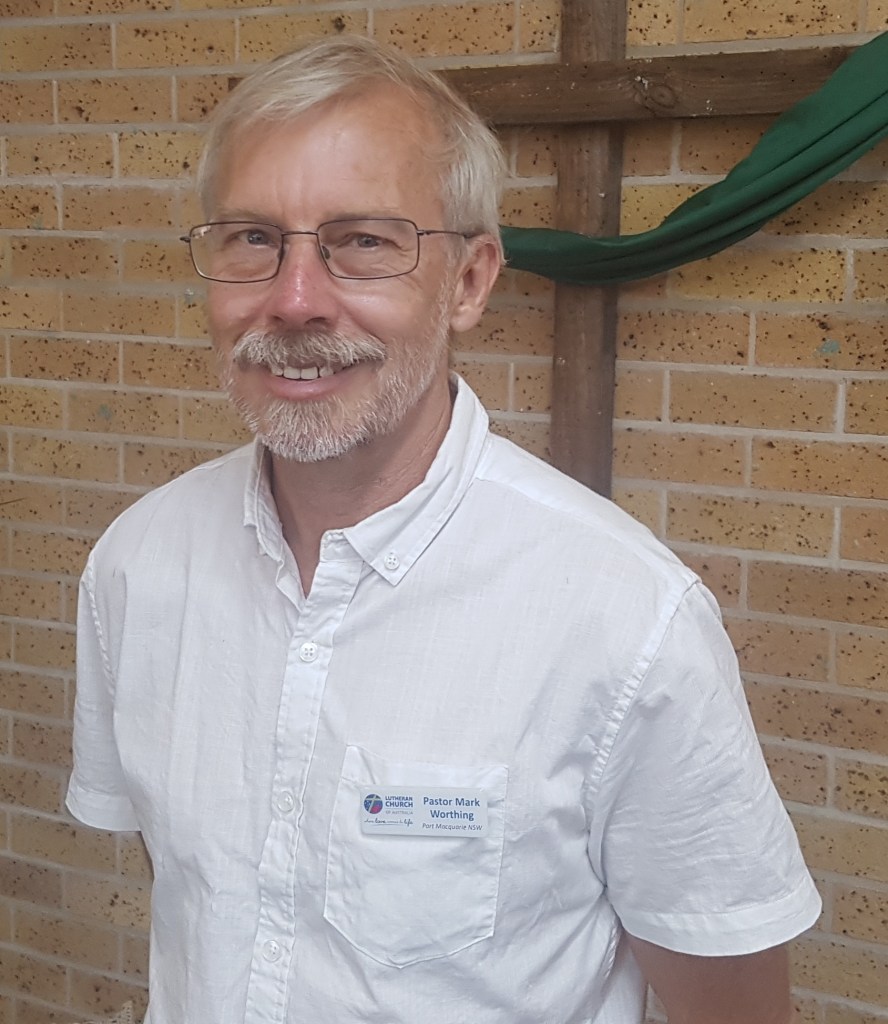
Sermon by Pastor Mark Worthing.
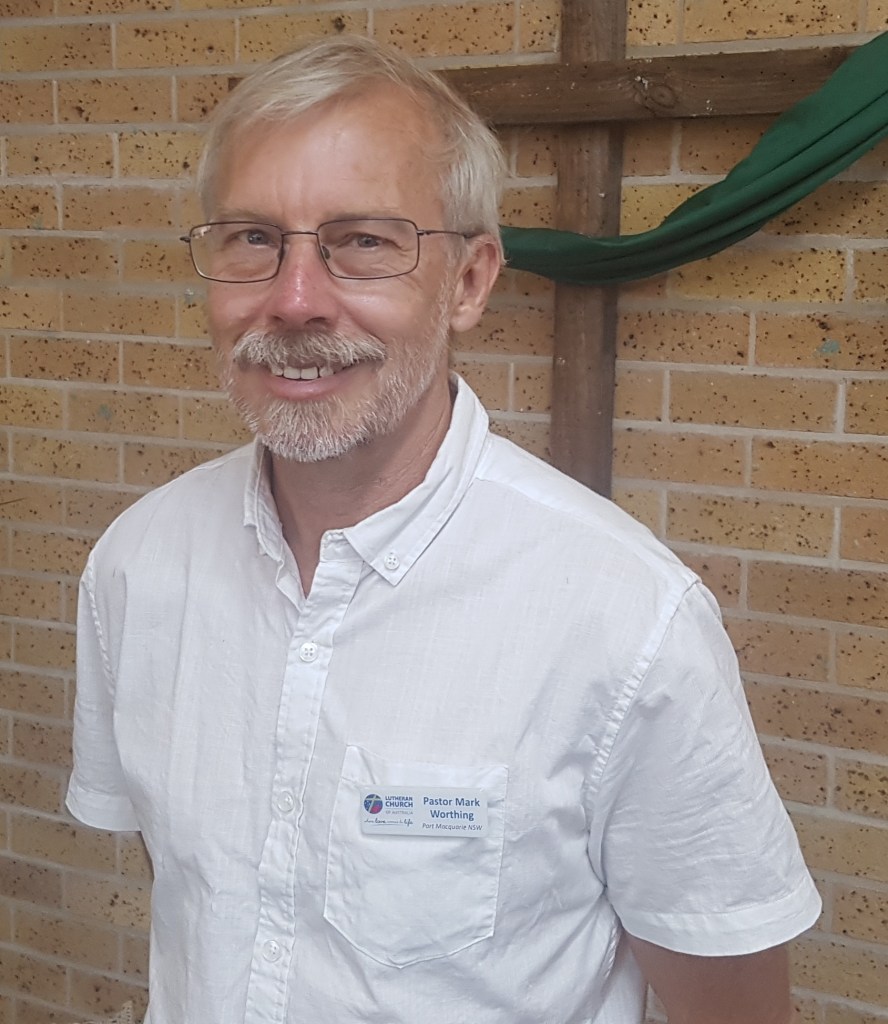
Sermon by Pastor Mark Worthing.
Sermon read by Allan Brun 15/3/26.
Audio Sermon by Rev David Thompson.
Audio Sermon by Pastor Mark Worthing.
Audio Sermon by Pastor Mark Worthing.
Audio Sermon by Pastor Mark Worthing.
Grace, peace and mercy to you from God our Father, through Jesus Christ our Lord. Amen.
The sermon for this Transfiguration Sunday is based on Matthew’s gospel reading.
And after six days Jesus took with him Peter and James, and John his brother, and led them up a high mountain by themselves. And he was transfigured before them, and his face shone like the sun, and his clothes became white as light.
May the God of light and glory, shine his light upon us and illuminate our way. Amen.[1]
————
Does anyone remember an artist by the name of Pro Hart? He was a big player in the art scene of Australia when I was growing up. Matter of fact, he still is I guess with some of his art fetching up to $50,000.
Anyway, one of my favourite advertisements on TV was by ‘Stain Master’ carpet. The ad starts with a guy, Pro Hart, looking at a sizable white lounge rug with nothing on it. He gently rubs his hands against the lush white carpet and says, ‘Beautiful.’ Then the ad turns quickly and Pro goes to work with a bottle of red wine, and all different foods, spaghetti, jelly, black forest cake. Meticulously and with the random precision of Pro, he creates this massive dragonfly artwork out of the food. He tops off the masterpiece by signing his name in chocolate sauce on the bottom right and seeking validation from his dog, ‘Rembrandt.’
Then enters the cleaning lady, who, to her shock, sees the ‘art’ and calls out “Oh Mr Hart, what a mess.” Now to some this would be a mess, but to artists like Pro, no such thing…. this is art at its finest. But never mind, the cleaning lady gets to work on the ‘Stain Master’ carpet and cleans up the rug with ease until it is sparkling and new.
Now you might ask, what does this have to do with today’s bible reading? Well, today is Transfiguration Sunday. And if you are like me, you might ask what ‘transfiguration’ really means and why is it so important in our life as Christians? So, I reached for the trusty bible dictionary and I found that the word ‘transfiguration’ comes from the Greek verb metamorphoó. It describes a profound, visible change that proceeds from an inward reality.[2] A change that goes beyond any external, visible change or disguise (Mt 17:2, Mk 9:2). Just as we have heard in today’s children’s address. The word also describes a transformation through the spiritual renewal of mind to the likeness of Christ (Rm 12:2, 2Cor 3:18). So, what we heard about in the ‘Stain Master’ advert is not as profound a transformation as initially thought. What Jesus experienced and what the three disciples witnessed is far greater than just a refresh of appearance or a little spruce up. What they really experienced is a glimpse into his heavenly glory and the divine nature of Christ.
Today’s gospel reading opens with Jesus and 3 disciples ascending the mountain (v1). And we hear of the transformation of Jesus, where his face is radiant and his garments white as light (v2). Much like the carpet in the ‘Stain Master’ ad, Jesus becomes sparkling and new, whiter than white, a symbol of perfection beyond anything we could imagine or have ever experienced. In one short verse and with the imagery of light, Matthew reveals the identity of Christ. And as John explained, Christ has come as the ‘true light of the world…into the world’ (Jn 1:9). Christ has come as the true source of spiritual illumination and establishing our right to be called children of God. That Christ came as God, truly God and truly Man, dwelling in the presence of humanity, and glorified in the resurrection. That he has come with the divine glory and authority of the one true God. Just like the carpet in the advert, Jesus was perfect in the beginning, his perfection hidden from humanity like a beautiful artwork, then revealed in all his divinity on the Mount of Transfiguration.
Then Matthew introduces Moses and Elijah into the Gospel. We know that Matthew focuses his writing on a Jewish audience. And for the Jewish audience of the day, these two prophets are representatives of the Law. But not just the law but scripture. Through Elijah, Matthew proclaims that Elijah is the prophetic forerunner to the Messiah which establishes Jesus as the fulfilment of scripture. In the presence of Moses, Elijah and the 3 disciples, Christ is revealed as the ultimate authority over the Law and prophetic messages. Just as God revealed himself to Moses through the “I am who I am” statement in Exodus (3:14), as we heard in the announcement of Peter that ‘Christ is truly God,’ Christ has come in glory and might to shine light in the dark places (2 Pr 1:19). And it is in this moment that our future is revealed…a glimpse into life in eternity with Christ. Just as Moses and Elijah’s journey on Earth culminates in a life eternal with God, we also have new life that leads to the transfigured Jesus.
As we move through the passage, our attention is drawn to the descending cloud and booming voice(v5). The symbolic bridge between Heaven and Earth, where the mountains and the sky meet. The Mount of Transfiguration is the meeting place where Jesus is the link, the connector, the bridge between humanity and God, between the temporal and the eternal. And as we hear of this, we think of the Exodus story where the cloud covered the mountain, where the ‘glory’ of the Lord dwelt upon them (Ex 24:15-16). We might also think of Jesus’ baptism. Where the Spirit in the form of a dove descends upon Jesus and where God states from above: ‘This is my beloved Son, with whom I am well pleased’ (Mt 3:17). Just like in today’s gospel, the booming voice of God, the use of ‘words’ alone, God confirms the authority of Jesus as his Son and directs the disciples to heed his word. This is a clear and undeniable message that Jesus is the true Messiah sent to unite God and his creation.
Now it is understandable that with all this happening, Peter becomes a little overwhelmed and makes a random suggestion of building a shelter (v4). Some translations use the word shelter but might also be understood to be a tent or memorial. We could view Peter’s response from two different perspectives. The first being fear. The text states that the presence and voice of God ‘strikes fear’ or ‘terror’ into the disciples (v6). Not an unnatural response, really. If a cloud talked to me, I too might duck for cover. And yes, this is a common response to the awesome reality of God’s presence. However, the tents or memorials could be viewed as an invitation for Elijah and Moses to stay. An extension of hospitality or a marker to commemorate the significance of the event. A recognition that God has finally come in human form, living among humanity, who will suffer at the hands of man, die and rise for our salvation.
As we head into Holy Week, transfiguration is an opportunity for us to reflect. A time to reflect on the impending death of Christ on the cross, and an event that casts darkness over all humanity. And what sounds like bad news is the ‘good’ news, for we know that the death of Christ means life and light. We have the ‘good’ news in the form of scripture and the words of the creed, which reinforce our beliefs. As Romans 6:4 states: “We were therefore buried with him through baptism into death so that, just as Christ was raised from the dead through the glory of the Father, we too may live a new life.” Paul underscores that through baptism we die to our old self, to sin and are raised to new life in Christ. A newness of life that comes through God’s only son, who is the link between the incarnation and the deity of Christ. It is through the light of the Transfiguration event that we see the shadow of the cross and with that the gift of eternal life. A gift that changes the way that we respond to everything around us.
As we walk with Christ in our lives, we experience spiritual transformation. A transformation into the likeness and glory of Christ. As Paul outlines in Corinthians (2Cor 3:18): “we all, who with unveiled faces contemplate the Lord’s glory, are being transformed into his image with ever-increasing glory, which comes from the Lord, who is the Spirit.” Through the word, we are renewed by the forgiveness of sins. In the body and blood of Christ, we are washed clean. Just like the ‘Stain Master’ carpet, we are made pure and new. Just like Christ, we are radiant and white, shining bright in a dark world. The very light that transforms our thinking away from the temporal desires and patterns of the world. A view that looks away from self, continuing the work that Jesus commenced, serving others with selflessness and humility. And as we do we continue to grow in the image and glory of Christ through faith and union with God’s Spirit.
It’s amazing to think that what is found is one simple word, ‘transfiguration,’ metamorphoó, is quite complex and multidimensional. This simple word depicts a movement from visibility, what we see, to the sharing of divine glory and what we believe. It grounds the sanctification in Christ’s own radiant person and guarantees believers’ final glorification. It calls the Church to a life of ongoing, Spirit-enabled transformation. A transformation that changes the way we see, the way we act, the response to the spirit, a changing of our mind and heart into that of Christ Jesus.
The carpet scene, which I referred to earlier, is somewhat a representation of our lives. We start life with a beautiful, clean and unblemished creation of a baby. A life full of hope and wonder. And as we grow, we quickly go to work messing it all up. A sprinkle of sin here, a dash of lust, a pinch of greed, all beautifully brought together in our sinful nature, which reaches all the way back to Adam. And what is God’s response? Just as we heard in today’s gospel, he says ‘rise and have no fear’ (v7). God sending himself in human form, his son as the sacrificial lamb for all, who takes our messy lives and makes them new on the cross. He washes us clean in the waters of baptism and makes us pure through the blood his blood. He transforms us, turning our death into life through the reconciliation of the resurrection.
Transfiguration is foundational in our beliefs as Christians. It reminds us that God is God, the creator and Lord of all things. That through the death and resurrection of Christ, we are renewed, transformed and have new life, which changes everything. It is a time when we find assurance in the hope that comes from a relationship with the one true God. And we have the assurance of future glory that sustains amid suffering (Rm 8:18) and compels us to share with joy the good news of Christ Jesus, our Lord.
Amen.
————
Let us pray –
Lord God, as you glorified your Son from the heavens, give us grace to receive in faith this revelation of his glory, that we may follow him through his suffering and death, and share with him in the glory of his resurrection. Through Jesus Christ your Son, who loves and reigns with you and the Holy Spirit, one God, now and forever. [3]
Amen.
[1] Mark William Worthing, Lex Orandi: Exploring the Christian Faith Through the Church Year (2022), 66.
[2] S. Renn, Vine’s Expository Dictionary of Bible Words, Hendrickson Publishers (2005), 980.
[3] Mark William Worthing, Lex Orandi: Exploring the Christian Faith Through the Church Year (2022), 66.
 St Peters Lutheran Church Port Macquarie