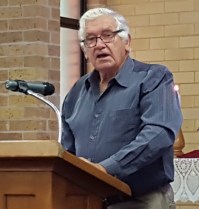
Fifth Sunday after Easter

Fourth Sunday of Lent

Text: Luke 7:11-15

Theme: “Love of Another Kind” (Part 2 in sermon series)  

love


rob2

How do episodes of TV soapies begin?  Like “Home and Away”, or “The Bold and The Beautiful”?  I’m told – I mean, I wouldn’t know from personal experience – but I’m told that they begin with a 1 minute compilation of the previous episode.  10 second grabs of the previous episode are shown – one after another – so that, even if you missed that episode, it gives you enough of the action to make sense of the present episode.

Since we’re in a sermon series – this is the 2nd in the series – I thought that a 1-minute compilation might be helpful. That way – if you missed the previous sermon – you should still be able to make sense out of this one.

Well, in the first message we saw that love is at the heart of an extra-ordinary church, that when a church is alive and effective and impacting, you can be sure that love is flowing through the lives of its members.  Not an ordinary kind of love.  Not a human kind of love.  But love of another kind.  The kind of love that Jesus showed as he rubbed shoulders with people.  And we looked at the first person in Luke chapter 7 that Jesus rubbed shoulders with – the Roman soldier who had a sick servant.  And the main point we learnt was that – while human love is so often limited, bound up by filters and conditions – Jesus’ love, the love he wants us to show, it’s unlimited, filter-less, unconditional.

That pretty much brings us up to speed and to day’s message.  The 2nd person in Luke 7 that Jesus rubs shoulders with almost happens by accident.  Jesus is going on a journey, and he gets 1 suburb away, and he’s got plans and he’s going somewhere, but his path is interrupted by a funeral procession.  Did you ever have your path, your journey cut short because you had to wait for a funeral procession?  It’s what happened to Jesus.  He’s going through a little town called Nain, and he comes across this funeral procession with a woman walking behind a casket.

What do you do when you’re in a hurry, when you’ve got some important business to attend to  . .  and somebody interrupts your plans?  What do you do?

I probably shouldn’t say this – because it doesn’t reflect too kindly on me – but I remember some time ago when I was interrupted by a funeral procession.  I was in a side street and I wanted to turn out onto the main road, and this funeral hearse drove slowly past.  And I remember looking down the line of cars to see how many friends this person had, hoping he or she didn’t have many . . . ‘cause I had to get to the office to talk to some people about Jesus . . . .  Curious, isn’t it!!  I got impatient, upset  . .  because I got interrupted by that funeral.

That’s . . .  that’s me at times.  What about you?  When you’re leading a busy life, when you’ve got appointments or a job and people expect you to be efficient and punctual  . .  what do you do when interruptions and complications and delays come your way?  What happens to your heart and mine, what happens to love of a human kind when something or someone gets in our way?  This is what often happens to our heart.  If our heart is normally this big, when someone interrupts our plans, our heart shrinks real fast.  In a matter of seconds, we can go from being calm and kind to being irritable and selfish.

Want an example to test this out?  Let’s suppose, let’s imagine that you’re at Woolies and you’ve gone there to stock up on some extra supplies in case the Covid-19 really runs rampant.  And you’re making your way up and down the aisles when a voice comes over the store intercom: “New stocks of toilet paper have just been put on the shelves.  But there is only a very limited supply.  Enough for the first 30 customers only.  Oh, and it is first come, first served.”  And you just happen to be standing right in front of those newly stocked shelves.  And you know there are at least 100 other people in that store.  And you know you probably don’t need any more rolls; you’ve got dozens stockpiled at home.  But you can hear the stampede coming your war.  And you can sense their urgency.

Now, what’s going to happen to the size of your heart?  Is your heart going to get big?   Are you going to step aside and say; “Oh please, you . . .  you go first.  Your need is greater than mine”  Probably . . . . probably many of our hearts would be shrinking.  Probably we’d be jumping forward and grabbing a pack with our right hand.  And then grabbing another pack with our left . . .  just in case!  And that would be love of a human kind  . . love of a human kind.

What did Jesus do in Luke chapter 7?  He’s busy.  He’s heading somewhere.  He’s just given his tremendously successful Sermon on the Mount, and lots of people thought that he was a big-time star.  So, he’s going along, and he gets interrupted by this funeral procession, and there’s some woman walking behind the funeral casket.  What does Luke 7 say Jesus did?  Jesus stopped  . . and he saw that woman’s broken heart.  Her son – her only son – was in that casket.  Vs 13 says, “When the Lord saw her, his heart went out to her.”  In a sense, his heart grows.  And then you know what he did?  He made his way into that procession and he touched the casket and he raised her son, and he gave him back to his mother. 

Now it takes a lot of power to pull off a resurrection!  But what really hits me in this story is not Jesus’ power, but his love.  What really stirs me is the love behind this miracle.  Jesus didn’t let this interruption shrink his heart.  Instead, he saw this interruption as an opportunity to expand his heart, to share his love with someone in need.  And that’s a powerful, powerful lesson for people like you and me.  Jesus is showing us – by example – that if you’re busy, if you’re going through the day and someone throws a spanner in the works, somebody interrupts you, there’s a complication  . . and you have love of another kind operating in your heart – then you look for the person or the people or the opportunity in the middle of that interruption.  What’s first on your mind is not “What am I going to miss out on now?”, but “Who might need my love right now?  How might I show it to them?”  Instead of shifting up a gear and trying to escape the interruption, you find yourself open to a change of plans.

I realize only too well that this is no small ask.  The pace of life for most of us these days – even for those of us in retirement – is frantic  . .  and we need interruptions like a hole in the head.  But there are times each week when I’m convinced that God arranges things, when he puts us in situations with other people who need the kind of love that we can uniquely give.  They are ‘divine interruptions’, ‘divine opportunities’.  And if we have Jesus’ love operating in our hearts, we can make such a difference to people’s lives, we really can.

Can I – in closing – can I ask you this week – each day this week – can I ask you to be on the lookout for interruptions, for complications.  And the numbers of those are certain to escalate in the times ahead as the tentacles of Covid-19 reach further and further out.  When those interruptions, those complications occur, can I encourage you – before your heart shrinks and you get hot under the collar – can I encourage you to ask yourself these questions: “Lord, is this an opportunity for love of another kind?  Is this one of your divine interruptions?  Did you arrange it?  Lord, should I be putting my plans on hold here and focus on the person?  How can I show love to this person right now?”

They’re mighty important questions when interruptions come our way.  And if we can respond to those interruptions with love of another kind – with Jesus’ love – we can bring some mighty important blessings into people’s lives.

May God bless you in your interruptions this week.  Amen.

Pastor Rob Paech

Third Sunday of Lent

Love of another kind – Series Theme Introduction

15th March, 2020


Over my 40 years in parish and locum ministry, I’ve come across many, many churches.  Large churches and middle size churches and small churches.rob  Inner city churches and suburban churches and rural churches.  And – at least this is my experience anyway – there is one factor that sets some churches apart from others.  A factor that raises them above the category of “ordinary” and places them in the “extra-ordinary” category.  And this factor, it’s got nothing to do with church size or location.  I’ve found these “extra-ordinary” churches in large, urban centres, and also in small country congregations.
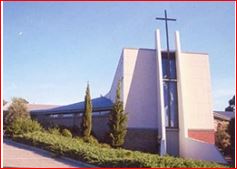
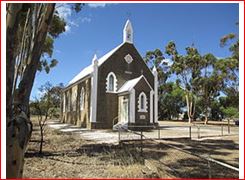
church3church2


church120180311_103505 (1)


So, what is this critical factor that sets some churches apart?  It’s LOVE!  Love!  Love is at the heart of every vibrant, impacting church that I know!  Bar none!  Churches can have the best location and plant and multiple staff members, but if they don’t have love beating strongly at their core, they will never be the “salt and light” church that God calls them to be.

And what is this love?  It’s the critical factor, the essential ingredient to an “extra-ordinary” church, but what is it?  What does it look like?  Where can you find it?  Well, you won’t see it on TV – on “Home and Away”, or on “The Bold and the Beautiful”.  You won’t see it demonstrated in the corporate or business world.    Nor in the various levels of government.  To see this kind of love, you need to go to another place.  Or – more correctly – to another person.  You need to go to Jesus.  To Jesus.  Because it’s another kind of love that he shows.  It’s another kind of love that he offers.  The only kind of love that makes a lasting difference in people’s lives.  The only kind of love that can truly transform churches and communities. love

So, can I invite you to join with me today – and over the next 2 Sundays – to journey through the 7th chapter in Luke’s Gospel and see Jesus interacting with various people.  And as we journey with Jesus in these interactions, we’ll see clearly what this love looks like.  And we’re going to do this under the sermon series theme of “Love of Another Kind”.


Love of another kind #1

Luke 7:1-10

15th March, 2020


In introducing the theme for this sermon series at the beginning of the service, I made this statement: “love is at the heart of an extraordinary church!”  And that statement is so true!  “Love is at the heart of an extraordinary church!”  When a church is alive and effective and impacting, you can be sure that love is flowing through the lives of its members.  And this love, it’s not an ordinary kind of love.  It’s not a human kind of love.  Rather, it’s “love of another kind”.  The kind of love that Jesus showed as he rubbed shoulders with people as he went about his daily business.

And that brings us to the first person in Luke chapter 7 that Jesus rubbed shoulders with.  He was a Roman soldier who had a sick servant.  So this Roman soldier – who the Jews hated – he approaches Jesus and says; “I don’t have a problem, but my servant does.  Would you consider healing him?”

Now let me ask you a question; what do you do when somebody you don’t know who has a friend of a friend of a friend comes to you and asks for a favour?  What do you do?  If you live a hectic sort of life – and many of us do – of if you’re an important kind of a person – your first reaction might well be to think to yourself; “I don’t have time to be bothered with this.”  And so you’ll say; “I’ll have my people call your people.  I’ll have someone in my organization contact someone in your organization.” …. Or what do you do when your neighbor gets a truckload of dirt dumped on his front lawn and he asks you to help him cart it round the back? …. Or when you’re asked to help some person in need in the community who you’ve never even met?  What do you do?  What do you do when you’re important or busy and people want some of your time?

Well, what did Jesus do?  Did he fob this Roman soldier off?  Did he ask one of his disciples to deal with him?  You could excuse him if he did.  I mean, Jesus is an important person.  And he’s on an important mission.  He’s on about his heavenly Father’s business.  And there’s so much for him to do.

So, what did Jesus do?  Jesus says; “Oh, there’s a hired hand you want healed?  No problem!”  And he heals him.

I’ve got to be honest; that’s not my natural way of operating.  If somebody comes to me for help, I’m likely to throw up some filters and conditions.  I don’t try to, but it just happens sometimes.  I can find myself saying; “OK, let me check these people out.  They’d better be legitimate.  They’d better be this.  They’d better be that.  And if they fit through all these conditions and filters that I put up and run them through, well, I might respond positively to their request”.

My love …. my love at times can be so limited, so restricted.  And then there’s Jesus’ love, and it has no filters or conditions.  In its scope, it is unlimited and unrestricted.  Jesus performs no background check to find out his credentials.  He disregards conventional prejudice about this person’s race and occupation.  He just helps him.  In the midst of his important schedule, he shows “love of another kind”.

I suspect that I’m not the only one who struggles with giving love, with giving time and energy and care to those who come in need.  Many people struggle with it.  They say; “I’ll love people if they’re white.  I’ll love people if they’re middle class.  I’ll love people if they’re educated.  I’ll love people if they vote the right way.  I’ll love people if they have the right tastes in music or in fashion.  I’ll love people if they’re young, or if they’re old.  I’ll love people if, if, if, if, if”.  And it affects, it limits the quality of relationships we have with others.

For starters, it limits our relationships within the family unit.  “If you put out the garbage, or if you do this job for me, then I’ll love you.”  But that kind of conditional love, it stunts relationships between husbands and wives.  It cripples relationships between parents and children.

 What our families need, what they desperately need, is mums and dads and teenagers and children who have “love of another kind” … who love unconditionally – without filters or limits.  Because when that kind of love is present in a family, people blossom and relationships deepen.  It makes all the difference when kids and teenagers know that – despite their way-out hair style or clothes or body piercing, … that even if they bomb out in school or drop out of uni or mess up their relationships – it makes all the difference when kids and teenagers know that their parents still love them with everything they’ve got,  … and that they’ll never stop loving them…..   It makes all the difference when spouses know that – even if they’re depressed or out of sorts or if they’ve failed their spouse big time – it makes all the difference when a spouse knows that their partner will keep on loving and loving and loving them. 

Not only does love of a human kind limit relationships in the family, but it also limits relationships in our community.  Love of a human kind responds to pop stars and movie stars and sports stars.  It makes time for the rich, the powerful, the popular.  But if you don’t fit into any of these categories, then that’s just bad luck.  If you happen to be unemployed or uneducated, if you happen to belong to the underclass or deviate from the socially accepted norm, it’ll probably mean that you’re going to be by-passed, over-looked, under-loved by the community.

What our community needs is “love of another kind”. … where people are treated equally – irrespective of their social standing … where people are given equal opportunity – irrespective of who they know or don’t know … where people are valued for who they are, not just for what I can get out of them … where people are respected and cared for because they’re people, not inconveniences or anonymous entities … where people can come to us with their requests – as did that Roman soldier – and we say – as Jesus did; “No problem.  I’ll help!”

And then there is the church community.  And where church communities run only on love of a human kind, they can be pretty tough places to exist in.  I’ve been privileged to be connected with some wonderfully loving and caring churches in my time.  But I’ve also seen the damage that happens in churches where the “in crowd” excludes the “out-crowd” or the new-comers ….  where the hand of fellowship is extended only as long as people are prepared to conform …. where people place all sorts of conditions on their support.

This is the 3rd year that Beryl and I have been coming for a stint here at St Peter’s Lutheran Church, Port Macquarie.  And I’ve got to say that we have felt welcomed and embraced and valued from day 1!  You have something special here!  But this church family – like any church family – needs to constantly be looking at the mirror and asking questions like: How serious are we about building relationships with those in our various communities so that we can share ourselves and our Saviour with them?  Like, how open are we to newcomers when they do come?  How much are we prepared to give, to serve, so that they might come to know Jesus and what it means to be a part of his family?    Like, how prepared are we to put aside hurts and disappointments from fellow members so that we can move on to health and wholeness?

What’s needed in our families?  What’s needed in our community?  What’s needed in our church?  It’s “love of another kind”.  It’s Jesus’ love.  It’s the sort of love he showed to that soldier’s servant, to that hired help.  A love that has no filters, no conditions.  It’s a risky kind of love, an unpredictable kind of love, because you don’t know who’s going to come around the corner, you don’t know who’s going to come your way with a request, a problem, a hurt.  But if that “love of another kind” is operating in your heart and life, it’s awesome!  It’s awesome!  It makes an immeasurable difference to the quality of life in our homes and in our community and in our church.

This “love of another kind”, it comes from Jesus.  And it’s available to you today.  Over the next 2 Sundays we’re going to look at it more closely, but you don’t have to wait till then to receive it.  It’s available to you right now.  All you need to do is to ask Jesus for it … to acknowledge that your human love is too limited, too filtered, too conditional …. and that you need his unconditional love to fill you and to flow through you.

It’s worth thinking about and asking for, wouldn’t you agree?

Pastor Rob Paech.


Second Sunday of Lent

The Text: John 3:1-17

God’s Family and Our Family

How often do you stop to think about what God is like? As far as eternity is concerned, what you believe about God is the most important thing about you. Knowledge of God is the most important knowledge you can possess.dhuff Knowledge of God is momentous knowledge because of its power to change lives in so many wonderful ways. The better you know God personally, the stronger will be your convictions on moral matters and the keener you will be to act on these convictions. The Bible says, “The people who know their God will stand firm and take action (Daniel 11:32).”

 A group of university students were asked for their definition of God. Some gave very complicated definitions; others gave very vague definitions. Finally a normally quiet, shy girl said with a big smile on her face: “God is the One without whom I cannot exist!” What we believe about God makes all the difference to how we live from week to week. God wants to be our refuge and strength amid the stresses and strains of daily life. Our Triune God isn’t remote or aloof from contemporary life, but is deeply involved in what’s happening in our lives now. Our God is behind all the things that go right in our lives each week.

 In His Son Jesus Christ, God has all the time in the world for individuals. In today’s Gospel about Nicodemus’ conversation with Jesus, we have the first of many conversations Jesus has with individuals on a one to one basis. What’s more, many of the greatest truths Jesus ever told were shared with individual men and women. Perhaps this is Jesus’ way of saying that these priceless messages of good news are meant for each one of us personally.

 Nicodemus comes to Jesus at night-time, fascinated by the miracles Jesus performed. In those days, religious issues were often debated at night-time, even on a roof-top to take advantage of a refreshing evening breeze. Nicodemus has come to question Jesus. Instead, He ends up being questioned by Jesus. Nicodemus begins by paying Jesus a compliment, and is taken aback by Jesus’ unexpected reply. Jesus ignores the compliment and focuses instead on the new birth we all need in order to join God’s Kingdom. Jesus says, “No one can see the Kingdom of God without being born again.”

 Poor Nicodemus! He, almost humorously, takes Jesus’ words literally. He naively comments that no adult can enter their mother’s womb a second time. Jesus takes the focus from Himself and gives it to the Holy Spirit when He says, “No one can enter the Kingdom of God without being born of water and the Spirit.” This is an example of the selfless way the three members of the Trinity operate. They honour each other by pointing to the work the other members of the Trinity do.

 God the Father points to the saving work of His Son Jesus and glorifies Him. Jesus takes the focus from Himself and glorifies His heavenly Father, while the Holy Spirit points us to Jesus and all that Jesus has done for us. God is no single person, but a social being, a Family of three persons. Just as it takes three persons to make a family, so the Trinity models family life for us. At the beginning of creation, God said, “It is not good that anyone should be alone (Genesis 2:18).” God never meant us to be alone, but rather to find our purpose and meaning in life and our fulfilment in relationships with one another.

 Our Father in heaven has given all authority, wisdom and love to our Saviour Jesus.  Jesus, in turn, is totally committed to doing His Father’s will. He says, “My food is to do the will of the Father who sent me (John 4:34).” The Holy Spirit reveals the Father and the Son to us and does all He can to bring them praise and glory. The chief characteristic of the Triune God is that of a community reaching out to include us in their love for each other. They want us to enjoy the fellowship they have with each other. You cannot have one member of the Trinity without also having the other two.

 None of us is self-made. We all began life in a triangular relationship with a mother and father. Most of us are involved in a threefold set of personal relationships. For example, I am a husband to my dear wife, a father to my children and a brother to my own siblings. Jesus says to each of you, “As the Father has loved Me, so I have loved you (John 15:9).” When the Bible says “God is love”, it affirms God’ social and Trinitarian nature, for love needs both a giver and a receiver.

 True love is mutual. Yet it is also more than mutual. Its outgoing nature is eager to bless as many other persons as possible. Self-sacrificial love is love at its best. Out of love for the whole world, God the Father sacrificed His dearest possession, His only Son, for us. This was the most glorious act of love by the Father in heaven. The glory of John 3:16 is in the special relationship between the Father and His Son. Jesus is God’s greatest gift of love to us, given to us so that we won’t perish. To “not perish” means that our lives won’t be wasted, but will enjoy life forever with the Father, Son and Holy Spirit.

 This hope that is ours through faith in Christ Jesus is a robust and resilient hope offered without limit. TV advertisements sometimes tell us “This offer is limited” or “Available only as long as supplies last”. Into our world of limited resources, limited time and limited opportunities Jesus tells us of God’s limitless love for the whole world. It would have been mind-blowing for Nicodemus to learn that God loves the whole world and that the very person he was listening to was proof of this love. “If God is for us, who can be against us? He who did not withhold His own Son, but gave Him up for all of us, will not God with Him also give us everything else? (Romans 8:31-32)” When we believe this with our whole being, then our lives become radiant with an indestructible hope.

 Rachel, a secondary school student, is an example of this. Seventeen-year-old Rachel wrote to her cousin, “If you had to make a list of the top 5 things most important to you, what would you put? Here’s mine: (1) God, (2) Family, (3) Friends, (4) My future, (5) Myself.”

 For Rachel and many other believers, God is No. 1 and all else is secondary. Rachel grew in grace and love. Her remarkable journal and her letters show that she understood what it meant to put God first in everything. She exhibited a deep spiritual life and wrote about her faith, her awareness of the fragility of life and the strength of God.

 Soon after, Rachel became one of fifteen victims in a tragic massacre at Columbine High School in America. Her attacker asked, “Do you believe in God?” She responded, “You know I do”, whereupon he said, “Then go be with Him”, and shot her.

 Earlier, Rachel had faced difficulties because of her faith and wrote, “I am not going to apologize for speaking the name of Jesus, I am not going to justify my faith to them, and I am not going to hide the light that God has put into me. If I have to sacrifice everything … I will. I will take it. If my friends have to become my enemies for me to be with my best Friend Jesus, then that’s fine with me.”

 What a heroic faith in a teenage girl, and what an inspiration for Christians of all ages. As the Lord’s Prayer reminds us, our Father in heaven is at the centre of everyday life, there to bless it and fill it with meaning. The Triune God can be found in our hospitals, our welfare centres, and near to the sick and dying. Jesus is on the side of the poor and needy, and we will discover Him there when we minister to them.

 God has created us so that we thrive in the company of others and they in turn bring out the best in us. It’s in our relationships with each other and with those closest to us that we find our true identity. It’s been said that a happy home life is our greatest source of satisfaction here on earth. God has given us families to teach us something about His own threefold Family. Healthy family living is other-centred in nature, where we’re more concerned to show love than to receive it. As the Prayer of St. Francis says, “It is in giving that we receive”; we receive the joy of blessing others with our gifts of love.

 “We love because God first loved us (1 John 4:19).” God’s love for us, given to us in richest measure in His Son Jesus Christ, is the best foretaste of Eternity we will experience in this life. And we look forward to eternal life when we will be “lost in wonder, love and praise” of God the Father, Son and Holy Spirit.

 “O, the depth of the riches and wisdom and knowledge of God! How unsearchable are His judgments and how inscrutable His ways! … From Him and through Him and to Him are all things. To Him be the glory forever. Amen.” (Romans 11:33, 36)

First Sunday in Lent

The Text: Matthew 4:1-11


Lord Jesus, your word has power to heal and restore, as we meditate on your word, enlighten our hearts and minds and transform us by your Spirit. Amen.

Matthew 3 to Matthew 4 gives us one of the biggest contrasts that exists in the gospels.20180311_103505 (1)

Jesus goes from the cool waters of the Jordan; now into the wilderness.

From the huge crowds into isolation.

From the Spirit resting upon him like a dove to being driven by the Spirit into the wilderness.

From the voice of the Father calling him “Beloved Son” to the voice of the tester.

It is as if over the course of these two chapters we get a reimaging of the incarnation. When Jesus was born to walk this earth, he stepped out of all the heavenly Glory, placed in the womb of a young nobody girl from the backwaters of Nazareth. When we celebrate Christmas we celebrate that there is the deliberate choice by Jesus to honour his Father and leave his heavenly kingdom to dwell on earth and every step would have been a reminder of what he had given up.

And just as the incarnation was the conscious decision of Jesus to leave Heaven, so now in the transition between Matthew 3 and 4 we see on the one hand the beauty of the relationship of the Godhead, three in one, only to see the Spirit again sending Jesus away from that into something strange and unfamiliar.

In the incarnation and in the wilderness, Jesus is not there by mistake. With the test to come from the devil, Jesus is not caught unaware. When Jesus enters the wilderness, he is on a mission to find the devil and pass the test. But it is the God of the universe who sets this test to reveal who Jesus truly is. When we read Matthew 4, we need to think in terms of the testing of Jesus, not the temptation. Temptation speaks of trying to trap someone to sin.  A test exists to make plain what is really true.  Therefore when the Spirit drives Jesus into the desert to be tested, it’s not to work out whether Jesus can resist evil, but for Jesus to be revealed as to who he is as the Son of God.

Our text says that Jesus went out to face the test, but it took 40 days for the devil to show up. The devil wasn’t going to face Jesus when he was energised and primed—that would just be crazy. The devil waits until Jesus has begun to experience what a world broken by sin can truly feel like. Hunger, thirst, fatigue, pain, disorientation.  And in steps the devil to test Jesus. Each of the three tests are the product of a disordered creation.  Each of the three tests are luring Jesus with the very things that the wilderness has taken from him.

So it begins.  The first temptation is harmless enough:  if you are the Son of God, command these stones become bread.  A victimless suggestion, an easy way to assert his identity- no one is hurt, no command is broken is it?  Well almost.  Remember, why was Jesus in the wilderness?  Because the Spirit sent him there. It is where Jesus is supposed to be and if the Father has withheld food from Jesus then that is well enough, to make food for himself is to assert himself against his Father’s will in a place where he has chosen to instead submit to it.

Jesus responds by quoting from Deuteronomy 8:2-5, where Moses spoke to the people of Israel (Deuteronomy 8:2-5):

And you shall remember the whole way that the Lord your God has led you these forty years in the wilderness, that he might humble you, testing you to know what was in your heart, whether you would keep his commandments or not. And he humbled you and let you hunger and fed you with manna, which you did not know, nor did your fathers know, that he might make you know that man does not live by bread alone, but man lives by every word that comes from the mouth of the Lord. Your clothing did not wear out on you and your foot did not swell these forty years.  Know then in your heart that, as a man disciplines his son, the Lord your God disciplines you.

The wilderness and the hunger isn’t an end in itself.  God’s people spent 40 years out there so that God would test them and know their hearts.  They were humbled, they looked to the hand of God to provide for them.  But the goal, the purpose, was so that they would learn reliance on the Lord alone to provide for them.

Now the people of Israel did not do so well.  In the desert they complained against God. When he provided they doubted and took extra just in case, and how long after they left the desert did it take before they again relied on themselves and not every word that comes from the mouth of the Lord?

So this test by the devil seems harmless on the surface. But Jesus sees right through him.  This was so much more.  It would not be enough for Jesus to remedy his suffering for himself.  He did not come to simply soothe the pain of a broken world and make it a little more bearable.  He had come to restore it, by triumphing over sin, death and Satan himself.  He has come to be what the people of Israel were meant to be and failed. And so even if the father sent him to a place where he felt impact of our broken world through the wilderness, he knows that his circumstances do not define him, but his relationship with the Father does.

So the Devil tries something new. He takes Jesus to the heights of the Temple and says ‘“If you are the Son of God, throw yourself down, for it is written, “‘He will command his angels concerning you,’ and “‘On their hands they will bear you up, lest you strike your foot against a stone.’”  Jesus isn’t the only one who can quote the Bible!  But like all good lies that contain about 90% truth, this test is designed to subtly redirect the intent and purpose of the word of God.  The devil quotes Psalm 91, and it seems to make sense, God will protect you Jesus, you won’t get hurt.

Yet there are in fact two fundamental flaws.

The first is that a Psalm of trust and confidence in God is transformed into a method to get God to do what you think you want or need. Psalm 91 is a beautiful Psalm of trust that helps us understand our circumstances especially when we are afraid or unsure. The devil tried to turn it into a means of forcing the Father’s hand. So instead of proclaiming unfailing trust in God, this test seeks to create doubt in the mind of Jesus and push him to force God to demonstrate his love on Jesus’ terms.  It becomes the exact opposite of the original meaning of the Psalm.

The second flaw stands out really clearly once you see it.  By saying that the Father won’t let Jesus be hurt, the devil trying to redefine the nature of the relationship between Jesus and the Father.  ‘If you are the Father’s only Son, surely he doesn’t want you to be hurt…’  the problem is: that’s precisely why Jesus had come- not to be hurt in some fickle experiment, but to bear the brunt of all hurt and all pain and all suffering.

To suggest that the Father would not allow Jesus to feel pain if he truly loved him seeks to test whether Jesus would truly obey the Father in all things regardless of the cost.

And Jesus sees right through him, quoting Deuteronomy 6: “you shall not put the Lord you God to the test.”

It is no one’s prerogative to assume that God is there to act when we tell him, to intervene when we demand it.  Even Jesus, the perfect Son, would not assume to flip this story on its head.  It is the Father testing him to reveal the truth of who Jesus is, it is not for Jesus to test the Father to try and determine his motives or his character.

Israel failed that test, they questioned God’s goodness, they doubted his provision, they dismissed his love and grace over and over again.  Jesus on the other hand demonstrates total trust in the Father, without having to get the Father to perform for him.  He trusts the Father’s goodness even when the path included pain and suffering. Jesus had come to go to the cross, pain was his path and he knew it was the goodness and grace of God that demanded it. He would not escape it, he would faithfully submit to his Father’s will and endure it—for us.

The devil has one more attempt.  If the path Jesus was on meant willingly going without food, meant not forcing the Father to intervene to avoid suffering, and indeed meant suffering, then the last test is simple- choose a different god.  Leave this one and instead of the wilderness you can have the world.  Exchange the God of the Cross and inherit the world.

Did the devil even have the right to offer this gift?  Of course not, the earth is the Lord’s and everything in it!  And Jesus saw right through him.

In the wilderness, the Israelites failed this test, they worshipped other God’s, they looked for an easier path, but Jesus’ character is revealed in this test.  Even knowing what it would mean to follow the Father, he would not turn away.

The Father was placing all things under Jesus and through the cross he becomes the Saviour of the world. Where Israel failed, Jesus triumphs.

Jesus tells Satan ‘Go!’ and Satan leaves.  The Father’s test is over and Jesus’ character has been revealed.

Where Israel could not be faithful, Jesus takes their place and fulfils it on their and our behalf.

From this point on evil wears the face of defeat.  All evil is now powerless in the presence of Jesus.  Jesus’ ministry begins by overcoming evil in these tests.  It reaches its climax when Jesus overcomes evil by the cross; it will end when Jesus comes again and finally and fully restores all creation—which includes us, too.

Amen.

Ash Wednesday

Jesus tells us, “This is the only work God wants from you: Believe in the one he has sent.”

(John 6:29 NLT)

Through the Scriptures, we are witnesses that Jesus entered humanity and took our sin to the cross so that we can be in a new relationship with God.

david3
David:0414521661

  A relationship that is characterised by God’s forgiveness of us and our acceptance of God’s love. Today, as we gather on this Ash Wednesday, may the grace and peace of our Lord, Jesus Christ, be with us always.  

Let’s join in a word of prayer: God our loving Father, on this occasion, we gather to remember the life and teaching of Your Son who was born into humanity for our salvation.    By your Holy Spirit, open our hearts and minds to the words of our Saviour, as we experience your love for us demonstrated every day of our lives. Gracious heavenly Father, hear our prayer for the sake of our risen Lord.  Amen.

Jesus tells us, “This is the only work God wants from you: Believe in the one he has sent.” Jesus affirms that many would come to Him in faith, because of the Father’s grace.

The weakness we experience in our lives and our faith from time to time will never keep God’s grace from working. When we come to Jesus, we find that God does not turn us away, nor cast us aside.

One young lady, Charlotte Elliott, learned an important lesson about Jesus one sleepless night in 1834. She was an invalid, so when her family held a bazaar in Brighton, England to raise money to build a school, she could only watch from afar.

That night she was overwhelmed by her helplessness and could not sleep. But her sadness turned to joy when she realized that God accepted her just as she was.

Her experience inspired these well loved words: “Just as I am, without one plea but that Thy blood was shed for me, and that Thou bidd’st me come to Thee, O Lamb of God, I come! I come!”  

(Source: from Dennis Davidson, “What Bread Are You Seeking, 7/27/08)

When we begin thinking that we are unworthy of God’s care and concern, we are approaching dangerous temptation. It is probably the most dangerous thinking that leads to the temptation to doubt God, and his love for us.

For a person to stand before God and say, “I am not worthy of your love”, it’s incompatible with our Christian faith.  And yet we know from Scripture that we are only worthy of God our Father’s grace and love because of the faith that we have in the one whom God has sent to us.   

It’s pretty clear to us that a Christian is someone who stands before God and says “there’s everything wrong with me. But your Son, Jesus Christ my Lord,  has overcome all that is wrong in me.”   The only work God wants from us: “Believe in the one he has sent.”

Once again on this Ash Wednesday, we confront all that is wrong with each of us and all that is right about God’s love for us expressed in his Son, our Lord Jesus Christ.

The message of Ash Wednesday is all about turning our attention away from our self-centred thinking that we are unworthy to focus on God our Father and Jesus Christ our Lord.  On the wondrous gift to us that removes every doubt and fear; that gives us courage to live in the protection and love God our Father has for us:   Jesus Christ our Lord.

The message of Ash Wednesday is also about turning our attention away from our spiritual weakness and helplessness to the power and authority of the Holy Spirit.

The message of Ash Wednesday is about turning our attention away from our misguided actions and attitudes, to focus on the life, teaching, and sacrifice of our Savour, Jesus Christ.

For us tonight, we hear the words of Jesus Christ “To love God with all your heart, with all your understanding and with all your strength, and to love your neighbour as yourself is more important than all burnt offerings and sacrifices.” We hear his words, and we receive an uplifting of our faith in a Saviour who loves us, accepts us, and forgives us.

For us tonight, we also discover the wisdom of Paul to the Church at Corinth, ‘We implore you on Christ’s behalf: Be reconciled to God. God made him who had no sin to be sin for us, so that in him we might become the righteousness of God.’

Yes, tonight, we set our hearts to refocus our attention during Lent.  To focus on God’s Son who has made all that is wrong in us to be a witness for our need of a Saviour.  To allow the Holy Spirit to work in us to overcome all that is wrong so we can be more and more like Jesus. 

We turn away from our sins of fear, anxiety, and doubt to accept the forgiveness received because of God’s own sacrifice. 

And then we focus on Jesus.  Filling our lives with acts of faith, of hope, of kindness, with joy in our hearts that God our Father is so kind to us.

The ashes of our celebration tonight remind us of the presence of Jesus Christ in our lives.  Each time we touch our forehead and feel the grit of the ash we remember the sin that brought Jesus to sacrifice himself.  We also remember that we have the sign of Jesus over us.  We are his and he is ours.  We live under the banner of our faith with words, actions and attitudes that line themselves to the will of God our Father.  An outward sign of the inward repentance and renewal received by God’s acceptance and forgiveness. 

So we receive the ashes on our forehead in the sign of the cross to be a sign to us and to each other that we are accepted and forgiven by the sacrifice of Christ Jesus on the cross of crucifixion.

Throughout the journey of the next 40 days leading to Easter, we will focus on all that Jesus gives us, that makes all the difference in our lives. 

The grace and peace of God keep our hearts and minds in the calm assurance of eternal salvation in our living Lord, Christ Jesus.   Amen.

David Thompson.

Transfiguration Sunday

The Text: Matthew 17:1-9


Here’s a question for you. You’re not allowed to phone a friend, but you could chat with the person next to you. The question is: what is the first commandment? The answer is: ‘You shall have no other gods before me.’ Why would God command that? Is he some sort of control freak or on a power trip? bobIsaiah 40:18-20 (NIV) really gives us the answer:

To whom, then, will you compare God?

  What image will you compare him to?

As for an idol, a craftsman casts it, and a goldsmith overlays it with gold and fashions silver chains for it.
A man too poor to present such an offering selects wood that will not rot. He looks for a skilled craftsman to set up an idol that will not topple.”

 In the religions of the pagan nations surrounding Israel, each person had their own personal idol they would have had carved or had made and each year they would take it up the mountain for an enthronement festival. God’s own people Israel got caught up in this abomination. Either they made an idol overlaid with gold, or if they are too poor for this, used a block of wood and hoped that it would not be vulnerable to rotting when exposed to the elements! Further, these blocks of wood and stone and metal couldn’t be in all places at once. They couldn’t be a saving presence wherever the people were, so they had to be carted around, and then set up and chained to the carts so that they didn’t fall over in transit! Quite comical, really. And the Israelites themselves fell for this cult of nothingness.

 The irony is astounding. Whereas the Almighty Creator created humankind in his image, mere humans created idols in their own image hoping by them to control the weather, but which were instead impacted by the weather. Those which were not everywhere present had to be carried around, and chained down so they wouldn’t fall over. And so the ironic reality for those who worshipped these idols is that they are not freed by, but chained by these idols and the worship of them and this is their downfall. For even though these idols had carved eyes they couldn’t see. Even though they had carved mouths they couldn’t speak. They were not life giving. They could not save, but only enslave.

 By contrast, today’s account of the transfiguration clearly portrays Jesus as the true living God. Unlike the little idols that had to be pulled up a mountainside on a trolley, Jesus leads Peter, James and John up a high mountain to be with him alone. And for a brief shining moment Jesus is shown in the fullness of his glory to indisputably be the Son of God, the Saviour of the world. And that’s the Father’s verification from the cloud: “This is my Son; with him I am well-pleased.”

 This Jesus is the One, who, up until this point in Matthew’s Gospel, has overcome the Devil’s temptation of him in the wilderness, he has healed lepers, the paralysed, and cast out demons from crowds of people. While he was in a boat with his disciples, he effortlessly calmed the storm that was lashing at it by simply telling it to stop. He restores a little girl to life and heals a woman who had been suffering from bleeding for 12 years. He restores sight to the blind. He feeds the multitudes with five loaves and two fish. He walks on the sea.

 There is nothing outside the scope of Jesus’ authority and power. So confesses Peter, just before our text today, in Matthew 16: “You are the Christ, the Son of the living God.”

 There on the unnamed mountain, for a few moments, the appearance of Jesus is changed so that his glorious divinity is on show. This really is the Son of God, the Saviour, God made flesh who dwelt among us, the One in whom the fullness of God dwells in bodily form. Accompanying this dazzling visual manifestation of God’s glory is the Father’s declaration: “This is my Son, whom I love; with him I am well pleased.” Then adds: “Listen to him!”

 Why? Because Peter’s not listening.

 Peter just has to say something. We’ve probably all wished that at times: “If only I knew what to say”. Imagine this spectacular sight; it’s impossible to comprehend; it would be mind-blowing—what would we do or say? Peter blurts out the seemingly bizarre offer: “Lord, it is good for us to be here. If you wish, I will put up three shelters—one for you, one for Moses and one for Elijah.”

 Peter wants to hang on to the mountain-top experience. He wants to bask in the glory. He hasn’t listened to what Jesus had just told them (for us, the verses immediately before today’s text: that he must go to Jerusalem and suffer many things and be killed—to which Peter replies: “No Lord, that will never happen to you!”—and that his disciples must also lose their lives by dying to self and take up their cross and follow him.

 We shouldn’t be too hard on Peter and the others. We have the benefit of the whole story. We’ve received the outpouring of the Holy Spirit after Pentecost to bring to remembrance everything Jesus had said. They were about to lose their dear friend. They were confused and didn’t understand. They expected Jesus was coming to free them; to save them. How then could Jesus possibly talk of death on a Cross? That hardly sounds like the victory and rescue that people had hoped for and had come to see in Jesus.

 Jesus’ claim that he must suffer and die smacks of failure, defeat, and compromise of God’s mission. How can suffering and death possibly happen to the One who is the agent of salvation? How can Jesus succumb to the very forces that he’s just overcome? Where is victory in a ruler who is going to be brutally murdered? Such humiliation sounds preposterous!

 Jesus’ death is not defeat or failure. The transfiguration is the visual confirmation that the freedom and hope they long for in Jesus will be fulfilled. But glory can only come after the Cross, where his death is the beginning of his victorious rule, once for all. Here Jesus will liberate from sin, Satan and death itself.

 Perhaps, like the disciples, we too have experiences in our faith journey where God does not work in the way we would expect. We might struggle to understand what he is doing—or seemingly not doing—in our lives. We might not like the sound of ‘dying to self’ and ‘taking our Cross’ and following Jesus. But only when we do, do we grow in Christian faith and love and life, becoming more like Jesus himself.

 “This is My Son; with him I am well-pleased. Listen to him.” When our faith journey is not going as we might expect it to, our text today gives us hope in three ways. First, in Christ, God is a personal God. He is a God of communication. A relational God. He has something important to say to us. He wants to speak to us. Unlike carved idols, He can…and does speak.  He wants to talk with us and reveal himself and his saving will to us. “This is my Son; with him I am well-pleased. Listen to him.

 Second, when we do listen to Jesus, we grow in the life of God. When we hold firm to the Word of God and endure in faith to the end, we too will join Peter and James and John and will see Christ face to face in all his glory, not just for a fleeting glimpse but for all eternity. Despite our failings and ways we haven’t taken up our Cross and followed Jesus, but have followed our own heart, or the times we haven’t died to self but revelled in it, through trusting in Christ and his word, we are pronounced righteous, not guilty and we will see Jesus face to face for all eternity and he will say to us, as he did to the terrified disciples: “Do not be afraid.”

 Third, until that time, whenever that day will be, Jesus journeys with us. “This is my Son, whom I love; with him I am well pleased. Listen to him!” the Father says. When the disciples heard this, they fell facedown to the ground, terrified. But Jesus came and touched them. “Get up,” he said. “Don’t be afraid.” When they looked up, they saw no one except Jesus. As they were coming down the mountain, Jesus came down with them.

 Jesus is on the plain with us too. He is in the wilderness. He is in those parts of our lives where there seems to be no hope of change for the better, those parts of our lives where we just don’t know what to do, who to turn to, or what to pray. Jesus journeys with us in the depths of our despair and brokenness, our illness, our struggles, our grief and pain. He journeys with us and will remain faithful to his promises even in the times we are unfaithful to him.

 How does our appearance need to be transfigured? Where do the commandments painfully show us the areas in our lives where real change needs to come? As we are called to die to self by picking up our cross and following Jesus, hear his comforting words to each of us: “Get up. … Do not be afraid.”

 For he is with us and will remain faithful to his promises to us to the very day when he will take us up the mount and we see him in the fullness of his glory, worshipping him forever in brilliant and dazzling light. There, our mortal bodies will also be transfigured to be completely without sin and frailty. Our face will shine like the sun, our clothes will be as white as the brightest light as we stand in the presence of the Lamb.

 Praise be to our Lord and Saviour Jesus Christ, because all of this is possible only because of him alone. The mountain of transfiguration points ahead to the mountain of Calvary, where Jesus’ blood brought us victory over the devil and released us from our sins.

 His outstretched arms nailed to the wood of the cross are the keys to the gate of Heaven, for us. Nothing else could possibly be added to his sufficient work. Nothing else needs to be. You share in all of this, personally, through your baptism into Christ. By virtue of baptism, we become children of God. That is why the Father’s proclamation about Jesus in our text are his words to us: “You are my son/my daughter whom I love, with you I am well pleased.”

 Where else could you possibly find more precious words?

Amen.

Sixth Sunday of Epiphany

Deuteronomy 30:15-20; 1 Corinthians 3:1-9; Mathew 5:21-37

The “Sermon on the Mount” before us in St Matthew 5 this morning is sometimes referred to as having in it “The Beatitudes”. gordon3These different terms brings to our attention how the church at various times has profoundly distorted the meaning of the so-called Sermon on the Mount.  In St Matthew’s gospel which is directed primarily to and associated with the Jewish Christian community, is one in which we are meant to see a type of New Moses who delivers to the 12 disciples, representing the 12 tribes of Israel, a new law.  But the new law which Jesus teaches is such that it puts an end to understanding the law as a way of salvation.  ‘Unless your righteousness exceeds that of the scribes and the pharisees you will never enter the Kingdom of Heaven’. ‘Thou shall not kill’ means you shall not be angry, and the consequences of anger is hell fire.

The law says, ‘you shall worship the Lord your God and him alone’. But worship becomes and is impossible if, in bringing your offering, you have some grievance, or someone has a grievance against you. In these words, Jesus indicates at one and the same time the drastic judgement that has come into the world in his word and work and the help and comfort which his teaching brings.

Yes, help and comfort! This intensification of the law’s demands by Jesus teaching shows the depths of our alienation from the created truth of our life in relationship to the source of our life in God.  The ‘thou shalt’ in front of the commandment to love God, which we understand so well, is the one thing we should not understand. The thou shalt in front of the commandment to love and worship God indicates the depths of our rejection of the truth of our life in relationship to God. It shouldn’t be there, but we understand the command so well when we hear it and that tells us that we in fact don’t love or worship God. We would rather hide from God with our guilty conscience.

Jesus knows this and He faces us with the contradiction in which God finds us all. But Jesus does this not in order to leave us with the knowledge of our incapacity and alienation. He is the one in whom our incapacity and alienation is overcome, in him God is loved and worshipped for God’s sake alone: the unselfconscious relationship of love and truth which exists by nature between the eternal Father and the eternal Son in the eternal Spirit is now made ours by grace. For in the obedient humanity of Jesus who receives that full measure of the Spirit in his baptism He goes on to fulfil every jot and tittle of the Law. Not for his own sake, he didn’t need to be made righteous he is the ever-righteous Son of the Father, he obeys the Law for our sake. Even though through His obedience he suffers his death on the cross as the Judge judged in place of all.

Thus, the Sermon on the Mount cannot be understood if it is separated from Jesus and turned into an assembly of moral maxims.  The sermon on the Mount is not a rarefied form of the old law of Israel.  If we were to take the sermon as moral exhortation to us it would make no sense at all; it would be irrelevant to our human condition, and most of us are aware of this when we read “The Sermon on the Mount.”  For example, Jesus says that unless our righteousness exceeds that of the scribes and pharisees, “we will never enter the Kingdom of Heaven”, that is the righteousness of those who made it their life’s work to study and apply the law.

If we think we can overcome this problem by saying that the scribes and pharisees were interested only in the outward performance of the law, whereas Jesus is concerned with inward motivation.  Well, if we think this, and many of us have heard sermons which portray the verses of the sermon on the mount as a series of moral ideals to strive after. But let us attend seriously to Jesus’ words. “The law of old says you shall not kill but I say to you ……whoever says, ‘you fool’ shall be liable to hell fire”. Further Jesus says, The Law of old says, “You shall not commit adultery”, ……. I say to you whoever looks at a woman lustfully has already committed adultery with her in his heart”.

This supreme intensification, the radicalisation, of the law by Jesus words is to indicate that the way to righteousness by fulfilling the law by our outward action or inward motivation is an impossibility.  Jesus builds a mile-high wall around the law as a way of righteousness.

He does this in order to invite us to allow our lives to be illumed by Him who speaks these words to us.  For, he says, he has come to fulfil the law not to abolish it.  But Jesus fulfilment of the law is not for his sake, he as the Son of God knows no sin.  He fulfils the law in our humanity for our sake. 

When Jesus in these same verses pronounces his disciples “blessed”, this is no pious incantation, but a declaration that all that he is in himself in relation to God, as the one who fulfils the law, is theirs as His gift to them. So, what the disciples take away from the mountain is not the law of righteousness but righteousness itself.  And it is this gift, identical with the life and presence of Jesus with them, that distinguishes the disciples as the foundation of the New Israel, the church, whose central act of worship is Jesus own appointed way of giving us to participate in his own eternal righteousness and life: His word and His sacraments.

This, however, brings us to one of the consequences of these miraculous words of Jesus in his so-called “Sermon on the Mount”. For if it is true that Jesus words bestow upon Christians by His grace, a new righteousness, as Jesus takes to Himself our sin and gives us the righteousness of His obedience unto death; then this has implications for our lives.

The “But I say” sayings of the “The Sermon on the Mount.” All these verses presuppose, assume, that because of Jesus presence with the disciples, his call of them, and His naming of them as ‘blessed’ because the purpose of the old law of Moses, which stated where his people ought to be in relationship to God and their neighbour, this purpose has now come to fulfilment in all that Jesus wills to be for the disciples through his binding of himself to them.  The ought of the old law, you ought to do this or that,  this has now been replaced by the “you are” of Jesus blessing of his disciples in his sermon on the Mount, giving them to participate in His own eternal righteousness,.

The new righteousness of the disciples which they receive by Jesus identification with them has its consequences in practical terms; why, because Jesus identifies himself with them as God’s enemies. They understand only too well the ‘Thou shalt in front of the commandments and therefore identify themselves as haters of God, His enemies.  So the principle of an eye for an eye and a tooth for a tooth, the law of retaliation against the enemy is now set aside because the one whose life the disciples now share, by the grace of Jesus call, is the one whose life is taken up, spent, in the service of God’s enemies.

These words are not to be interpreted as an abstract principle of non-resistance as a form of natural political wisdom of a sage.  The named enemies here are God’s enemy.  The question here is that there can no longer be any grounds for holy wars about holy lands.  The coming of Jesus puts an end to the justification of war, between nations and individuals based on faith.  The holy wars that Israel fought against its neighbours has come to an end, there can be no more holy land since the Messiah has come, the whole earth is become the subject of God’s reign of righteousness. The mission of the church as the New Israel is to the whole Gentile world. The fulfilment by Jesus of the old covenant has this effect for the church – that Christians are to relate to non-Christians as those enemies of God with whom Jesus identifies himself.  Jesus breaks down the dividing wall of national and individual difference by tying all people together as God’s enemies that he may have mercy on all.

It is this mercy of God by which Christians live that ties them to their non-Christian neighbours in a solidarity which finds expression in this generosity of Jesus words in Jesus sermon. This generosity of the second mile in patience and forbearance toward the one who treats them as an enemy, expresses the patience and forbearance of God which has come to light in Jesus, adopting the place of the enemy of God, with all that that involves for him in the cross. It is this demanding, drastic freedom, which Jesus bestows upon Christians in the righteousness He gives them in His words of this ‘Sermon on the mount’. For when Jesus calls a person, as Deitrich Bonhoeffer once said, “He bids him come and die.”

Dr Gordon Watson.

Fifth Sunday of Epiphany

  Jesus calls out to us with the words,
 “You are the salt of the earth.”  And again, “You are the light of the world”.

The prophet Moses approached his call to be light and salt timidly,  He said, “Who am I, that I should go to Pharaoh and bring the Israelites out of Egypt?”  To which God answered, “I will be with you.”

david3
David:0414521661

The Apostle Paul, called to witness Christ Jesus to both Jew and Gentile, also approached his call to be light and salt with some reservations.  Paul writes, ‘when I came to you, I was weak and trembled all over with fear, ‍and my teaching and message were not delivered with skillful words of human wisdom.’  To which God gave Paul divine truth to share with simple words centered on Jesus Christ and his cross. 

Let’s join in a word of  prayer: Loving God our Father, today we gather to worship You and to celebrate the light that our Saviour brings into our lives and the salt that preserves the message of salvation in the power of your Holy Spirit. God our Father, guide our steps and our lives with the light of Christ, as you open our minds and hearts by your Holy Spirit.  Preserve within us the wisdom You have for us, and strengthen our  faith, to be salt and light for people around us. Gracious heavenly Father, hear our prayer for the sake of our risen Lord,  Amen.

A camera in my hands will only capture a few personally precious moments.  A camera in the hands of Ken Duncan will record a pantheon of life in Australia.   It depends on whose hands it’s in. A tennis racquet in my hands will only lob the ball into the net, but a tennis racquet in the hands of Novak Djokovic will mean a Grand Slam title.   It depends on whose hands it’s in. A staff in my hands might help knock an apple from a tree branch, but a staff in the hands of Moses parted the mighty sea.   It depends on whose hands it’s in. A sling shot in my hands is a kid’s toy, but a sling shot in the hands of the shepherd king David was a mighty weapon.  It depends on whose hands it’s in. Two fish and 5 loaves of bread in my hands is a couple of fish sandwiches, but two fish and 5 loaves of bread in the hands of  Christ Jesus fed thousands.  It depends on whose hands it’s in. Nails in my hands might produce a simple bird feeder, but nails in the hands of Jesus Christ produced salvation for all people of faith.  It depends on whose hands it’s in.

As I have repeated several times. It all depends on whose hands it’s in.  When we put our concerns, our worries, our fears, our hopes, our dreams, our gifts and our relationships in God’s hands, that will make all the difference.  Because it depends on whose hands it’s in.  (Author Unknown)

In the example of the great prophet Moses, and the great Apostle Paul, we are reminded that it isn’t by our eloquence or brilliance that we witness Christ as Lord.  But simply by the epiphany of Christ as our personal Saviour, in our simple words, our soothing attitudes, and our loving actions.  As we put ourselves in the hands of our Saviour.
It’s clear that it was no coincidence Jesus chose salt and light as examples for our life in him that is shared with others as a living witness. 

Neither salt nor light exists for themselves. They only fulfil their purpose when they are poured out and when they shine.  As I consider the combination of today’s readings, I come to the conclusion that, like savoury salt, we are to be drawn to others to make a difference in their lives, all in the Lord Jesus Christ.  And that, like light, we are to be a warm beacon for others, drawing them to the Lord Jesus Christ.  In both cases, we walk together with Jesus Christ in the guidance of the Holy Spirit.

Salt remains in the background, only useful in conjunction with the food it seasons.   Once at a Bible Study, some young people were discussing this text.  They were suggesting uses of salt, and the meaning.  One said, “Salt gives flavour to food”.  Another said, “It also preserves food to keep it from decaying.” Then one girl said, “salt makes you thirsty.”   Since I encountered this, the question that has haunted me is, “have I ever made anyone thirsty for Jesus?”  Perhaps a question for each of us. We are that kind of salt when we allow our hearts to show the world the peace and joy of our salvation by what they see in our eyes.

When we allow the compassion of our attitudes reveal Christ in our interactions.  When we allow the encouraging words of hope to be what they hear from our lips.  All the result of the Holy Spirit filling and guiding us – making others thirsty for the confidence we have in living with Jesus in our hearts.

By contrast, light never remains in the background. Light fills the space it occupies with warm rays of confidence.  Light draws attention to itself by it’s very nature. When the light of Christ beams out from our lives, we cannot help to draw attention to the goodness of our Saviour.

When it comes to showing the world that we are children of God, and that we are loved by Jesus Christ, God’s Holy Spirit makes all the difference, giving us the courage to be the light to the world that cannot be hidden away.  And that will make a difference in the life of someone who desperately needs to see that light of Jesus Christ.  Someone we may not even recognise.

It would never occur to those who don’t know Jesus Christ, to turn on that light in their life.  Not unless they see the light of peace, joy, hope and love that our Saviour’s light shows them through our lives of faith.

 I am convinced they would never notice the light of Christ shining through our lives, unless we first enter their lives as quietly as salt.  Showing them our friendship and compassion.  I have seen that light streaming through the lives of so many here at St Peter’s as we engage with each other with such gentle caring.

The big question is, ‘how do we sustain this?’ 

Christ Jesus gives us the answer in what seems to be harsh words at the end of the reading for today.  Jesus says,  “Do not think that I have come to do away with the Law of Moses and the teachings of the prophets. I have not come to do away with them, but to make their teachings come true.”   

The heart of the law of Moses and the teachings of the Prophets is summed up in other words of Jesus,   “ ‘Love the Lord your God with all your heart and with all your soul and with all your mind.  And Love your neighbour as yourself.’” (Mt 22:37~40 NIV84)  Jesus fulfilled the heart and the letter of the law perfectly.

What I’ve noticed is that if we approach every interaction with others, anxious about being salt and light to that person; anxious about fulfilling the heart of the law of Moses — we will spend our time concentrating on ourselves with anxiety and fear. 

From Scriptures, I am sure that is not what Jesus wants us to do, and it’s not what Jesus Christ entered our lives to do.  Jesus came to make his teachings come true.  To make the way for the Holy Spirit to change our nature to be like him.  To approach every interaction with others, just to love them. To care about them.  To show them Jesus. 

As we let each encounter with another to be a natural outflow of ourselves, we let Jesus be present.  And we let our Christian friends show us their love as well.   Just as Paul says, ‘Your faith, then, does not rest on human wisdom but on God’s power.’

So what happens, if, at one time or another,  we just can’t be salt and light?  The good news is that we have a Saviour who understands everything about being human.  Who shows us his love in all the times of our lives, whether times of failure or times of success.  We can let his forgiveness and love surround us and encourage us, rather than fill our spirit with guilt and anxiety.  Just  continue to let the Holy Spirit work in our lives.  After all, we are not a finished product and we will only be perfect when we reach eternity and stand by the side of our Saviour.

As Paul wrote in Romans,  “We are made right in God’s sight when we trust in Jesus Christ to take away our sins. And we all can be saved in this same way, no matter who we are or what we have done.”    As for me, I won’t ever know the full impact of what my living example might have on someone else.  Whether  good or bad.  Whatever I might influence them to be and do. Whether good or bad.  So I ponder the question ‘where does that leave me’?  And others as I suspect.

I suppose in the worst case, to be counted  least in the Kingdom of Heaven.    But really, that is good news. What a relief that is!  Even when I continue living in this broken world, subject to the sinfulness that is part of life, Jesus has made the way for me to enter the Kingdom of Heaven; by His own sacrifice, and our faith in him.   I can envision that being even the least in the Kingdom of Heaven as having an eternal future that is far above anything I could hope for or expect in this world. 

And that is just the starting point for every Christian.  Given the right to become children of God by our faith in his Son.  Jesus also says, “But anyone who obeys God’s laws and teaches them will be great in the Kingdom of Heaven.”

I suspect there is only one who ever truly obeyed God’s laws; only one who ever rightly taught God’s laws. Jesus Christ, our Saviour.  He came to earth to “fulfil the law of Moses and the writings of the prophets.”  And rightly so, Jesus is the greatest in the Kingdom of Heaven.  He is our High Priest, our King, and our Saviour.  We hold Him up as the example for our joyous living, and we hold the  Commandments as the law of God which is the mirror of our own sad reality. 

But our Triune God sees us through the prism of the one who fulfilled the whole law.   So our destiny is somewhere between being least in the Kingdom of Heaven and  being just short of great in the Kingdom of Heaven. 

What a wonderful and exciting destiny. And we are all in this together.  We are all destined for the eternal Kingdom of Heaven with Jesus our Lord. 

What hope this gives to all of us.   What energy it gives to know that God loves us that much.  How this Good News can fill us with renewed enthusiasm to try again to be the person that Jesus wants each of us to be.  And what encouragement it provides to try again to be salt and light to the world around us.

As we let God’s Holy Spirit make us into the salt and light for the world, the grace and peace of God, keep our hearts and minds in the calm assurance of eternal salvation in our living Lord, Christ Jesus.   Amen.
David Thompson.

Fourth Sunday of Epiphany

The Text: 1 Corinthians 1:18-31 (ESV)

18 For the word of the cross is folly to those who are perishing, but to us who are being saved it is the power of God. 19 For it is written, “I will destroy the wisdom of the wise, and the discernment of the discerning I will thwart.”

20 Where is the one who is wise? Where is the scribe? Where is the debater of this age? Has not God made foolish the wisdom of the world?

ac8
David: 0428 667 754

21 For since, in the wisdom of God, the world did not know God through wisdom, it pleased God through the folly of what we preach to save those who believe. 22 For Jews demand signs and Greeks seek wisdom, 23 but we preach Christ crucified, a stumbling block to Jews and folly to Gentiles, 24 but to those who are called, both Jews and Greeks, Christ the power of God and the wisdom of God. 25 For the foolishness of God is wiser than men, and the weakness of God is stronger than men.

26 For consider your calling, brothers: not many of you were wise according to worldly standards, not many were powerful, not many were of noble birth. 27 But God chose what is foolish in the world to shame the wise; God chose what is weak in the world to shame the strong; 28 God chose what is low and despised in the world, even things that are not, to bring to nothing things that are, 29 so that no human being might boast in the presence of God. 30 And because of him you are in Christ Jesus, who became to us wisdom from God, righteousness and sanctification and redemption, 31 so that, as it is written, “Let the one who boasts, boast in the Lord.”


Dear heavenly Father, send your Holy Spirit on us so we may boast in the cross of Jesus Christ. Amen.


As our church attendances dwindle, our attempts at evangelism struggle, and the number of empty pews multiply, have you ever thought God should have a better marketing plan?


For example, why doesn’t he just give people what they want? If people pray for healing – give it to them. If people pray for success – give it to them. If people pray for rain so their crops would grow – give it to them. If people pray for a sunny day so they can enjoy a leisurely day outside – give it to them. Surely God’s powerful and clever enough to direct sun in one place and rain on another!


Just think, if God would give everyone what they want, don’t you think it follows that every worship service would be about receiving power, success, prosperity, intelligence, beauty, health, long life, and so on. Don’t you think this would be very attractive?


You’d think this would also mean every church would have impressive and charismatic preachers the people would admire and want to emulate. Everyone would get to sing the hymns and songs they want to sing. We wouldn’t even need to be choosy about which church to go to because every church would offer exactly what we want.


If God gave people what they wanted, then wouldn’t our own church, and the whole world, be filled with dedicated disciples who sing God’s praises at all times and in every place?


But what does he do instead?


He asks us to ‘foolishly’ believe the God who creates the universe and all its wonders, came to earth as a humble human being in order to serve us by suffering and dying on a cruel cross without even putting up a struggle, and that somehow through the shedding of his innocent blood, we obtain forgiveness of sins, peace in heart, body and soul, and life eternal through faith.


In other words, God markets his peace, life, and salvation through his Son’s agonising death on a cross!


What’s more, he then gets human beings who are weak, selfish, sinful, uninspiring, and incompetent to preach the message of Jesus Christ crucified to a doubtful and disbelieving world who would rather God would just give them what they want, and who often blame God for everything which goes wrong in their lives even though they’re more to blame than he is.


He also gets you, his proud, selfish, and fiercely independent people to gather together to admit to each other (and the world) that you’ve stuffed up and sinned against God and others around you. He asks you to believe his words of forgiveness are effectual even though they’re spoken by imperfect people.


He asks you to believe a simple washing with water in the name of our Triune God joins you to Jesus and grants eternal life in God’s kingdom. He also expects you to believe a small wafer of bread and a little sip of wine is the true body and blood of Jesus Christ!


Do you realise how foolish, absurd, and ridiculous this sounds to most people? And we wonder why more people don’t coming flocking to our church in order to be disciples of Christ!


While we might think God needs a better marketing plan of power, wealth, health, and success in order for more people to believe and trust in him, God instead, in his infinite wisdom, expects us to market the shameful and humiliating death of Jesus Christ on a cross, with all its accompanying weakness, humility, and foolishness!


God seems to delight in doing things all mixed up, turned about topsy-turvy, and the wrong way around! I mean, just listen to what we call ‘the Beatitudes’ in the Gospel reading for today – Jesus calls spiritually poor people, mourners, and those who seek the peace of God the ‘blessed ones’, when everyone else today thinks the rich, intelligent, beautiful and successful are the blessed ones!


He also doesn’t do what we expect him to do (at least, not according to human wisdom and logic), but does things in his own way and timing, including giving his divine gifts (such as forgiveness and eternal life), to undeserving people like you and me.


Not only this, but as people who believe in what he achieved for us on the cross of Christ, he asks you to live the way of the cross by loving and forgiving your enemies and all those who hurt you.


But, like it or not, this is the way and wisdom of God – and thank God for that!


I mean, if any of us were God (which is the original sin which got the human race into trouble in the first place, and still continues to get you and me into trouble), wouldn’t we only choose the good, strong, intelligent, beautiful, or wise to be part of this congregation or part of God’s people? Wouldn’t we only choose those who do the right thing by us or who agree with us? Imagine then, if it were really up to us, how few people there’d be here today, or even more tellingly – how few people we’d receive into heaven!


Part of the point is, if God were to work the same way as you and me, would he choose you? Would he choose me? Would you and I ever be good enough, strong enough, healthy enough, beautiful enough, smart enough, or even faithful enough for God? If you could only be chosen by God if you always did the right thing by God or to those around you, would God ever choose you?


Sure, our God demands perfection, and God makes it clear through his word (and through our own consciences) that we all fail to live according to his ways and so therefore deserve punishment. None of us deserve eternal life in heaven.


Yet God, in his wisdom, sent his only Son to us as a human being in order to live perfectly and obediently for us. He also took on all our sin and punishment for us and then died for us. He paid the full price for our sin so that we would be forgiven and no longer need to fear punishment from God any more.


In other words, we don’t need to be perfect because he was perfect for us! We’re made acceptable and worthy of heaven only because of what Jesus did for us and through our faith in this fact.


God, in his wisdom, gathers strangers together, like you and me, in order to receive his gifts of grace upon grace through his Word, through Baptism, and through the Lord’s Supper. He makes these strangers into family – that is, he makes us all brothers and sisters related through the blood of Christ, who not only want to receive the grace of God, but also want to share the grace of God with each other.


God, in his infinite wisdom, calls us to love and forgive others as he first loves us. This is foolish in a world which demands payback, put-downs, isolation, rejection, and revenge, yet he proclaims forgiveness of sins through the death of his Son so that you and I would be at peace with him. Then, as those who have been forgiven, he calls each of us to also forgive, including those who hurt us. Strangely, this forgiveness is the only way which offers true reconciliation and peace for troubled consciences, hearts and minds.


God, in his wisdom, doesn’t always give us what we want, because we’ll never be truly satisfied anyway. Not only this, but he doesn’t always give us what we want because getting our own way often hurts those around us.


God, in his wisdom, chose to love the fools of this world (like you and me). This doesn’t mean we’re all idiots or stupid, but that we have the faith to trust the wisdom of God when our own understanding falters. While this may make us all ‘fools’ in the world’s eyes; in God’s eyes our faith in him makes us the wise and blessed ones.


God, in his wisdom, chose the weak, because if we were strong, we might think he chose us for our strength or physical abilities. But because we’re not strong or powerful or mighty, we rely on, and trust in, his strength instead of our own.


Unfortunately for so many in the world today, the stumbling blocks to faith are pride, self-glory, intellect, strength and nobility, yet these are what Jesus gave up on the cross…for you and me, so that we may live with him in eternal righteousness, innocence, and blessedness.


I mean, put it this way: when we get to heaven, and as our knees shake before God as we give an account for all our life: for all our thoughts, words and actions (or lack of them), what will we point to? Our intellect? Our strength? Our good intentions? Our good works? If we were to point to any of these, we’d be labelled a fool and laughed out of heaven!


You see, our only boast, our only claim for salvation in front of God, is Jesus Christ crucified on the cross.


In this way we boast in his suffering.

We boast in his death.

We boast in his resurrection.

We boast he’s forgiven us even though we don’t deserve it.

We boast in his gift of washing, adoption, and new-life given in baptism.

We boast in the gift of his body and blood to nourish and reassure us of his love and forgiveness through his Holy Supper.

We boast in the proclamation of Christ crucified through human beings, no matter what they look like or how long their sermons go for.

We boast in the cross of Jesus Christ, crucified for us to save us and reconcile us with his Father in heaven.


While it’s not the best marketing plan in the world, it’s the wisdom of God to proclaim Christ crucified. His suffering and death (which takes away all our sin), proclaims God’s love for you and me better than giving us everything we want would.


Therefore, if we think we’re not good enough, smart enough, or able to be a good person by our own strength, then that’s a good thing! You see, only then, as ‘fools’ who totally rely on the grace of God through Christ Jesus are we wise enough to no longer boast in ourselves or our own achievements, but we’re ready to boast only in Christ and his death on the cross so that…


…the peace of God, which surpasses all human understanding, will guard your hearts and minds in Christ Jesus crucified. Amen.

Third Sunday of Epiphany

The Text: Matthew 4:12-23

Echoing the Gospel


John the Baptist’s ministry was ended. The work that God called him to do was done. John preached the Word he was given, “Repent, for the kingdom of heaven is at hand” (Mt 3:2), and, “behold, the Lamb of20180311_103505 (1) God who takes away the sin of the word” (Jn 1:29).

For faithfully witnessing about Christ John was put in prison. He condemned King Herod’s marriage as adultery, and rightly so. But Herod was not interested in the Word of God and he locked John away. The baptiser decreased: Jesus was increasing (Jn 3:30).

After Jesus was baptised He overcame the temptations of the devil in the wilderness. Then we read that Jesus goes to live in Capernaum, on the north shore of the Sea of Galilee. Living there Jesus fulfils the prophecy we heard earlier from Isaiah, that the Lord has made glorious the way of the sea, the land beyond the Jordan, Galilee of the Gentiles. The people who walked in darkness have seen a great light.

Capernaum is in the north of Israel, where Jews and Gentiles lived side by side. The Jews in Jerusalem regarded Galilee as a backwater, and the Jews who lived there were considered lesser Jews than themselves. But it is among those thought of as being less – second rate Jews and pagan Gentiles – that Jesus went to live and first began to preach about the kingdom of God.

Jesus’ preaching was straight to the point, “Repent, for the kingdom of God is at hand.” In this preaching we hear the messages of the Law and the Gospel. The two go hand in hand, never to be separated, but always clearly distinguished. To only preach “repent” will motivate people to run around and do all sorts of good works. That kind of Church looks very busy, but it is all done in the hope of showing their repentance to God, but never knowing for certain if God loves them. There is no rest in a church like that. Preaching Law without Gospel drives people to despair.

To only preach “the kingdom of God is at hand”, referring to the riches of God’s grace, makes believers think they do no wrong. If the Law—the Ten Commandments—are not preached, how do we know what sin is? Preaching Gospel without Law makes saints into sinners.

John the Baptist, and all the prophets before him, preached repentance and the nearness of God’s kingdom. Jesus was echoing John, who in turn echoed the prophets. In time, the apostles and pastors who followed Jesus would echo His words and call sinners to repentance and point them to God’s forgiveness. 

The first disciple of Jesus came from among those Jews in Galilee. The first disciples were fishermen—devout, hard working men who were looking for the Messiah. John the Baptist pointed them to Jesus and now their Lord comes to them and commands them, “follow me, and I will make you fishers of men.” Peter and Andrew follow without hesitation. James and John join them. Soon others would join them.

These men left everything to follow Jesus. They left behind their families and homes, their work and communities, all to follow Jesus, and learn to be fishers of people.

It is the preaching of Law and Gospel—repentance and the nearness of God’s kingdom—that enabled those fishermen to leave their nets. It is the powerful Word of God that planted the seed of faith and hope in their hearts and made them disciples. It is the same Word of God that convicts us of sin—the Word that brings us the forgiveness Jesus earned on the cross and raises us to new life in Baptism. It is the Word of absolution proclaimed in the Divine Service that removes my guilt before coming to the Altar to eat the visible Word that grants life everlasting. In all these ways the kingdom of heaven is at hand when the King comes and does His work of bringing heaven to us.

This understanding that the divine Word gives us cannot be found anywhere else. The knowledge of what is truly sin and displeasing to God comes only from the Word, not a dream or government policy or society. If we use human wisdom to determine what sin is, that list would change continuously.

The Gospel comes from the same Word. The Good News of the Son of God becoming man, then dying for sinners and rising from dead is not a message that could come from any human author. The Gospel is the wonderful revelation of God’s grace for sinners. It shows us the Lamb who was slain for us, so we can have life with God now and forever. The Word of the Gospel comes as light into our hearts driving to drive out darkness and death.

We are all encouraged to echo what we have heardTo speak again what the prophets and apostles said: To witness Christ crucified for sinners. Now, those who witness the cross are regarded by many as old fashioned. But to witness anything else is to deny that we are born sinners and that we have a Saviour. Christians who hold to the promises of the Word are thought of as fools. The world rejects the authority of Word of God. But to Jesus’ disciples, to you and me, the message of our crucified Saviour is peace and life; for, The word of the cross is folly to those who are perishing, but to us who are being saved it is the power of God (1Cor 1:18).

It is by the power of God that we are disciples of Jesus. We cannot make ourselves His followers. It happens when the Holy Spirit calls us by the Gospel and we realise that God’s love for this sinner, and that everything needed for my salvation has been already been done by Jesus. Trusting the message of the Gospel is called faith, and it can only happen by hearing the Word of God.

A disciple of Jesus listens, learns and lives by the Word of God. It is our lifeline to God. Disciples hear the Word as the voice of God. We listen to God speak in the reading of Scripture in the Divine Service, the preaching of the Church, the richness of the hymns. We listen to the Word at home, where the Lord speaks as we come to the Word daily to be fed by Him.

Disciples listen and we learn and grow in the Word together as Church. Being a disciple of Jesus is not only about you and your Bible. We are baptised into the Church, made part of the body of Christ which stretches back to Adam and Eve, to Moses and Abraham, to Luther and Sasse. We seek the wisdom of the ages to understand the Word of God, because they had the Holy Spirit also.

Jesus’s disciples listen and learn, and we live by the Word. Through the Word, God communicates His life to us, in forgiving our sins and in granting us the Holy Spirit; the Lord and giver of Life. In the Word joined to water, bread and wine, God grants us heavenly gifts.

The disciples of Jesus listen, learn and live by the Word, and we echo that Word. We speak to others what we hear from Jesus. We shine the light that has driven the darkness from our hearts. The same Word that speaks Jesus to us, we share to make Him known among our family and friends and work colleagues. We are fishers of people as we follow Jesus and echo His words. Even the power to speak the Word does not come from us. It comes from the Word in us, from the Holy Spirit who lives in us and brings the words of Jesus to mind.

It is important for us to know that we never graduate from being a disciple. We are always a learner. As long as we remain in this sinful flesh we need to hear the call to repent and feed again on the forgiveness God. We never complete our learning.

Being a disciple of Jesus does not necessarily mean you have to leave your job or family or community. It may of course mean exactly that. Some men are called to move and study at Australian Lutheran College to train for pastoral ministry. Others are called to be camp directors or lay workers or Bible translators, far away from where they once lived.

Most of us are called to be a disciple right where you are now, to your family or housemates, to your neighbourhood and community. Wherever you live, Jesus calls you to follow Him, listen to His words, receive His grace and mercy and echo His words in your home, your marriage, to your friends, even to your enemies. That is what Jesus did and He was saved from death. He commands us to do the same and He promises to rescue us from all our sins and raise us from dead.

Let us always give thanks to God who speaks so clearly about our salvation in Christ, and who gives us His Holy Spirit to keep us believing. Praise God that He daily catches us up in the net of the Gospel and leads us to catch others with the gifts of forgiveness and promise of life everlasting. Let us keep hearing the Divine Word that we remain disciples of Jesus, who leads His people onto the joys of heaven. Amen.

Let’s pray. Lord, keep us steadfast in your Word, that walking in the footsteps of Jesus we would be built up in faith and echo the Gospel to the world, so that your kingdom would grow. Amen.

The peace of God that passes all understanding, keep our hearts and minds in Christ Jesus. Amen.