Fifth Sunday after Easter

The last Sunday in the Church Year

Today is the last Sunday of the Christian Year. Next week will be the first Sunday in Advent.gordon
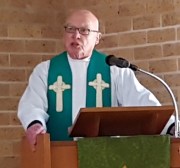
I want to use a quote from Winston Churchills speech to the English people on the defeat by the English 8th Army together with the Australians at Tobruk and Alamein of Rommel’s Afrika Korp. In 1942 he said,

“Now, this is not the end. It is not even the beginning of the end. But it is, perhaps, the end of the beginning.” Winston Churchill.

For Christians today, there is an end and a beginning, there is fulfilment, finality, end but also hope. Fulfillment and Hope would be another way of expressing what today is in the Christian understanding of time. Our time, Our lifetime, the Lifetime of the world. This is the case since the Christian understanding of time is not based on the sun and the moon whereby in a rough manner, we understand time in terms of years and months. But the church understands time in terms of how God has and will act in his redeeming activity revealed in the incarnation of Jesus Christ, God’s eternal Word.

We understand time by the way we experience it as past present and future time. We indeed measure it by clocks and watches. This kind of time the Bible calls chronos, what Shakespeare described as “Tomorrow, and tomorrow, and tomorrow, Creeps in this petty pace from day to day, To the last syllable of recorded time”; on the other hand, the Bible has a name for the time which we celebrate today at the end and the beginning of the church year. It is called Kairos, that is time understood in terms of a purpose not as Shakespeare described our time, “a tale Told by an idiot, full of sound and fury, Signifying nothing.” (Macbeth spoken by Macbeth)

Today’s lesson from the Holy Gospel of St John speaks of Jesus role in the coming judgment of Christians and the world. They are cryptic words. Words which do not have an evident meaning in terms of how the world viewed and understands the One who speaks them, Jesus of Nazareth. He is on his way to the cross and in the next chapter of the gospel he indicates that only those who eat the bread of life, his body and blood, have eternal life.

Here Jesus cryptic words refer to his role in the coming cosmic judgment of the world. And what a contrast they express! The carpenter’s son from Nazareth with a band of semi illiterate disciples identifies Himself as the One who judges the world. That his being and presence in the world has this kind of cosmic significance.

What has this to do with where we find ourselves today at the end and the beginning of the Christian Year? Fulfilment and Hope, that is what it is about. An end and a beginning which must be understood from its pivotal point in the person of Jesus Christ. He it is who determines how our time and the time of world is understood. We come today to the end of time as measured by our experience of time as a fleeting past and present and an unknown future. But we come today and look toward a future time measured not by our experience but by Him who, having identified himself with us in his humiliating journey to the cross, now determines our time as a future with hope because of who He is and what he has done. For Jesus as judge receives His power as the humiliated and crucified One from God the Father. The way he is going, the course of his life, his time, is not a random series of haphazard events without meaning and purpose.  According to Jesus words in St John He receives His authority from the Father as the Judge of the world. We know from St John in chapter one that this same Jesus is the co-eternal Word of God who was with God in the beginning and is the One through whom the world came into existence and that He is one with the Father: as the Nicene Creed puts it, He is “of one being (homoousios)with the Father.” That He receives authority as judge means that it is as the humiliated and crucified One, the One who become incarnate for our sakes. Became one with us to establish our righteousness through His self-emptying journey to the cross. He receives this authority not for His own sake but for ours. That he may be one with and represent us to the Father.

“For as the Father has life in Himself, so he has granted the Son to have life in himself, and has given him authority to execute judgement because he is the Son of Man.” John 5:26

Jesus, as the Son of God, is ever one with the Father and does not need to have life given to Him. He with the Spirit are ever one with the Father. But here Jesus says his capacity to have life in himself is a gift from the Father. He thus speaks as the One who has condescended to make himself one with us; who do not have life in themselves. He speaks as the one who will glorify the Father in His obedience unto death. He speaks as the one who is vindicated by the Father for our sakes, as He is raised from the dead. His being given the gift of having life in Himself is therefore to be understood as a gift He receives NOT for Himself, but on our behalf as the One who represents us in our alienation from God.

As this One He lives and rules the church and the world. According to his words his presence now in His word and sacrament is how the world under the thraldom of sin and death is judged.

” The hour is coming, and NOW is when the dead will hear the voice of the Son of Man and those who hear will live.” John 5:25

The presently active judgment of God of which Jesus speaks happens through His word. His word is the medium that now calls into being, actively creates the condition, whereby the cosmos, the world, is judged. The word of Jesus defines reality; Jesus word of promise changes the status of the world. Not simply as we perceive it and understand it; the power of Jesus word as that of the living crucified One is that which establishes the truth of our life before God, despite who we may think we are. It creates out of nothing a life of righteousness in the place of our sin, eternal life in the place of death. “The dead will hear the voice of the Son of Man and those who hear will live”. This judgment takes place despite appearances to the contrary, even though our experience of ourselves and the world contradicts it. This redefinition of reality by the word of Jesus is the foundation of our present hope, it alone sustains the church in its journey towards His final appearing.

Precisely the same paradox in respect of our time and the reality of our life of righteousness in Christ compared with how we experience ourselves and our time of sin and death, this very same paradox created by the presence of Jesus Christ, the living Word of God in the world, applies to the church and its relationship with the world.

Today, as we have just indicated, is an end and a beginning, fulfillment and hope, the end of the Church Year and the Beginning of a New Time when we look towards the Advent, the coming of Christ the Judge, who defines our time as past and future by the gift of His righteousness and the final destruction of sin and death. This is also true of the Church.

Fulfillment and hope are also how we understand the church and its life in the world. For like individual Christians and their pathetically feeble witness to Christ and His glory, compared with the promise of Christ’s Word that they know sustains them in righteousness before God. With the church it is no different.

What significance does the existence of the church really have in the tumultuous life of the city or it’s industry? What significance does the modest Sunday Service or Mass have

compared with what humanity usually sets up and deifies as the meaning of Sunday? What is the actual result of the church’s activity? Compared with the great or little achievements in other spheres of human activity, the discoveries of science and the inventions of technology, what is really accomplished in a visible and tangible form that can concretely demonstrated and of enough importance to be described in a meaningful way in the press?

What human beings do may be great or small but at least it is done in the light of day. What the church does in the world in all its uniqueness and cosmic importance never appears. It is hidden. This is the weakness of the church when compared with other human enterprises.

Yet in the weakness of its efforts and achievements there is concealed the active strength of the church. The church need not be ashamed of its weakness. In fact, it must seriously renounce all attempts to give itself the appearance of strength. It must see that its honour consists in the fact that its being unimpressive and unsuccessful is because it is in the company of Jesus Christ. It can therefore know its hidden but very real power. For the strength of the Christian community consists in the fact that in all its obvious weakness it is not concerned plainly and noticeably with the most important matters of the day, but with the matter which whether known or unknown by the wider community is determinative for all people. It is concerned with the decision taken in Jesus Christ in favour for all people: for their deliverance from sin and death, that they are free and not slaves, that they may live and not die. This decision and its coming revelation is that which holds the world together, whether the world realises it or not. If the world concerns itself with the periphery of things, the church concerns itself with the centre of all things that relate to human existence.

What other work, or accomplishment in politics and art, industry and technology, can be done with the unlimited confidence that the church has as it looks to the revelation of this decision of God in Jesus Christ. No other human work or activity has this strength concealed in its weakness. All other human work is done under the pressure of consequences, of success. The Church is free from this pressure because it may know and trust, can praise and confess the One who is the Coming judge of all things. This is the confidence, the strength, the hope that this word of God gives to us today.

“Truly, truly I say to you, he who hears my word and believes him who sent me, has eternal life; he does not come into judgment, but has passed from death to life.” John 5:24.

Pastor Dr. Gordon Watson
26th Sunday after Pentecost 18th November

Text: Mark 13:1,2
As Jesus was leaving the Temple, one of his disciples said, “Look, Teacher! What wonderful stones and buildings!” Jesus answered, “You see these great buildings? Not a single stone here will be left in its place; every one of them will be thrown down.

Have you ever walked around a cemetery looking at the graves and reading the details about the lives of those buried there? 20180311_103505 (1) I’ve walked around some very old cemeteries in Europe and read the epitaphs and tried to work out something about the people who were buried there and the time they lived in.  In some places there are many graves of small children and we guessed that some kind of contagious illness had claimed their lives.  In some places we saw the graves of men, women and children who had been caught up in war and we read with sadness the details on their tombstones.

Gravestones can tell you a good deal about a person.
A headstone in Kent, England, reads,
Grim death took me
without any warning.
I was well at night,
and dead in the morning
.

On a headstone in a churchyard in Cornwall, England,
Here lies the body of Joan Carthew,
born at St Columb; died at St Cue;
children she had five,
three dead and two alive;
those that are dead choosing rather
to die with their mother than live with their father.

Toward the end of the nineteenth century, Swedish chemist Alfred Nobel awoke one morning to read his own obituary in the local newspaper.  It read, “Alfred Nobel, the inventor of dynamite, who died yesterday, devised a way for more people to be killed in a war than ever before.  He died a very rich man.”

Actually, it was a mistake – it was Alfred’s older brother who had died.  But reading his own obituary had a profound effect on Alfred.  He decided he wanted to be known for something other than developing the means to kill people efficiently and for amassing a fortune in the process.  So he initiated the Nobel Peace Prize, the award for those who foster peace.

Nobel said, “Every person ought to have the chance to correct his epitaph in midstream and write a new one.”

At this time of the year the Church’s calendar is almost at an end and soon we will start a new year as we begin our preparations for the coming of Jesus at Christmas. With the end of the year also comes talk of the end of everything.  As we heard in the readings today there is an emphasis on the fact that there is a time limit on everything on this planet, including ourselves.

As one gravestone says,
Here Lies Joyce
she’d rather not
but has no choice.

So maybe it’s good to do what Alfred Nobel did – “to correct our epitaph and write a new one.”

If you died today, what would your family write about you in your obituary?
What would they honestly say about you as a person?  What memories would they have of the things you have done and said for them?
What moments would they recall where you have touched them at a point of need or rejoiced with them as you celebrated one of life’s victories with them?
What would they say about your Christian faith – your role in the church – the way you demonstrated your faith in your relationships, the way you passed on your faith and love to the next generation and to others?
After the funeral what would your friends say about you over a cuppa and a piece of cake?
How will your family, neighbours and your work mates remember you?

An obituary is a brief story of a person’s life whereas a eulogy is a statement that praises a person for all the good things he/she has done and ignores everything else.  In the church we prefer to use the term obituary because we recognise that life is full of ups and downs and the way we respond to those hills and valleys and challenges will vary.  We don’t always get it right.  We don’t always treat the people around us fairly and kindly.  Life is not just about being successful and being always happy.

One of the things we can get so wrong is how reckless we are with the people we love.  We get preoccupied and caught up in so many things. There’s not enough time in the day to do the things that we want to get done.  Unfortunately the victims of our busy-ness are the people we are the closest to – or at least are supposed to be the closest to.  We keep saying to ourselves, “I know I’ve pushed you to the side, but there’s always tomorrow and I’ll do better then”.  But will there always be another tomorrow to appreciate the beautiful things of today.

The disciples were admiring the magnificent beauty of the Temple in Jerusalem a true masterpiece of craftsmanship but as huge and magnificent and permanent the Temple might have seemed Jesus states that even this holy place of worship will come to an end.  And it did. The Romans completely destroyed the temple.  The reality is that there is not a never-ending supply of tomorrows.

We don’t know when we will take our last breath.  It may happen suddenly, giving us no time to make up for the important things that we have left undone for so long, and the relationships that we have ignored.

Jesus tells the story of the Rich Man who had a beggar living on his footpath – Lazarus was his name.  The Rich Man died and went to hell.  Suddenly he realised his mistake – Lazarus was his neighbour but he had been too caught up in making money and throwing big parties for his cronies.  Now it was too late.

As we focus on the reality that there will be a time when time will end – either at the end of the world or at the moment of our death – it’s good to stop and examine where our lives are heading.
Reassess what’s been happening in our relationship with the people in our families.  Ask the question – have I shown as much love and care to them as I would like?
Have I spent time with them – listening to them – learning about their joys and sorrows – encouraging them?
Reassess what’s been happening with your friends and the people at work.  Have I given them some of my time?  Have I been too busy and too uninterested in what’s happening in their lives?

Reassess where you are at this moment in your relationship with God?
Do I trust God?  Do I have a real sense of peace knowing that God is ready to help me, guide me, and support me?
Is my faith something in my head or is it something that really affects everything that I do in my daily life –
the way I interact with people,
the way I speak to them,
the way I speak about them to others,
the way I focus on God and his love for me?
Can I forgive those who have deeply wronged me?  Am I willing to reach out to them rather than wait for them to come to me?
Can I forgive myself for the wrongs of the past because I know that God has forgiven me?  Can I learn to not be so hard on myself and live in the grace and peace that comes from God?
How well am I caring for my relationship with God through reading his Word and prayer, attending worship and Holy Communion?

Has my leisure time or work taken control of my life?  God wants us to get out there and enjoy sport, be good at our work, have fun enjoying God’s creation.  He has given us all these to make the most of; but he doesn’t want these to take control of our lives – to disrupt our relationship with the people in our lives and especially to put at risk our relationship with God.

I’m not telling you anything new when I say that when you die, we stand naked before the judgement throne of God.  At that moment all that will count is – not your job, not your money, not your status or fame, not your successes, not even your piety – all that will count is that Jesus has died for you.  If it wasn’t for Jesus your sin would condemn you.  Trusting him is the only way to life eternal and eternal peace and joy.

What is the greatest comfort that you can give your family when it comes the time for you to leave this life?  Their ultimate consolation is to know that Jesus is your saviour.  The greatest comfort you can give your family is the assurance that you are in heaven where there is none of the troubles of this life.  You are there ready to welcome them when that day comes for them to die.

I would hope that the inscription on your headstone would be better than the one on an auctioneer’s grave, which simply read.  “Going!!  Going!!  Gone!!”
I would hope that your obituary would tell how
you trusted God;
fixed your eyes on Jesus when the going got tough;
knew that Jesus has forgiven you making it possible for you to go to heaven,
confessed boldly, “Jesus is my Lord and Saviour”
knew how to divide work time and leisure time, making sure there was time for worship and prayer.
I would hope that those attending your funeral would be able to reflect on how you cared for them,
encouraged them,
showed them Jesus,
prayed for them,
enjoyed life with them,
and worked honestly alongside of them.

I would hope that when it came to that day, your funeral would be a celebration of your entrance into eternal life.  I would hope that those who gather on that day would experience an inner peace and joy knowing that Jesus died for you and that you trusted in him for forgiveness and eternal life.  That will be of special comfort to those who are feeling empty and alone because of your departure.

That day when Jesus was leaving the temple with his disciples, he gave them a lesson on how temporary things in this life really are as he spoke of the almost unthinkable – the destruction of that magnificent building.  Our place in this world is even more temporary than the things we build.  However, there is a permanent home waiting for us in heaven. Jesus says to all who trust and believe in him, “There are any rooms in my Father’s house.  I have gone to prepare a place for you so that you can be where I am”.

© Pastor Vince Gerhardy

25th Sunday after Pentecost 11th November

The Widows Mite, More Than It Appears To Be

Text: Mark 12:38-44

Proposition: Pride and humility are revealed in our actions and they declare our belief in who we think is supreme and best able to care for us. bob                    

Introduction: It had been about three days since Jesus made the triumphal entry into Jerusalem, which means it was three days away from the time of His arrest, humiliation and death. One of the last lessons of faith that Jesus gives to the people is the caution to avoid the pitfalls of pride, especially in worship, leadership and stewardship. It’s a caution to value the things that God values, to not be fooled by outer appearances, to neither over estimate the proud nor under estimate the humble. There’s a story told about how a delegation called on Theodore Roosevelt at his home in Oyster Bay, Long Island. The President met them with his coat off and his sleeves rolled up. “Ah, gentlemen,” he said, “come down to the barn and we will talk while I do some work.” At the barn, Roosevelt picked up a pitchfork and looked around for the hay. Then he called out, “John, where’s all the hay?” “Sorry, sir,” John called down from the hayloft. “I ain’t had time to toss it back down again after you pitched it up while the Iowa folks were here.” In politics, sports, entertainment and even the church, appearances can be deceiving. As Mark records what Jesus did in those last days, what occurs is a contrast between the worthless actions of the proud and the extravagance of humility. It was a lesson that the apostle Peter never forgot, perhaps as he told the account of these days to young Mark what Peter remembered was how he had fallen in pride and been restored through humility. Turn with me to Mark 12: 38-44.                                                                                                                                             

  1. Recognize The Source Of Pride.                                                                           

Pride is often known by its desire for greatness, that’s how Jesus begins to describe it. The long robes, the formal greetings in the market places, the special seats at the feasts, all these point to how pride is a desire to ascend to the highest place. We recognize pride in the way that it exalts itself, the way it calls others to, “Look at me, look at what I’m doing, aren’t I great!”. Maybe you recognize these as words that children have often called out to their parents as they rode their bike for the first time or climbed the tree in the backyard. When they say this it’s cute, it has a feeling of accomplishment and pride seems to be a good thing, a natural influence in our lives that draws us to take risks and to stretch our capabilities. Does pride somehow start out good and then somewhere along the way turn bad? Is it like a cute little Tiger cub that one day grows up to be a man-eater? 1 John 2:16 says, “For all that is in the world, the lust of the flesh, and the lust of the eyes, and the pride of life, is not of the Father, but is of the world.” It seems that no matter where you look in Scripture the term pride isn’t referred to in a positive way. Consider these thoughts from the book of Proverbs:      Proverbs 11:2 “When pride comes, then comes shame; but with the humble is wisdom.” Proverbs 13:10, “By pride comes nothing but strife, but with the well-advised is wisdom.”                                                                                                               

Shame, strife… the Scripture states that these have their origins in pride, no matter the age or stage of life. As pride seeks to elevate self it will either seek to gain the approval of some or seek to diminish those who oppose it. Perhaps one of the most insidious appearances of pride is when it cloaks itself as humility. Jesus refers to the pretense of the Scribes as they make long prayers. He speaks about the way their piety is used to for dishonest gain in consuming the widows’ house. The face and the posture and the words seem humble but at the heart of it all is pride. But pride is not just action or attitude, it comes from a deeper place. Charles Spurgeon tells a story about a wise man who comes upon a shepherd boy taking care of his flock. The water that the sheep have to drink from in the creek is so muddy that it is undrinkable. So the shepherd boy is taking out jugs of water, letting it sit and then carefully pouring the clear water out to the flock. The wise man sees this and observes that it’s going to take all day to water just half the flock. He suggests to the shepherd boy that they walk upstream to see what makes the creek so muddy. As they come over a rise they see this pond out of which the creek flows and it has all kinds of wild animals and birds walking about its edges. The pond is fed by an underground spring and the spring water is pure yet all these wild animals and birds are stirring up the mud and the creek becomes undrinkable. If they will chase these away and then guard the pond then the shepherd no longer needs to work so hard at straining out the muddy water. The point is that pride issues from the heart and we can work at changing our behavior till the day is done and it still won’t fix the problem. You need to go to the source, clear out that which pollutes it and then guard it from other intruders. How do you do that? Proverbs 8:13, “All who fear the LORD will hate evil. That is why I hate pride, arrogance, corruption, and perverted speech.” Know the truth of Proverbs 29:23, “A man’s pride shall bring him low: but honor shall uphold the humble in spirit.” In contrast to the pride of the Scribes comes the humility of the widow as she brings her offering to the Temple.

  1. Know the Strength of Humility.                                                                                

I think it could be a little unnerving to have Jesus sitting there by the offering plate as it were, watching what each person drops into it. We would likely think that this was inappropriate if it happened today. Yet there Jesus is, I’m thinking that He was there because that’s where the Father asked Him to be, that’s where this event was about to unfold, a literal event and even a prophetic event. On the surface this looks more like a story about generosity than humility, an extravagant generosity that draws the eyes of the Savior. It’s what Jesus says next that moves this to the realm of humility, “…she out of her poverty put in all that she had, her whole livelihood.” So two ideas immediately present themselves:

  1. When it comes to giving to the Lord it’s not the amount that is of primary importance but rather the heart attitude of sacrifice that the amount represents.
  2. When giving to the Lord it’s not about duty so much as it’s about dependence. When you think that she gave her whole livelihood that sounds irrational, what will she live upon tomorrow? The widow’s answer would be that God has promised to provide for her. This is where the focus shifts from lessons on giving to lessons on humility. It’s why Jesus calls the disciples to Himself, the lesson of humility is one which they will dearly need as they face isolation and the formidable forces of resistance of both Herod and Satan. Charles Spurgeon said that, “It is not humility to underrate yourself, humility is to think of yourself, if you can, as God thinks of you.” The widow in Israel was one who was to be protected, Psalm 68:5 says that God is a Father to the fatherless and a judge of the widows. Deut.10:18, Prov.15:25, Psalm 146:9, Jer.7:6, Isa. 1:17…all these verses speak about God’s concern for the widow and the fatherless. The care of widows was meant to be a spiritual barometer for the nation of Israel, that this widow had but two mites to drop into the offering spoke very poorly of the spiritual health of the nation. It is no small coincidence that this story is immediately followed by the prophecy of the destruction of the Temple. The widow knew the word of God, she had placed her hopes upon its promises and upon the Lord Who stood behind this Word. Her humility was a confidence properly placed, she had no hope in herself. All this is what Israel ought to have done. Humility begins in the heart, the same place that pride has its origin. It is from the heart that God calls us to follow after His will and design for us. Consider Isaiah 57:15, “For thus says the high and lofty One who inhabits eternity, whose name is Holy: “I dwell in the high and holy place, and also with him who is of a contrite and humble spirit, to revive the spirit cof the humble, and to revive the heart of the contrite.” If humility is to think of yourself as God thinks of you, then humility is a pursuit of the truth of who we are. Humility in that sense is what marks the character of Jesus, He knows the truth of who He is. It is that same right assessment of identity that Jesus calls us to, it’s why He revives the spirit of the humble that they would walk truthfully before Him. The contrite heart is a repentant heart one that changes from pride to humble agreement with God. The widows’ heart was humble, the circumstances of livelihood were there and it was a concern, yet she declared her even more real trust and dependence in God. In the Bible there are 49 verses referring to Pride, 25 referring to the humble and 833 that speak about the heart. Guard your hearts! “The humble shall see this and be glad; And you who seek God, your hearts shall live.
    Read by Bob Raywood


24th Sunday after Pentecost 4th November

Text: Revelation 7:13-14
One of the elders asked me, “Who are these people dressed in white robes, and where do they come from?” “I don’t know, sir. You do,” I answered.
He said to me, “These are the people who have come safely through the terrible persecution. They have washed their robes and made them white with the blood of the Lamb.

You – a saint?

Are you a “saint”? Do you write the word “saint” in front of your name when you sign things? Do you introduce yourself saying “Hello, I’m Saint …?” 20180311_103505 (1)Most of us would think that it would be far too presumptuous on our part to call ourselves a saint. We know just how unsaintly we are.
When we think of a saint we think of the heavy weights of all saintsChristianity A saint is someone like Mother Theresa – you go and live in a third world country somewhere and dedicate your life to helping others – that’s a saint.
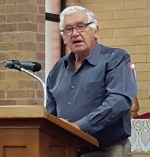
The Apostle Peter or the Apostle Paul – those guys are saints – the real good people. These are the champions of Christianity – they are shining examples to the world of what it means to be a Christian.

But me – a saint? No way. I’m definitely not a saint.”

Let’s say that we have a committee here at church, called the “Saint Committee.” And their job is to determine if you should be called a “saint” or not. And so this committee goes into your house while you’re not home, and sets up hidden cameras. They set up microphones all over your house. They set up surveillance equipment at your work. They bug your phone so that they can listen to your conversations. They follow you around, take pictures of you, and take notes on everything you say and do.

Then, after gathering all this information, they meet as a committee, and the chairman says, “Well, what have you learnt about so-and-so? Is this person a saint?” What do you think they would say, after observing the lives of any of us closely?
“He’s no saint,” one of them might say. “I’ve listened to his conversation. I’ve watched what he does. He’s no saint! Without a doubt he’s a sinner!”

Do you think that’s what the committee would say about you?

It is true, that we are sinners, and we have more than earned that title in our lives. If our all of our conversations were taped, and we were watched every day, we would be embarrassed by what other people would see in our lives.

We know that God knows everything about us – what we say and what we think and what we do? That thought is so embarrassing. There’s no way God could think otherwise – we are no saints; we are sinners.

Everyone is sinful, and even the so-called “good” people have skeletons in their closet. No one deserves to be called a saint.

And yet, the strange thing is, God does call us to be saints! The word “saint” appears in the Bible over 60 times, and every single time it is used, it refers to those who are Christians but interestingly not necessarily those whom we think of themselves as good and holy. In his letter to the Romans, Paul says, “To all in Rome who are loved by God and called to be saints.”

He begins his letters to the Corinthians in the same way and we know all too well that the church in Corinth had so many issues to deal with. They could hardly be called a model Christians. The congregation was divided according to their favourite pastor, there was sexual immorality, drunkenness at church gatherings, claims of superiority over others because some claimed to have greater and more important gifts from the Holy Spirit, there were even lawsuits between members of the church. And yet in spite of all this Paul’s opening words, “To the church of God in Corinth, to those … called to be saints”.

If the Apostle Paul wrote a letter to this church, he would write, “To all in Caboolture who are loved by God and called to be saints.”

It’s good to remember this because we can be so hard on the church and the people who make up the church. Many people drop out of the church because all they can see are sinners in a congregation – people with all kinds of hang-ups, different and difficult personalities, people with any number of pet sins they find hard to kick, people who seem to specialise on stepping on other people’s toes. If that’s all that God could see when he looks at us, he would have every right to drop us like a hot potato. He knows all about our sin but he doesn’t give up on us.

So why does Paul use the word “saint” so freely when addressing even the most perverted Christians? How does a person become a saint in the eyes of God?

The answer is found in one of our Scripture lessons for this morning – the reading from the Book of Revelation, chapter 7. There you have a picture of the saints in heaven gathered around the throne of God.

Verse 9 – there is a huge crowd – so big no one could count them. They were from every nation on earth, wearing white robes and holding palm branches, praising God in heaven with all the angels.

Verse 13 – someone asks, “These people in white robes – who are they and where did they come from?”

And then verse 14 is the key verse, “These are the people … who washed their robes and made them white with the blood of the Lamb”.

That’s the secret of how a person becomes a saint – by washing their robes and making them white in the blood of the Lamb.

“Your robe” is your life. The Bible sometimes talks about our robes – our clothes – as covered in dirt – the dirt of every sinful thought, word and action. They are so filthy that no amount a Sard Oxy Action Plus or Omo would get rid of the stain of sin. There is only way your robe of life can be made white as snow and that is in the blood of the Lamb, Jesus Christ.

At the beginning of our service, we confessed all of our sins to God. And after confessing our sins, what happened? We again received the assurance that our sins have been forgiven. And it wasn’t some warm fuzzy statement about how God is nice and loves everybody and doesn’t really take sin seriously. No, the forgiveness of sins you received was a special kind of forgiveness. The forgiveness God gives is very costly. The high cost was the life of God’s Son given for us on the cross.

The Bible says, “The blood of Jesus, his Son, purifies us from all sin” (I John 1:7). We believed this; we put our faith in it. In the eyes of God, we are saints. Sure, we will always be sinners while we walk this earth, but as far as God is concerned we are also saints – people who have been cleansed of all sin through the blood of Jesus.

You see, a “saint” is someone who realizes that he/she is a sinner, repents of that sin and believes that the blood of Jesus Christ takes away all of our sins.

In our baptism God cleansed us for our sin by connecting us to the blood of his Son.

When we receive Holy Communion we eat and drink the very body and blood of our Lord and Saviour, Jesus Christ, given and shed for you, for the forgiveness of your sins. At that moment, you are washing your robe in the blood of the Lamb. You and I are “saints” in the eyes of God. It’s not because we have done something so good that somehow makes up for all the bad we do. Quite the opposite Jesus has done something good for us by giving his life for us on the cross.

Maybe there are some people here who aren’t yet convinced that God can accept sinners, especially if you are feeling guilty over something you feel is unforgiveable. Be certain about this – through Jesus’ life, death and resurrection and the holiness that Jesus achieved for you on the cross, he is calling you to have faith in what he has done for you – that the blood of Jesus Christ has cleansed you of all of your sins.

It follows then that since God has made us saints that we should endeavour to live like saints. It’s a tough call but saints strive to show love, forgiveness, compassion and understanding in every relationship and every circumstance. That’s the challenge that God throws out to us. You have been called to be saints and so strive to be who you are.

We know how often we fail to live up to our calling. Without hesitation we say, “Well, I’m a sinner – that’s no secret to anyone who knows me. But I’m also a saint because Christ has taken my sins away. I’m a saint because of Jesus.”

© Pastor Vince Gerhardy

Reformation Sunday, 28th October 2018

“Sermon for the 52nd anniversary of the LCA”
Reformation Sunday, 28th October 2018Martin Luther
Rev. John Henderson, Bishop, Lutheran Church of Australia
(Edited slightly by Pastor André Meyer, for clarity)
Text: 1 Peter 2:4-10.
Pray: Father, thank you for this time that we may hear your Word through our

Bishop. Open our hearts by your Holy Spirit, and grow us in faith together for Christ’s sake, Amen.dhuff

Dear friends, what extraordinary things Saint Peter says about Christians! ‘… you are a chosen race, a royal priesthood, a holy nation, God’s own people…’ But doesn’t that sound a little ‘over the top’?
Before we get any fancy ideas, however, let’s think about the audience to whom those words were first written. Peter the apostle wrote to small churches scattered around the western end of the Roman Empire around the time of the emperor Nero (who hated Christians). These were marginalised groups in social and religious isolation. Peter calls them ‘exiles.’ He wrote to tell them that no matter how isolated or alone they might feel, they still belonged to Christ, they were still part His Body, the church, and that they should be confident in living out their faith.
During those early days, it was important for Christians to stay together. Personal
contact and continuity of teaching were critical to the survival of the church. 1 Peter, then, emphasises unity in Christ and the gospel, and the shared life and discipline that exists in the church. God chooses the church. As Christians, we can live the faith confidently, because we are God’s own people.
Those were the early days. The whole church on earth was younger than the Lutheran Church of Australia is today. But there was no New Testament. They were still sorting out how Jewish and Gentile Christians could co-exist despite centuries of division. They had no confessional writings to help them unpack the truth of the faith. They had the Hebrew Scriptures, the lived experience of the risen Jesus, they had letters like 1 Peter, and the gift of faith through the power of the Holy Spirit. Although at that time, the first generation, those who had met Jesus in the flesh,were dying – though rarely by natural means. Many, even most, died as martyrs for the faith.
And that’s how it is. The Christian church has been through many tough times. Yet
Christians have endured. Faith and the church have always been God’s work, not ours, right from the beginning.
On this 52nd anniversary of the Lutheran Church of Australia, this helps us put things into perspective. Like the early Christians, it’s not our size, our institutions, our organisational prowess, our wealth, or our position in society that are most important. Christian unity and faithfulness in confession and life – these matter most. We depend 100% on the gospel of Jesus Christ. It is a gift, which we receive by faith, against the odds. It is never our work; it is not our church. It’s always God’s work, His church. It all hinges on that reality.
When Lutheran Christians first came to Australia in the 19th Century, they came for a number of reasons. In the 1830’s, a major ‘push’ factor was a church union forced on them by the Prussian king. For a short period, the Lutheran faith became illegal, so they looked for somewhere else to live and worship. Those early settlers were united in their stance against the king’s new law, but they were not so united on how to teach and practice the faith in their new land. Inevitably, then, there were divisions which caused a great deal of sadness. Those divisions afflicted the health of Australian Lutherans for the next 120 years, all through the next waves of migration and settlement.
Over the years, however, an amazing thing happened… the people of the church
continued to plead and pray for its unity. And, occasionally, unity would ‘break out.’
They could agree happily, for instance, on sending missionaries to Central Australia, and what an amazingly positive impact that had, and still has. Local congregations cooperated. But sadly, the leaders still argued, so divisions continued. Eventually, the plea for unity overcame the scandal of division. When the Evangelical Lutheran Church and the United Evangelical Lutheran Church declared altar and pulpit fellowship in 1965, it sealed the pathway to full union. Symbolically, on Reformation Day 1966, the divided Synods ceased to be, and a united Lutheran Church, one synod, was born. That’s why we are celebrating today!
The concept of one church spanning two countries, Australia and New Zealand, is quite rare in global Lutheranism. In North and South America, in Africa, and in much of Asia, there are multiple Lutheran bodies. In 1966, sadly, a handful of our pastors and congregations did not join the new church, but, the vast majority chose a common life as one body in Christ. And today, we still believe that what unites us – God’s call to a shared faith and witness in Christ – is so much greater than what could divide us. And so, when we don’t agree on something, we turn again, as our ancestors did, to the Word of God and our Confessions. We seek to work it out together, because we are committed to one another in Christ.
For 52 years, we have repeatedly shown our commitment to each other. We have asked our theologians, our pastors, our Synods, and our lay-people to carefully work through issues, sometimes more than once. And as we do it, we have deliberately chosen to stay together and to pray together. We choose to give each other time, space, and grace. We treat each other with compassion and respect.
For decades now, as we well know, one of the issues we have confronted is the
ordination of men and women. It is still a sensitive matter. It is testing us as a united synod. Another test for us is ‘Renewal.’ How does the Holy Spirit work among God’s people? What does that look like? How do we understand baptism, faith, and spiritual gifts? As we explore these important questions, we will do what we have always done.
We will go back to Scripture, re-read the Confessions, pray, talk and worship together, and we will sort things out. That’s just what we do. It’s just who we are.
Unity of faith and witness is not just important for us, but it’s important for the world.
In this present age, materialism and spiritual apathy are widespread. Many people are also hostile to faith and the church. The church is not trusted as it once was, sometimes for very good reason. So today, Christians must work together to address these realities, because we are a message of hope for society in a time when many people, despite their affluence, live in despair and meaninglessness.
Whatever difficulties we confront today Saint Peter brings us back to basics. Let’s
remind ourselves of what those basics are:
 Firstly, belonging to the family of faith does not depend on where you live,
what you have (possessions), or who you are. God elects you. God says ‘yes’ to
you because of Jesus. God makes you holy. He sets you apart as His people. God
says ‘yes’ to you; ‘yes’ to us. (1 Peter 2:9a)
 Secondly, it means we can tell the world about the great things God has done
for us. That God’s plan for His church. The world needs Jesus, and He asks us to
introduce Jesus to others. We are to tell the world the message of how we have
been called out of darkness and into His marvellous light. God’s ‘yes’ to us,
means that we can now say ‘yes’ to others. (1 Peter 2:9b)
These are Peter’s basics. Once we were nobodies, but now we are God’s people. We are somebody’s! Once we were under the law, but now we are under the gospel. It’s true, God really has had mercy on us. (1 Peter 2:10)
The Bible is crystal clear that the work of salvation, of becoming and remaining God’s people, is God’s work. The Lutheran Confessions back that up. Justification and faith are pure grace. That’s why the Lutherans were so radical during the Reformation era 500 years ago. Many people in the church at that time had forgotten this basic truth. It’s still easy for us to forget it today. That’s why we are a confessional church. That’s why we hold to God’s Word – so that we will not forget. Every day we learn to live in the free grace, love, and mercy of God. Every day the grace of baptism turns us away from sin, and God teaches us once more what it means to trust Him.
We are here today because millennia of Christians have passed this faith on to us.
Through good times and bad, times of ease and times of hardship, times of growth and times of persecution, times of wealth and times of poverty, times of certainty and times of doubt, and even times of genocide or apostasy, the Church has endured, Christians have endured. Against all the odds, the faith continues to be proclaimed. The church of Jesus Christ endures, and you and I, are part of it. Our witness today includes all who have gone before us, and all who will follow us – because we pass on the message of Christ to them.
And like them, that great cloud of witnesses, we have the immense privilege and task of telling the world today about the mighty acts of our God. At 50 years old, the LCA is in its early days. We have so much growing, so much living, and so much witnessing still to do. We have barely begun. Jesus is alive. We are resurrected in Him. We have the Holy Spirit. We are rich in everything we need. God has called us, set us apart, and made us His people. We are free to live in the promise of God, and to experience the new life of Christ. So yes, we are ready, ready for the work God has prepared for us to do. Let’s go on and do it confidently, sharing in Christ’s mission to the world. Let’s tell everyone how He has brought us out of darkness, and into His marvellous light. And let’s do it together, and let’s do it joyfully, in the name of our Lord and Saviour Jesus Christ. Amen.

Read by Derryl Huff

22nd Sunday after Pentecost 21st October

   Jesus said, “among you it should be different.  Whoever wants to be a leader among you must be your servant, and whoever wants to be first must be the slave of all. For even I, the Son of Man, came here not to be served but to serve others, and to give my life as a ransom for many.”

History tells us that when World War I broke out in Europe, davidthe Prime Minister of Australia offered the Australian Commonwealth to do all they could to back Great Britain. He asked what was the most useful thing Australia could do.  The reply came-“Build us ships: we need ships.” The Australians did not build ships.

Instead, they did what Australians do best.  They began to till the fields, sow seed, and reap harvests to send food to England. Grain was gathered, put into sacks, and brought down to the water’s edge to wait for the ships. But the ships never came.  And as the grain rotted on the docs Australia prepared to go to war. 

All the same, Great Britain cried out for, “Ships! ships! ships!”  With all due respect to our Commonwealth,  Australia only had to “obey the call.”

But it seems that ever since the rebellion of Adam and Eve, “obedience” has become less and less important in the minds of people.  And obedience is a lost art today. We see it all around us.  Kids don’t seem to obey their parents. Employees don’t like to listen to their bosses. Patients often won’t follow their doctors.  People even seem to struggle with simple obedience to the laws of our neighbourhoods.  

The word ‘obey’ is probably considered worse than most other four-letter words today. It seems that society associates obeying someone with slavery. However, in our Christian experience,  “obey” is far from a dirty word. It does not mean inferiority. It is something that God encourages.  And yet, of the 2340 references I found in the Bible to obedience, only about 10% of those are in the New Testament.  And even then, it is an invitation to follow Christ Jesus, and listen to our conscience, trained by the Holy Spirit, using the double edge sword of the Scriptures. 

In Christ Jesus, we have freedom.  Freedom to disagree with society and become obedient servants of our Saviour.  Freedom to care for our neighbour, our family, and our friends.  Recognising ‘political correctness’ as another failure to obey Christ Jesus.

For Christians, it is a blessing to hear the words of Jesus saying, ‘among you it should be different.’  And to discover the words of Hebrews,  ‘even though Jesus is God’s Son, he learned obedience from the things he suffered.’  When Jesus encourages us to take up our crosses and follow him, he is calling us to see every discouragement, every challenge, every suffering as an opportunity to be obedient servants.

So what does it mean to be an obedient servant?  When I look at the fruit of the Holy Spirit blossoming in our lives, I find the job description of an obedient servant.  Love, joy, peace, patience, kindness, goodness, faithfulness, gentleness, and self-control.

As Paul tells us in Romans, ‘We should help others do what is right and build them up in the Lord. For even Christ didn’t live to please himself.’ (Romans 15:2-3)

And also in Ephesians, ‘I therefore, a prisoner for the Lord, urge you to walk in a manner worthy of the calling to which you have been called, with all humility and gentleness, with patience, bearing with one another in love, eager to maintain the unity of the Spirit in the bond of peace.’ (Ephesians 4:1-3)

As we allow the Holy Spirit to dominate our attitudes toward God and toward each other, the servant-heart of obedience grows stronger in us every day. 
But we will never get it perfect.  We will still make mistakes along the way. We will find ourselves repenting over and over for our short-comings. 

As Martin Luther indicated, ‘The old Adam was drowned in our baptism, but “the old Adam is a mighty good swimmer,” and keeps popping up.’  That doesn’t mean that we should just give up.  That we should stop listening to our conscience.  But we should let our lives be the battlefield of our obedience to our Lord and Saviour.  So when we meet him, we will hear the words,  ‘good and faithful servant.’ 

After all, we have the armour of God to prepare us for the confrontation with our temptations and confusions.  And we have the valiant warrior of the Holy Spirit to guide us along the pathways of obedience.

We can hold onto the example of Job.  When he became the object of the devil’s wrath, he remained obedient to God.  When he became the object of ridicule of his friends and his wife, he remained obedient to God.  When he entered a dialogue with God asking “why”, he still remained obedient.  And God responded, “Where were you” when God created the universe and set his plan into motion.  In all his suffering, Job was reminded that we can never fully know God’s reasons or his plan.  But God has revealed enough to us in his precious Word, to allow us to keep faith in Jesus Christ, and remain obedient to God’s will for each of us.

We live every day, counted among the righteous, because of the gift of faith in our Lord Jesus Christ.    

Our Lord who has made the way for us to be counted among those with a right relationship with our Lord.   

Our Lord, Jesus Christ, has earned our honour our praise, and our obedience.   We have a purpose in living, and it isn’t just about us. Our Saviour calls us to the obedience of servant-hood as children of God, and Disciples of our Saviour.    Through Jesus we have real significance.  Through him we are sons and daughters of the creator of all.  Through Him we have the freedom to be servants.

We come here, in the very presence of the King of Creation, to be blessed by the High Priest, who offers us forgiveness and life eternal.  Jesus Christ himself.

He comes to us in the Word.  He comes to us in the Sacraments.  Here Jesus puts His own life and strength and Spirit in each of us.  Here the Great Servant King provides us with the strength that we need to be obedient servants.  The humility to give ourselves over to the power and authority of God.  The courage to let  the Holy Spirit grow us to be the best people we can be. 

It is in our response to Jesus Christ that we honour God in all the ways he reaches out to us.  As one example goes, ‘Sir Leonard J. Wood once visited the king of France and the king was so pleased with him he was invited for dinner the next day. 

Sir Leonard went to the palace.  But the king, meeting him in one of the halls, said, “Why Sir Leonard, I did not expect to see you. How is it you are here?”  The astonished guest responded with humility, “Did not your majesty invite me to dine with you?”

“Yes,” replied the king, “but you did not answer my invitation.”    Then it was that Sir Leonard Wood uttered one of the choicest sentences of his life. He replied, “A king’s invitation is never to be answered, but to be obeyed.” ’  (Emphasis, Vol. 24, No. 3, September-October 1994 (Lima, OH: CSS Publishing Co., Inc.), pp. 48-49)

As one of our beloved hymns says,

When we walk with the Lord,
In the Light of his word,
What a glory he sheds on our way!
While we do his good will,
He abides with us still,
And with all who will trust and obey.
Trust and obey, for there’s no other way,
to be happy in Jesus, But to trust and obey.

And it ends with the words:
Then in fellowship sweet, we will sit at his feet,
Or we’ll walk by his side in the way;
What he says, we will do; Where he sends we will go,
Never fear, only trust and obey.

The grace and peace of our Triune God keep our hearts and minds in Christ Jesus.  Amen

Rev. David Thompson

21st Sunday after Pentecost 14th October


Text: Hebrews 4:15-16 (CEV)
Jesus understands every weakness of ours, because he was tempted in every way that we are. But he did not sin!  So whenever we are in need, we should come bravely before the throne of our merciful God. There we will be treated with undeserved kindness, and we will find help.

God knows One of the complaints often heard about our politicians is that they lose touch with johnmacwhat is happening in the ‘real world’. What we mean is that the longer women and men spend in the elite “corridors of power” the more likely they are to lose an awareness of what it is like to be an ordinary citizen. The announcement that the Prime Minister will make a flying, rushed, two day visit to a rural area to become acquainted with the “grass roots,” is met with a good deal of cynicism. The same goes for the occasional visits of cabinet ministers to a factory floor or a steel mill. It might be a good PR photo opportunity for the politician but does little to acquaint the person with what is happening in the lives of ordinary people.

This sort of comment is made about the hierarchy of the church across all denominations as well. Maybe it’s part of what we call the “tall poppy syndrome” but there remains the perception that church bureaucracy regardless of the skills of the leaders can so easily lose touch with the hopes and fears of ordinary Christians.

Is it possible that the same kind of criticism can be levelled at God?
How can the God of the heavens be in touch with the ordinary lives of you and me?
How can God empathise with our little minds, with our fierce hopes and nagging anxieties?
Isn’t God too big, too far away, too almighty (if you like) to know and appreciate what it is that bothers us and fills our hearts with fear.

Many feel that way. They feel it, even though they may never be game to say it aloud. Some of the great people of the Bible, people like Job, the writers of the Psalms, and Elijah, have expressed how God seemed to be so distant and uninvolved in their problems. At one time we find Elijah escaping into the desert hunted by the soldiers of King Ahab and Queen Jezebel. He collapsed under a large tree exhausted and disillusioned, believing that God didn’t care or didn’t understand what was happening to him. He exclaimed, “I’ve had enough. I just want to die”.

Have you ever wondered why praying to Mary and the saints is so popular to so many Christians. One of the reasons is that such souls are able to understand what it’s like to be human, struggling in this unpredictable and often unjust world. Many of the saints lived in complicated and unfair circumstances and received what they didn’t deserve even though they lived godly lives. So it’s easy to unburden your heart to your favourite saint trusting them with your prayers because they know what it’s like to feel life’s injustices.

I believe at some time all of us experience the gulf between God and us and we shouldn’t just pass it off as a moment of doubt or weakness. Especially those moments in our lives when things happen that we don’t understand. There are certain events and circumstances that happen that don’t make any sense to us at all. They seem unfair, unreasonable, irrational, unkind and cruel. We can’t see any good in what is happening at all. It is just at this time that God and his love seem to be so distant.

We call to God. We want answers. We want to understand. We want things to change. But we don’t hear what we want to hear; we hear only a still small voice whispering to us as it did to Elijah assuring us that in spite of everything God has not abandoned us. That small voice of God might be a friend trying to reassure and comfort us but in the confusion of the moment that’s not the answer we are seeking.

Is it true that God doesn’t understand what we really want and need? Is he really out of touch?

How can God know what it’s like to be a teenager constantly confronted with drugs and alcohol and wild parties and raging desire?

Can God appreciate how it feels to be 48 years old and to lose your job where you have worked your guts out for years? And when you look for another job you’re regarded as “over the hill” because of your age and unemployable.

Or how can God comprehend what it’s like to keep up with our money centred culture?  What does God know about paying the bills, scrimping and saving to educate children, being confronted with the runaway cost of living?

Or how can God, who’s not had a day’s worry in all of eternity, know what it’s like to worry? What does God know about being anxious waiting for a doctor’s report, or waiting for a rebellious teenager to come home, or to worry about the future?

How can God truly be on the same wave length as us and know what it’s like to be a mere mortal with all that goes along with our mortality? It would seem most unlikely. Job complained about God’s lack of appreciation of his troubles saying, “I cannot find God anywhere in front or back of me, to my left or my right. God is always at work, though I never see him. … If I knew where to find God, I would go there and argue my case” (Job 23:8,9,2,3).

In the Jewish religion it was only the High Priest who could approach God on just one day of the year. There was this ongoing wall of separation between God and the people. God was considered unapproachable to the ordinary person.

Then something amazing happened.

God came from heaven to earth. He was born as you and I. His earthly name was Jesus, a commoner, and preached his Gospel throughout the province of Galilee. It was the ordinary everyday people who flocked to listen to him. He taught them about a loving God who was near at hand;
a God who treasured the name of each vineyard labourer or woman toiling in the home or child playing in the street;
a caring God who numbered the hairs on the head of even the lepers, prostitutes, and the unpatriotic tax collectors;
a loving God who was like a shepherd to his people, knowing each one personally, watching over them, protecting them, guiding them and always by their side.

Jesus brought a whole new perspective on how God views each one of us. Not only did Jesus teach them that there was no gap, his life embodied that teaching.  The Word became flesh. Slowly the disciples began to suspect that there was more to Jesus than met the eye. Slowly they came to see that Jesus was God and so they came to experience God in a totally new way. God was not remote. He was in the world in Christ and then in the world and in them personally in the Holy Spirit.

The gulf was bridged; bridged forever. And so we have this text today from Hebrews chapter 4
“Jesus understands every weakness of ours, because he was tempted in every way that we are. But he did not sin!  So whenever we are in need, we should come bravely before the throne of our merciful God. There we will be treated with undeserved kindness, and we will find help”. 

These are words of confidence. They tell us that through Christ Jesus, the gracious God is readily available to each one of us. These words tell us that God is not out of touch with what is happening right now in our lives but that he knows what it’s like to be in our shoes.

God knows from firsthand experience.  God is closely acquainted with the temptations of the teenager and of the middle aged and the elderly, with the pressures of work and opponents, acquainted with our health and our pain, our fears and our dearest hopes. He understands. He feels. He has compassion.

Paul said to the people of Athens, “God isn’t far from any of us, and he gives us the power to live, to move, and to be who we are” (Acts 17:27,28). Through Jesus we have direct fellowship with God, and through Jesus, God has direct understanding of what it means to endure the joys and hardships of life in this world. In short, our God understands.

He understands when we don’t understand and begin to question his wisdom. When we ask those questions that start with “why” or make statements that start “it’s not fair”, God knows and understands the pain that cause us to question his plans for us. He simply says,
“Trust my love for you. There are a lot of other uncertainties in this world but there is one thing that is an absolute certainty and that is my love for you and I will never do anything that will contradict that love. It might look as if I don’t care from your perspective but, from where I sit, I only want what is best. I can’t explain it any simpler than to say, ‘Trust my love for you’.

Even though Jesus has ascended to heaven and now sits on the throne of heaven in all his godly glory, he hasn’t forgotten what it’s like to be human. We are encouraged to trust God even in those times when we don’t understand what is happening in our lives.
When we are hurting;
when we are bewildered;
when we are physically, emotionally and spiritually drained and we have no reserves left,
we can be certain our heavenly Father knows exactly how we feel.

In fact, I would go so far as to say that Jesus suffers with us. We say that in baptism we are joined with Christ in his death and resurrection. I would contend that we are joined in such a way that when we weep, he weeps with us; when we cry out in pain, he cries out with us. He feels what we are feeling. Jesus understands us completely and so we are invited today to come confidently to God in prayer. Because he understands, we will find help.

The help he gives will come in a multitude of ways and we need to keep in mind that one of the ways that he helps us is to give us perfect healing – the perfect healing that is given when we leave this life and enter the new life in heaven and given a new body. That is the perfect healing we all long for and it’s the goal of our faith because there with Jesus there will no longer be confusion, doubt, anxiety, pain and all the other things that trouble us now.

Until that time, as we travel through this life, we can be certain that we have the loving arms of God around us. They are there even when we think they aren’t there because we have a God who is touched by our human weaknesses, who really knows what it is like to be you, or to be me.

© Pastor Vince Gerhardy

Read by John McLean

20th Sunday after Pentecost 7th October

St Mark 10: 17 – 31
There is a remarkable correspondence between the account in Genesis:2 from today’s lectionary reading and the issues raised by the conversation between Jesus and the rich man and the disciples regarding salvation or eternal life. In trying to understand this connection we also see the truth of Martin Luther’s words in his commentary on the Epistle to the Galatiansgordon

Therefore, whoever knows well how to distinguish the Gospel from the Law should give thanks to God and know that he is a real theologian (Luther LW Vol 26 p115.)

 What Luther is saying is that in one way or another we are all theologians, we all have views about ourselves, the world and God. But what distinguishes real theologians from fake theologians is their knowledge of the difference between God’s Law and God’s Gospel. This ability consists in the right use of both the Law and the Gospel. God’s Law confronts us with God’s commands. It constantly reminded us just how far we are from knowing and loving God. It tells us that in fact we hate God, we would rather be free of God’s commands and be the judges of what is good and evil for ourselves. How very post-modern is that!

The Gospel on the other hand is God’s Word of free forgiveness in Christ, the covering of our waywardness and hatred of God by God’s gift of Christ’s righteousness; whereby we are set free from being haters of God’s law to embracing his will for us and our neighbour, in which we express our thanks to God for His grace toward us in Christ. 

In the scriptures from Genesis to the Gospel of St Mark read today, we see how the difference and unity between the Law and the Gospel has a very drastic effect if they are not understood or rejected.

In the garden of Eden man (Adam/Adamah means ‘earth’ from which God created man) Adam is put amid a flourishing garden planted with all manner of edible fruits which are there for his benefit and sustenance. There is however one important proviso or exception. He must not eat of the fruit of the tree of the knowledge of good and evil. God says if man eats the fruit of the tree of the knowledge of good and evil on that day, “you will surely die.” So, the fruit of this tree has fatal consequences and thus God’s command to avoid the fruit of this tree is a prohibition to safeguard and protect the Adam’s life. God’s command is life giving and life preserving. In this command God’s protective hand is stretched out over man. God wills to protect what He has created from death, with all its negative connotations. God’s command concerning this tree is a powerful promise of life and abundant nourishment for Adam in the garden.

The threat posed by the fruit of the tree, which man is forbidden to eat, is that God knows that once eaten man will have his eyes opened and he will have the knowledge of good and evil. For Adam this is the fatal threat that this tree poses. It promises the knowledge of good and evil. Once man has this knowledge God cannot stop the fatal consequences flowing from the decision to eat the fruit, this occurs in Chapter 3 of Genesis. But once the fatal step is taken man will become himself like God. He will possess in the knowledge of good and evil that which distinguishes the Creator from the creature. The knowledge of creation established in its lawfulness as good. God’s act of creation consists in the establishment of that which is not God within the limits of creaturely being, as created. In relation to God and this limitation of the creature is being a creature is as part of the good creation that the Lord God makes and loves. God knows the creation in its earthly reality as created is limited, is not divine, it is not unlimited but limited, it has boundaries set by God’s act of creation and which is declared ‘good.’

In transgressing the commandment that is meant to save and secure the creaturely life of the creature, man becomes the possessor of divine knowledge; man become as the Bible puts it “like God knowing good and evil”

But such knowledge, once attained, cannot become unknown. Man is burdened with it and it becomes the seed of his destruction as the creature God has made from the dust of the earth. For the creature makes the impossible attempt to be like God and therefore rejects the gracious life preserving truth of God’s command regarding the tree of knowledge. In seeking and achieving this knowledge man hates the limit of his creaturely being and life as the one who God had created and willed to relate to in love. But instead seeks to be equal with God; man grasps the impossible possibility for a creature of being “like God”. Adam thus embraces his own death as a creature in his rejection of God’s good command to “not eat of the fruit tree of the tree of the knowledge of good and evil.” Instead of allowing God to be God and rejoicing in the promised goodness of God’s commandment towards him that wills to preserves life; Adam and all his subsequent generations hurtle headlong to destruction in hatred of God’s commandment and reaching for the unattainable goal of being like God. Possessing the ability to know good and evil, having a conscience, being the judge and therefore being like God. Rejecting the love of God encapsulated in the command not to eat the fruit of the tree of the knowledge of good and evil; rejecting this love, rejecting the life-giving life preserving commandment, Adam chooses the death of separation from God as a would-be god with all its awful consequences. This is immediately revealed by the book of Genesis in Adam’s family. His descendants multiply and destroy each other as generation succeeds generation.

When we come to the New Testament, the reading from the holy gospel of St Mark 10, we are presented with the difference between those who are obedient and those who are disobedient to Jesus. Who’s in and who’s out of the kingdom. It has two main sections: one dealing negatively with the disobedience of the rich man and the other positively dealing with the nature of the disciple’s obedience.

We shall begin by trying to see the difference by looking at the second section first: The obedience of the disciples. They ask Jesus, “Who can be saved”, for they are “astounded” and “amazed” at Jesus saying that it “is easier for a camel to go through the eye of a needle than that rich man should enter the kingdom of God.” When the rich man seeking eternal life says he has kept the commandments turns away from Jesus when confronted with the meaning of God’s commandments.

Contrary to the rich man who departs and goes away from Jesus. The saying of Peter in v.28., is not contradicted. That they indeed, the disciples, have left all and followed Jesus. They have done in fact what the rich man could not do. But to their amazement Jesus does not then say that therefore they inherit eternal life, as opposed to the rich man. Surely, we may think, Jesus is over emphasising the situation of human beings before God. Haven’t the disciples done precisely what the rich man was unable to do and in so doing, leaving all and following Jesus, haven’t they by doing this shown that entrance into the Kingdom of Heaven is after all a human possibility.

But Jesus words in v.27 puts an end to this illusion. That even they, the disciples, the obedient ones, should enter the Kingdom of Heaven is an impossibility for men. So, Jesus’ answer to the disciples’ urgent question, “Who then can be saved” is effectively – ‘No one’ can, ‘Nobody can be saved’. The disciples, standing as they do before the disobedience of the rich man, are forced by Jesus words to see themselves as standing on a par with the rich man when it comes to reckoning up “Who can be saved.” They are forced to see that their only hope, as it is also the hope of the rich man, that with God, “all things are possible,” and therefore even their salvation as well. For this possibility of God is standing before them and the rich man in the person of Jesus, who as God’s Son is identified in his flesh with the godforsakenness of the human condition. He is God’s possibility which excludes both the rich man as well as disciples from salvation in terms of what they have done or not done: for He is in Himself not simply the divine possibility of salvation He is its actuality.

Even though it is true of the rich man that it is easier for a camel to go through the eye of as needle than that he should enter the Kingdom of Heaven, this is also true of the disciples: those who have done what the rich man could and would not do. From the point of view of their own ability the disciples too lack precisely the same thing as the rich man. This is the discovery they are forced to make when, according to the text, they exclaim, “Who then can be saved!” The judgment of Jesus on the rich man, the affirmation by Jesus of the one thing necessary applies no less to the disciples.

These words of Jesus compel the disciples to see the disobedient in an entirely new light. Jesus’ seemingly harsh words directed at the rich man and indirectly to them as well, who have left all and followed Him, that they indeed are included in Jesus saying, “With men it is impossible.” With these words Jesus binds the disciples in complete solidarity with the disobedient rich man. In Jesus encounter with the rich man and in the consequent discussion the disciples are confronted with the yawning abyss of their own disobedience, the impossibility of their salvation apart from the actuality of the possibility of God’s grace present for them in Jesus. The presence of God’s grace in Jesus excludes all people from the Kingdom of Heaven in order that those who enter, enter only because of the gift of grace present in Him. Who can be saved? Nobody can be saved, the affirmation of the one thing necessary for the rich man applies no less to the disciples.

What is it then that distinguishes the disciples of Jesus from the rich man, the disobedient. The difference does not consist in their obedience, what they have done in following Jesus as opposed to the rich man’s disobedience. What distinguishes the disciples from the rich man is not who and what they are but who and what Jesus will to be for them in His call of them. In their following Jesus, their being with Him, they testify to the possibility of grace, the fact that with God all things are possible and that includes their obedience. They remain disciples only in so far as they continue to acknowledge this mystery to be the basis of their existence. For the conversation between Jesus and the disciples ends with the cryptic saying, “many that are first shall be last, and the last first.”

But this gift of grace present in Jesus was there not only for the disciples it was there for the rich man as well. The gospel writer adds the critical words in the context of Jesus conversation with the rich man: “Jesus”, he says, “looked upon him and loved him.” When Jesus goes on to tell him what he lacks, the freedom from his riches, he does so in order that he, the rich man, may see that Jesus is there specifically for him. Jesus call of the rich man to follow him and forsake his riches shows us, as in Genesis, that the command of God is life preserving and grounded in God’s love. It is that rich man, may give up what he has chosen as giving his life meaning and value, his possession and instead receive the gift of God’s grace as that which gives his life enduring meaning. Within the hard shell of the commandment that Jesus gives the rich man is the life preserving love of Christ which he chooses not to receive  

For who else is Jesus on the way to Gethsemane and Golgotha, but for the sake of those who are enslaved by all that negates true human life. Jesus hard words to the rich man, the demand that he lays upon him and which causes him to turn away, this hard demand is in order that the rich man may be set free to allow himself to be loved by Jesus. This was purpose of the command of the law which the rich man could recite but did not know. The rich man can certainly reject what Jesus wills to be for him and he does so. But his actions cannot negate or overthrow the Kingdom of Christ, the fact, so poignantly stated by the gospel writer, that Jesus looked upon him and loved him, loved specifically him with his hard and rebellious heart.

In Him God has taken to himself the sinful humanity of every one of us, children of Adam and become the One, the only one to live a human life before God that allows God to be God. To fulfil the Law not for his own sake but for ours. This involves Him confessing the sin of Adam and all his descendants by allowing God to be in the right in rejecting the foolish creature who sought to be God by knowing good and evil. Allowing God to be the judge. Allowing God to be in the right over against Him and thus embracing his journey to the cross and death in order that a new Adam may come to life in His resurrected glory and be the one who lives to give this new humanity of His to those who accept the gift of His truth and righteousness as the truth about the untruth of their lives and thus live by faith in Him. And we are promised this wonderful gift of Himself in Word and Sacrament

Pastor Dr. Gordon Watson.

19th Sunday after Pentecost 30th September

Prayer is powerful and effective

James:5 16b
The prayer of a righteous person is powerfull and effective.

Prayer is an important part of the religious life. Remote tribes present offerings and then pray forevery day things such as health, 20180311_103505 (1)food, rain, children and victory in battles. 

Moslems pray 5 times a day.
Martin Luther devoted two to three hours daily in prayer.
An order of nuns known as ‘The Sleepless Ones’ pray in shifts every hour of the day and night.

George Muller established orphanages in England and by 1870 had more than 2,000 children under his care and 23,000 children had already passed through his homes. He never asked anyone for financial assistance or went into debt even though building the homes for orphans was extremely expensive. Every day he spent several hours in prayer imploring God for the practical needs of his orphanages. Many times, he received unsolicited food donations only hours before they were needed to feed the children, further strengthening his faith in God.

There are many great pray-ers in history but I wonder how many of us can claim to be among them. Maybe we are a bit more like the people Philip Yancey interviewed.

This is what he found as he asked, “Is prayer important to you? Oh, yes.
How often do you pray? Every day.
Approximately how long? Five minutes – well, maybe seven.
Do you find prayer satisfying? Not really.
Do you sense the presence of God when you pray? Occasionally, not often“.
Many of those he talked to experienced prayer more as a burden than as a pleasure. They regarded it as important and felt guilty about their failure to pray.

Prayer along with reading our Bibles has become a victim of our modern busy every day lives. We have the constant problem of not enough.
Not enough time,
not enough rest,
not enough exercise,
not enough leisure,
and certainly not enough time to pray.

If we want to bare our souls and find solutions to our problems there are therapists, counsellors and support groups. Who needs prayer?

Communication with other people has become shorter as we send text messages, emails, instant messaging, blogs and this kind of communication is being transferred to the way we communicate with God. Prayer has become like sending God a text message. Short, instant, not much thought, not much time or effort involved. There is a place for text message type prayers but it becomes a sad state of affairs if that is the only we communicate.

Prayer has been described and defined in many ways. Philip Yancey talks about prayer in a general way, “We pray because we want to thank someone or something for the beauties and glories of life, and also because we feel small and helpless and sometimes afraid. We pray for forgiveness, for strength, for contact with the One who is, for assurance that we are not alone”. (Philip Yancey, Prayer – does it make any difference? 2006 Hodder & Stoughton pg 5).

Henri Nouwen says, “To pray is to walk in the full light of God, and to say simply, without holding back, “I am human and you are God”. Prayer is a declaration of our dependence upon God.

O Hallesby states, “Our prayers are always a result of Jesus knocking on the doors of our hearts”.
“Prayer is simply telling God day by day in what ways we feel that we are helpless.”
“It is by prayer that we couple the powers of heaven to our helplessness, the powers which can turn water into wine and remove mountains in our own lives and the lives of others”.
Hallesby has so many wonderful descriptions about prayer. One more quote.
“Prayer is given and ordained for the purpose of glorifying God. … If we will make use of prayer, not to wrest (force) from God advantages for ourselves or our dear ones, or to escape from tribulations and difficulties, but to call down upon ourselves and others those things which will glorify the name of God, then we shall see the strongest and boldest promises of the Bible about prayer fulfilled also in our weak, little prayer life. Then we shall see such answers to prayer as we had never thought were possible” (Prayer, 1994 Ausgburg Fortress pp 5, 26, 82 & 130). To pray is to let Jesus into our need and leave it to him what will best glorify his name.

At the time when the South African government was brutally enforcing apartheid, Archbishop Desmond Tutu addressed a gathering at a university. The crowd of students were clearly enraged about the violence in South Africa and asked what they could do to force change.

The archbishop replied, “I’m going to tell you all what you most need to hear, the single most important thing you can do for South Africa.” The building fell silent. “Pray,” he said softly. “Pray for my people. Pray for us and with us, daily. Pray. That’s what you can do. That will change the world.” Desmond Tutu was saying that violence, revenge and hatred do not bring glory to God. Pray for the solution that will.

Not quite what the crowd expected but it was clear that the archbishop believed that prayer was the answer to the helpless situation in his country. This is taking God at his word, “Call to me when trouble comes; I will save you, and you will praise me” (Psalm 50:15). It is taking Jesus’ invitation seriously, “Everyone who asks will receive, and he seeks will find, and the door will be opened to him who knocks” (Matthew 7:8). Tutu believed that “the prayer of a righteous person (a person who is reconciled to God through Jesus) is powerful and effective”.

William Barclay tells this story. In the days when the work of a domestic servant lasted all day and half the night, a servant girl said, “I haven’t much time to do things, but at night when I go to bed, I take the morning newspaper with me. I read the birth notices, and I pray for the little babies who have just come into the world. I read the marriage notices, and I pray that God will give these people happiness. I read the death notices, and I pray that God will comfort those who are sad.” Barclay continues, “No one in this world will ever know what blessing to unknown people came from an attic bedroom from one who prayed.” This young woman spent her precious spare time interceding for the needs of others, for strangers. She knew their names but not their faces, but that didn’t stop her bringing their needs before the throne of God in prayer. As James states, “The prayer of a righteous person is powerful and effective”.

In 1540 Luther’s good friend, Frederick Myconius, fell ill and was close to death. When Luther heard of his illness, he immediately wrote a letter saying, “I command you in the name of God to live because I still have need of you in the work of reforming the church. … The Lord will never let me hear that you are dead, but will permit you to survive me. For this I am praying because I only seek to glorify God.” Myconius had already lost his ability to speak by the time Luther’s letter arrived. In a short time he was well again and died 6 years later – two months after Luther. “The prayer of a righteous person is powerful and effective”.

I refer to Desmond Tutu again. After the changeover in South Africa, Tutu was given the arduous task of presiding over the Truth and Reconciliation Commission. For two years he heard horror story after horror story of beatings, rape, murder, torture and cruelty. One day he was asked, “Why do you pray and how do you find the time for prayer and meditation?” Tutu’s answer was simple. “Do you think I’d be able to do this stuff if I didn’t?”

We might not be under the same strain and pressure as Desmond Tutu as he tried to reconcile all parties involved in the atrocities, but we certainly have our own difficulties and problems that put us under strain and pressure. Shouldn’t we be saying what Tutu said? “How can we expect to deal with all this stuff if we don’t spend time with God in prayer and meditation?”

When the forces against us are greater than we can endure or possibly hope to deal with and when our own resources whether physical or emotional or spiritual are at a low point, how can we hope to rise above everything that rages against us? We might try but we can’t. It all seems too hard and hopeless. And as we wallow in despair and frustration Jesus is inviting us, calling us, commanding us to ask and seek and knock in prayer. He is ready to use his power on our problems. He urges, “Call to me when trouble comes; I will save you, and you will praise me”.

But why is it that we find it so hard to pray? Why do we neglect this rich source of strength and power for our daily lives? I probably don’t need to tell you the reasons why because we are all guilty. I guess at the bottom of it all is that it takes effort to pray.
It takes effort to make time available every day to pray.
It takes effort to be quiet and still for just a short while.
It takes an effort to stop during a busy day and to spend time talking with God.
It takes an effort at the end of a long day to stay awake long enough to pray.

We readily and easily pray when there is a pressing need, when sickness or despair strike, but for the rest of the time prayer is often seen as a burden, as an effort, though it takes far less effort to pray than taking the wheelie bin out to the curb.

We may doubt the value of prayer; we may lack the confidence that it really does anything. In fact, if we truly believed in the power of prayer we wouldn’t have any problems spending time with our heavenly Father in prayer. Prayer requires practice and perseverance if it is to become a gift from God that is well used. Prayer is not a quick fix to everything that upsets us. Maybe God’s answer is quite different to what we expected. But whatever the answer we know that it is an answer that comes from the perfect love of God and that our prayer then ought to be asking for a willingness to accept the answer God gives.

Remember Paul prayed again and again for healing but God’s answer wasn’t the healing that he expected. God’s answer drew Paul into a deeper and closer understanding and trust in God’s grace to help him through the most difficult times – a lesson that would stick with him as he sat in gaol or was taking a beating. The answer was different to what he was praying not because Paul lacked sufficient faith, or that what he was asking was unreasonable, or that God wasn’t interested. God’s answer assured Paul that he was loved and cared for in a most wonderful way every day as he struggled with his debilitating illness.

Sometimes when we are at our lowest words are difficult. Prayer then becomes relaxing and sitting quietly in his presence. Focus on a verse from the Bible that reminds you that the Lord is able to take care of you in even the most extreme circumstances. Let God speak to you rather you do all the talking. Prayer and meditation go hand in hand. How can we know what God wants for us if we never listen and are always talking?

If you aren’t able to pray, ask for the Holy Spirit to help you in your prayers and to assure you that God has not deserted you and his love for you is even stronger in your time of need even though you might not necessarily feel it at that moment.

Our loving Father and Saviour assure us that prayer is never wasted energy. We are certain “The prayer of a righteous person is powerful and effective”.

© Pastor Vince Gerhardy


18th Sunday after Pentecost 23rd September

DEPRESSION

‘You are precious in my eyes, and honored, and I love you’ (Isaiah 43:4a).

Introduction

girls3

            There’s an old legend which tells of a good angel being sent to Satan to take away all of his favorite temptations. After much argument, the devil agreed. But he begged to be allowed to keep the least important of all his temptations.

            ‘Which is…?’ asked the angel.

            Satan shrugged. ‘Depression’, he said.

            Satan got his wish, and was allowed to keep depression.

            ‘Good!’ laughed Satan to himself. ‘In this one gift I have secured all’.

            Yes, depression is a difficult condition. It can shatter our zest for life and our faith in Jesus.

Depression is a common problem. So today we would ask, what is depression? What are some of the causes of depression? What are the results of depression? How can we find a way through depression?

I  WHAT IS DEPRESSION?

 First, what is depression? The word itself means to press down, to sink, to slump. Depression means a reduction in strength, vitality and spirit. It is a mood of hopelessness, inadequacy and failure. One wants to give up on life. Depression is often accompanied by physical symptoms.

            Depression is very widespread. One survey showed that 56% of factory workers had suffered from depression in the previous three years. I’m sure all of us know of people who have suffered from depression. Maybe we are one of them.

            Many of the great heroes of faith suffered from depression. The great prophet Elijah once told God, ‘It’s too much, Lord. Take away my life; I might as well be dead’ (1 Kings 19:4). Job said, ‘O God, put a curse on the day I was born… I wish I had died in my mother’s womb’ (Job 3:2, 11). Jeremiah said, ‘Cursed the day in which I was born’ (Jer 20:14). King Solomon lamented, ‘I have seen everything that is done under the sun. It’s all a vapor, like trying to catch the wind’ (Eccles 1:14).         

            These examples give us heart. They show us that depression is not a sign we have lost our faith. Nor should we say that if only a depressed person had faith, they wouldn’t be suffering from depression. Although depression may be painful, it needn’t extinguish faith; and faith can help us in our darkest hour.

II  ITS CAUSE

Second, what are some of the causes of depression? One of the greatest causes of depression is loss.

  1. You lose your boyfriend or girlfriend. You feel down in the dumps. Depression.
  2. You lose your children as one by one they leave home. After the last one goes, you have a good cry. Depression.
  3. You lose your best friends when they move elsewhere. You miss them badly. Depression.
  4. You lose your job; you feel useless. Or you lose your job when you retire. You still find things to do, but you feel empty inside. Depression.
  5. You lose things from your house after it is burgled. As you walk through the mess, counting all the things that were stolen, a cloud of gloom comes down on you. Someone else has been touching your things. Depression.
  6. You lose your health. You feel miserable. Your mind gets focused on your ailment. Will I ever feel well again? Depression.
  7. You lose the respect of your family. You are not appreciated at home. You are treated as a fixture, a piece of furniture. Your children or grandchildren rarely visit you. You feel forgotten, unloved, lonely and passed by. Depression.
  8. You lose the vitality of a younger life. You are getting old. You can’t get around as you once could. You need a walker. Your hearing is bad. Your eyesight is poor. Your memory is slipping. It takes you twice as long to do even simple jobs. Depression.
  9. You lose your house. You can’t safely stay there anymore. You have to go into aged care. Depression.
  10. You lose someone through death. You had a miscarriage, maybe years ago. You think about the child that might have been. You go through a painful divorce. Your spouse dies. Everything is different. The empty space at your table; no one to consult when you have an intimate problem; no one to share your life with. Or maybe you never married and now you’re old. Life has become lonely. Or your best friend dies. Their absence leaves a gaping hole in your life. Depression.

            Another major cause of depression is sin. We know what God’s will is. But when we examine our lives we see blunders and failures. There is a huge gap between who we are and who we ought to be; a big gap between what we do and what we ought to do. The devil uses these failures to promote depression.
 So loss and sin all cause depression.

III  ITS EFFECTS

  Third, what are the results of depression? What happens to the person who is depressed? This poem gives us a glimpse of the depressed person.

  Depression is:
defeat,
deepening gloom.
Surveying an unbelievably messy house,
Piles of laundry,
work undone, and not being able to lift a finger.

            Doubting that God cares,

            Doubting in my prayers,

            Doubting he’s even there.

            Depression leads to lethargy. We can’t motivate ourselves to do anything. We sit in our chair or lie on our bed and can’t get up and go.

            Depression often leads to self-pity. We feel sorry for ourselves. Then this spreads to anger. We get angry with ourselves and others for the way we think about ourselves. So we may lash out at a victim for no apparent reason at all.    Another result of depression is that we give up trying. Depression tells us that we won’t succeed so why bother trying in the first place. It’s no use looking for another job – we won’t get it. It’s no use trying to please our husband or wife, or our parents – they will always find some fault in what we do. It’s no use trying to please the boss – he or she won’t praise me. It’s no use inviting others to church – they won’t listen to us. Thus depression discourages, weakens and paralyses.

            Depression often makes us believe things won’t get better. It sees no light at the end of the tunnel. Things will continue as they are or may even get worse. Such a bout of depression makes us sour, unhappy, defeated. It’s a good recipe for driving away friends, which only serves to increase depression as we are left alone.

            Depression also affects our health. Bad health can lead to depression, but depression can also lead to bad health. Our appetite may decrease. Our return to health may be slowed. We may be less likely to survive an operation. Indeed, studies in a Sydney hospital showed that 80% of patients who died after surgery were depressed at the time of the operation.

            Severe depression can also lead to suicide or attempted suicide. The great hymn writer William Cowper, was one of these. Several times Cowper tried to commit suicide. On one occasion he went to a river to drown himself. But when he reached the river, he found a man seated at the exact place where he intended to end his life. He returned home and threw himself on his knife, but the blade snapped. He then attempted to hang himself, but the rope broke. Yes, depression can be a cruel master.

Depression affects our faith. We may begin to doubt the love of God. The clouds of life block out God and we are no longer warmed by his goodness. Faith can be shattered by deep and constant depression.

            Naturally depression also affects hope. The future looks bleak and tasteless. Even the joys of heaven don’t seem all that great. Depression is a serious threat to our standing as children of God.


IV  THE REMEDY FOR DEPRESSION AND ITS EFFECTS

            Finally, what is the remedy for depression? There’s no use being told, ‘Snap out of it; things aren’t as bad as you think. Or, don’t feel like that; others are a lot worse off than you’.

            Drugs and counseling may help. But today I want rather to talk of God’s help for the depressed. God meets us when we are depressed. We would like him to fix things in our lives with a wave of his arm: better health, wealth, a job or new job, great hopes that are fulfilled, patched up relationships. But sometimes God leaves us with his word only. As if to say, ‘My grace is enough for you. When you are weak, my power is doing its best work’ (2 Cor 12:9).

            God gently tells us, ‘Yes, you are a sinner, but my Son Jesus took your sin to his cross; Jesus died in your place so you are free from the penalty of sin – death. Jesus rose from the dead and lives in you. Because of Jesus ‘I will remember your sin no more’ (cf Is 43:25). Those sins which weigh you down into depression – forgiven, washed away by the blood of Jesus. More, my Son Jesus has clothed you in his holiness and righteousness. When I look at you I see Jesus. So I am no longer angry with you. I am your loving God. “You are precious in my eyes and honored, and I love you”’.  

            God’s Word is a powerful antidote against depression. Write some Bible texts and put them on your fridge, or behind the toilet door. Memorise them, and let God speak to you through them, especially when you are down.

            The whole 43rd chapter of Isaiah is a wonderful tonic for the depressed. Listen, ‘Fear not, for I have redeemed you; I have called you by name; you are mine. When you pass thru the waters, I will be with you; and when you pass through the rivers, they will not sweep over you … For I am the Lord, your God … I, even I, am he who blots out your transgressions, for my own sake, and remembers your sins no more’ (Is 43:1-3, 25). Or think of this beautiful verse from Isaiah 32:2, ‘You, O God, are as a hiding place from the wind, and a covering from the storm, as rivers of water in a dry place, as the shadow of a great rock in a weary land’. And in John’s gospel, Jesus says, ‘Believe in the light (me!) while you have it, so that you will be people of the light’ (John 12:36).

            So when the gloom of depression begins to cover us, we can look up to God and say, ‘Jesus died and rose to make me your son, your daughter. Through Jesus I am born anew, I am righteous and holy. Through Jesus I can call you Father. And, Father, you call me, yes, me, precious, honored, loved’.

            As we reflect on God’s love in Christ, our faith begins to bloom again. We are not alone in this world. We are not forgotten. God is here. And he loves us in Jesus. The causes and results of depression begin to lose their power over us.

            Take loss. Whenever we suffer loss, we know that God is with us in the midst of that loss. He reassures us that he is concerned for us. He tells us, ‘I will never leave you or forsake you’ (Heb 13:5). You may lose everything, but you will never lose me. ‘I am with you always to the close of the age’ (Mt 28:20).

            Take loss of respect. The whole world may be against us, but God is for us (Rom 8). Our life depends not so much on others as on God, who claims us as his own in Christ. We are God’s precious children, honored and loved by him.

            As faith controls our life more and more, our hope will be renewed. We can exult, ‘Praise be to the God and Father of our Lord Jesus Christ! In his great mercy he has given us new birth into a living hope through the resurrection of Jesus Christ from the dead’ (1 Pet 1:3). We are baptized! We belong to God! Precious, honored, loved! That’s us!

            Depression is also eased if instead of shutting ourselves up we make the effort to visit someone else. Their presence helps to lift depression.

            Renewed faith and hope also foster good health, both physical and emotional. Remember, too, that Holy Communion helps us, not only spiritually, but also physically. It gives health to our bodies and emotions too. The early church fathers called the Lord’s Supper ‘the medicine of immortality’. Yes, the gospel of Jesus affects our health. Christians still get sick, of course. But the general rule is true that a healthy faith helps one have a healthy body.

            Another remedy for depression is singing. Singing produces a happy heart which then beams its light into our life. Do know which hymn in a worship service is sung the loudest? The last hymn! Not because it is the last one, but because it is sung soon after we have communed. How can we not sing when we have tasted Christ’s body and blood given and shed for the forgiveness of our sins?

            Yes, music lifts our spirits. William Cowper, who tried to commit suicide as we heard, was a hymn writer. The love of God raised him from his depression and enabled him to write the hymn, ‘There is a fountain filled with blood drawn from Immanuel’s veins, and sinners, plunged beneath that flood, lose all their guilty stains’ (Hymn 68). He also wrote the hymn, ‘God moves in a mysterious way his wonders to perform’ (Hymn 414). What a hymn, written by a man whom God brought out of suicidal depression!

Conclusion

            Martin Luther once became depressed. One day he came to breakfast to find his wife Katie dressed in black. Usually she said good morning to him, but this time she said nothing.

Luther asked, ‘What’s wrong?’

Katie announced sadly, ‘God is dead’.

‘Katie, how could you say such a terrible thing? God is not dead, nor does he sleep. Heaven and earth may pass away but God will remain’.

            Katie then said, ‘Why do you wake each morning with such a sad expression on your face. You appeared to know God well, but from the expression on your face, God must surely have died’.

            She said this with a sad look on her face. Suddenly Luther burst out laughing. ‘You have convinced me, Katie, dear. So, if ever you see me again with a sad face, remind me that God is living and that he will live forevermore. I promise you that I shall try not to appear as sad-faced as a shriveled turnip’.

            Depression hits us too from time to time. This doesn’t mean we have no faith. But in Christ depression will not defeat us. Jesus died and rose to forgive our sins and bring us to God the Father. He puts joy in our hearts as he tells us, ‘You are precious in my sight, and honored, and I love you’.


Peter Kriewaldt.