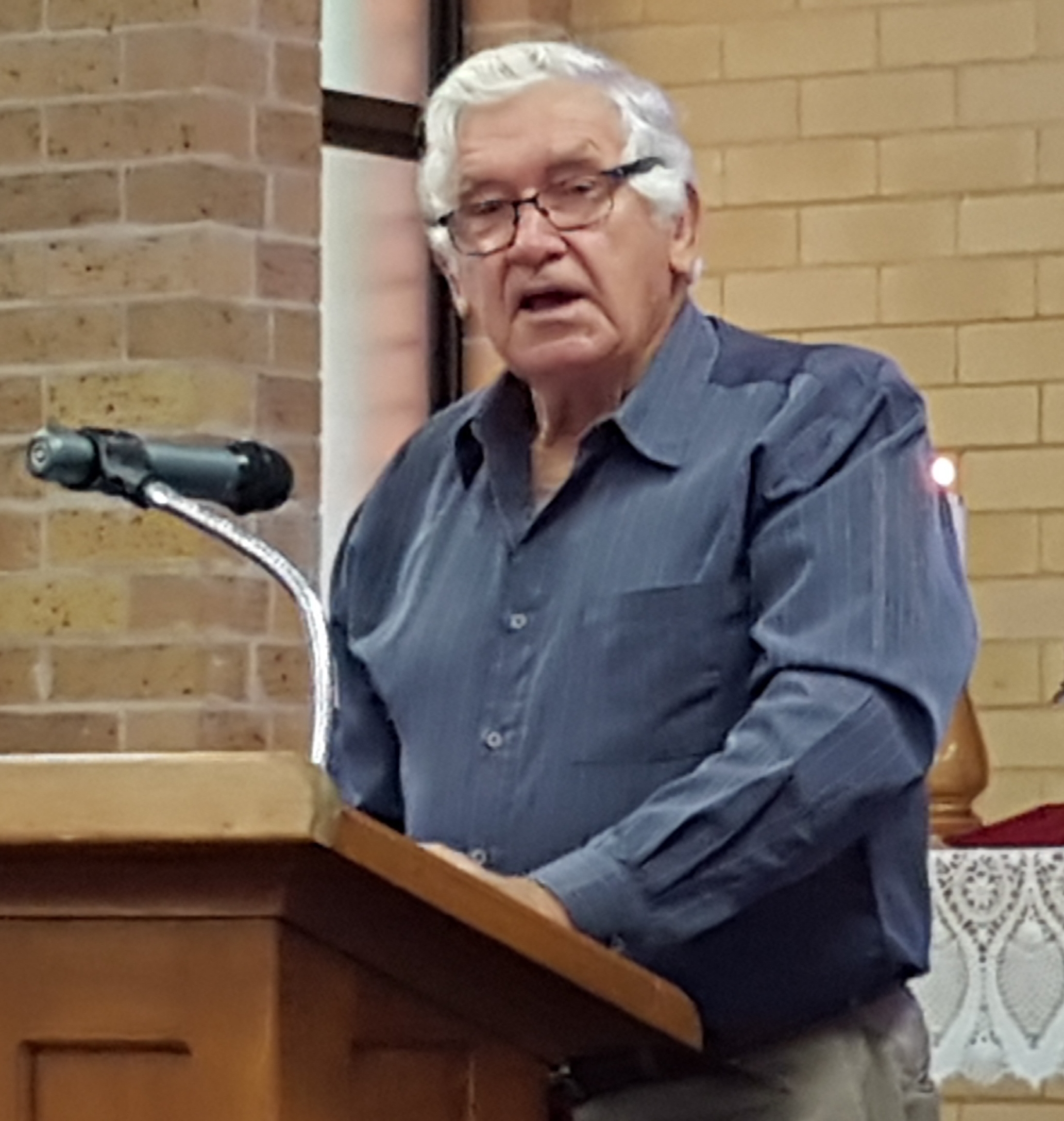
Christmas Day

The Text: Luke 2:11-20

8f5d0040f261ddb1b3f281e00e1385f0

If you were asked what the most important thing to happen in history was, how would you reply? The sixth person interviewedby a newspaper reporter was a 14-year-old schoolboy who said, “The birth of Jesus Christ.” He believed the birth of Jesus was the greatest event in our world since its creation. For us, Christmas is a holy day as well as a holiday. Christmas is an event too divine, too glorious and too precious to reduce our wishes to others as “Season’s Greetings”. Without our Saviour’s birth, there would be nothing of real and lasting meaning for us. Christmas regenerates our lives each year; its celebration seems perennially new as it inspires new songs, new music, new artwork, and new presentations of the Christmas story.

The surprising way in which God comes to us shatters our preconceptions of how God ought to act. Christmas is the scandal of our Almighty God coming into our world as a helpless baby, lying in an animals’ feeding box. No elaborate preparations were made for this, the greatest birth ever. God’s true greatness is seen in His humility on Christmas night in Bethlehem. By His breath-taking humility, God raises us up to new heights of glorious joy and wonder. He came down to earth to first seek and save the lost; to experience an ordinary human life with us; and to model that human life for us so it might be our lifelong passion and endeavour to be like Jesus.

To save us from our sinful human nature and be reunited with Him, God came to us as a baby crying in His mother’s arms, as she fed Him and rocked Him to sleep. God didn’t want to scare anyone at Christmas with His great power, but reminds us that his power is made perfect in weakness (2 Cor 12:9). He didn’t force his way into our world. Instead, He came to share our vulnerability and need. He came in love and in the powerlessness of a newborn baby.

The angel gives the shepherds a sign “You will find a Child wrapped in bands of cloth and lying in a manger” (v 12). Now there’s nothing especially religious or miraculous about this sign, and its lowliness didn’t deter the shepherds from going to the stable to see their Saviour lying there. When the angel says “To you is born this day in the city of David a Saviour” (v. 11), the words “to you” mean us too. We are also beneficiaries of this amazing event. Jesus belongs to you and me as much as He does to Mary.

In the hour of His birth, this good news of great joy is announced by an angel. The contrast between the humble setting of His birth and the splendour of the angel’s announcement couldn’t be more dramatic. And then a host of angels engage in praise and adoration of the wonderful thing God has done, giving God the glory for His wondrous deeds. Their Christmas song is still heard by us two thousand years on in our Sunday services. Their Christmas anthem is the climax to the Christmas story.

“Glory to God in the highest and peace on earth to those who enjoy His favour” (v. 14)

Jesus has brought the glory of God down among us so that we might never stop praising our marvellous God. The birth of Jesus brings heaven down to earth for us. The vision of God’s glory is no longer restricted to the angels in heaven. It’s now revealed to us in the human face of Christ. The Apostle Paul says in 2 Corinthians 4:6, “For it is the God who said, ‘Let light shine out of darkness’, who has shone in our hearts to give the light of the knowledge of the glory of God in the face of Jesus Christ.”

In our Christmas carols, we’re telling the world that heaven has come down to earth through the birth and life of Jesus. The angel’s Christmas carol permeates our whole worship. We join the angels in praising God for the marvellous way His Son comes to us. The more we enjoy all the wonderful gifts God has given us, the more we can’t help but give Him the glory. To do so is to acknowledge His primary importance in our lives and to praise His everlasting goodness, grace and mercy. King David’s prayer, “Let your glory be over all the earth” is now being fulfilled (Psalm 57:5). Praise of God is joy expressed in words, music and song. We praise the most what we love and treasure the most. When we sing with the angels “Glory to God in the highest”, we’re expressing enjoyment of our Creator. We’re living again as God created us to live; we do what God created us to do.

With the psalmist we say, “I will give thanks to the Lord with my whole heart; I will tell of your wonderful deeds. I will be glad and exult in you (Psalm 9:1-2).” We have received immeasurable blessings in our lives from celebrating Christmas year after year.

A common prayer request at this time of year is for harmony, peace and calmness of spirit to reign supreme when family members get together at Christmas. The Christ of Christmas says, “Blessed are the peacemakers”, because what peacemakers do is so urgently needed and so full of blessings for everyone involved (Matt 5:9).

“People who work for peace in a peaceful way plant a good crop of right-living (James 3:18).” What a wonderful incentive that is to make the “peace on earth” of Christmas an essential part of our relationships with each other. Peacemaking is meant to be a tonic rather than a tranquiliser as it aims to make others keen to be peacemakers too.

When we give Jesus the broken pieces of our lives, He gives us His unbroken peace, peace such as this world cannot give, peace which blesses us with His gift of patience and makes us so much easier to live with. The peace of Christ becomes the still-point in our madly turning world, a blessing no change of circumstances can destroy. His peace is a creative gift that brings a soothing sense of serenity and calmness to those who eagerly embrace and treasure it. Nothing can bring you peace of heart and mind quicker than to pray about the things that make you angry and upset. Let us all pray that God will make us His instruments of peace this Christmas season.

After hearing the angels’ message, going to the manger in Bethlehem becomes more important for the shepherds than anything else.

What would you have done if you’d been one of them?

What is it in your life that matters more than anything else?

What if some of the shepherds had said they had to work, or that the stable was too far, or that they didn’t have time?

What if, years later, a shepherd who didn’t go, reported to his grandson: “Years ago when I was young, and I was watching sheep at night near Bethlehem, a bright light appeared in the sky and a voice said; ‘I bring you good news of great joy. To you is born a Saviour, Christ the Lord.” The old man’s story would finish. His grandson would look puzzled and ask what happened. The old shepherd would have to reply, “I never found out. I never went to see. Some shepherds said they saw the Christ-child. For me, I could never be quite sure. I couldn’t be bothered going.”

We too are called as the shepherds were called, to go and pay homage to the Saviour of us all. The shepherds went without hesitation and experienced the greatest night of their lives. They had believed without first seeing, and their faith was vindicated. This filled them with endless courage to share the good news of our Saviour’s birth with those around them. They took the light of Christmas into the darkness of their lives, never to be the same again.

God came Himself to save our fallen world. He came through His Son. The Word became flesh because only in flesh could Christ demonstrate ultimate and uttermost love to us human beings. The story of Christmas continues every Sunday in our worship, where we continue to sing the angel’s song: “Glory to God in the highest, and peace on earth to those who enjoy His favour.”

The glorious joy of Christmas is yours to enjoy as long as you live.

Good Christians all, rejoice

with heart and soul and voice;

give good heed to what we say

Jesus Christ is born today!

Amen.

Fourth Sunday in Advent

The Grace and Peace of our Lord Jesus Christ be with you all.
  Let’s  join in a word of  prayer:
Loving God and Father of our Lord Jesus Christ; this day around the world, our fellow Christians are gathering together to worship You, and to remember the human life, death and resurrection of Your Son, Jesus Christ, who is our true redeemer.   We thank you that we can be together to praise you, and  to consider the sure and certain hope of eternal life with You.  By your Holy Spirit, open our minds to understand, our spirits to receive, and our hearts to rejoice over your plan for Christ to return again at the end of this age.  In the name of Christ Jesus we pray.   Amen.

david3
David:0414521661

Christmas is soon upon us.  As we make our final preparations, this week, it’s good to take a few minutes away from all the fuss and just relax in the presence of the Saviour whom we celebrate.  After all, soon, we will once again gather to celebrate the birth of the most important person ever – Jesus Christ, the son of Mary, and the Son of God – both human and divine indivisibly intertwined. 

A Saviour whom followers have been celebrating for more than 2000 years.  And whom our Triune God has been preparing the world to receive almost from it’s creation.  A Saviour who brought both blessing and controversy to the people whom God loves so much.

Nearly 1000 years before the birth of Jesus, God was speaking to David about the Savour through the Prophet Samuel.   “ ‘And now the Lord declares that he will build a house for you—a dynasty of kings! Your dynasty and your kingdom will continue for all time before me, and your throne will be secure forever.’ ”

The birth of Jesus Christ into humanity, into the line of David, was the fulfilment of God’s promise to David.  And yet, this fulfilment needed to wait for the perfect time when a gentle teenager, Mary, was chosen to be the human mother of Jesus.  A girl faithful to God in all things.  The first believer in the Saviour who brings us into a right relationship with God by our faith.

What do we hear when we listen to the words used to describe the incarnation of Jesus to Mary.  “The Holy Spirit will come upon you, and the power of the Most High will overshadow you.”   Isn’t this reminiscent of words used much earlier in Scripture?    ‘In the beginning God created the heavens and the earth. The earth was empty. And the Spirit of God was hovering over its surface.’ 

The same creating presence of the Triune God.  Father God who sets His plan for creation into motion, the Son and Saviour who is present and active in both creation and redemption, and the Holy Spirit who fills all creation with the presence of God.

And we have young Mary, caught in the embrace of history and destiny.  But Mary, who is given both opportunity and choice.  The Angel Gabriel explains the future for this young believer in a God of miracles.  And Mary makes her choice.  “I am the Lord’s servant, and I am willing to accept whatever he wants. May everything you have said come true.”   I can just feel the relief of Gabriel, if angels can have feelings at all.  The plan had not been rejected.

But this choice must have represented some serious after-thought on Mary’s part.  I am convinced that Mary would have suffered rejection and criticism from the family of Joseph.  Even Joseph himself revealed his concern over the chastity of his fiancée.  He considered breaking the engagement quietly and sending Mary away to have her baby.  Now I can almost feel the anxiety of Gabriel.  

It reminds me of the beginning of the movie “It’s a Wonderful Life”. The Angels are in conference about the fate of George Bailey, in answer to the many prayers for him.  But St Peter calms the angels and sends just the right one to meet the challenge facing George.  

I can imagine the angels in serious discussion with God about Joseph’s quandary.  And then God sends Gabriel to calm the fears of this devout carpenter.

Gabriel spoke to Joseph in a dream, when he was quiet enough to listen.  Gabriel said, “Joseph, son of David, do not be afraid to go ahead with your marriage to Mary. For the child within her has been conceived by the Holy Spirit.   And she will have a son, and you are to name him Jesus, for he will save his people from their sins.” 

When angels make their presence felt in the human experience, two things are certain.  It will involve a miracle, under the direction of God, and it will involve belief on our behalf to accept the miracle. 

Like Mary, Joseph was a person of great faith.  Faith in a miracle working God.  And when Gabriel appeared to Joseph in his dream, Joseph believed. ‘When Joseph woke up, he did what the angel of the Lord commanded. He brought Mary home to be his wife,  but she remained a virgin until her son was born. And Joseph named him Jesus.’ 

Now I can imagine the utter joy of Gabriel.  God’s blessings of both Mary and Joseph will become the reality of every Christian, drawn to faith by the message of angels, the servanthood of two simple folks, and enshrined in the sacrifice of the Saviour of the world.

The human birth, life, ministry, death and resurrection of Jesus Christ had one purpose.  The focus of God from the beginning of creation and the fall of Adam has been upon that purpose.  And we are the realisation of that purpose.  Chosen to follow Jesus just as surely as Mary and Joseph were chosen to parent the Saviour.   Given the opportunity to believe, just as surely as Mary and Joseph were given the opportunity to receive the blessings and the challenges of raising Christ Jesus.  Guided along the path we accept by the Holy Spirit, just as surely as Mary and Joseph were guided in their lives.

But we have the same challenge that Mary and Joseph had.  When we face the reality of Jesus Christ, inviting us to accept the challenge of Christian living.  We must face our fears and doubts and come to terms with who we are, and what we are about.  Even when we don’t see the angels that surround us, we can face the confusion and anxiety of this world, knowing that in our every day lives, we are being addressed personally by God.  è

Through the Word and Sacraments.  Through the presence of his Holy Spirit.  Through his plan for our lives.  Through the protection of the guardian angels sent by God our Father.

 Our gracious God created the world to be a place of harmony and peace.  But when the people God created determined to be their own god, our Creator’s perfect plan was corrupted.  And so, God determined to restore our relationship with him by entering humanity and bring salvation.  God the Son, our Lord Jesus Christ was born into humanity as the sacrifice for our human brokenness.  In our own brokenness, we can only come to terms with the brokenness of others by living the forgiveness and compassion of our Saviour.

And when Christ Jesus returns to establish an eternal kingdom of perfection, all will be completed, and we will once again find ourselves in a garden of eden.  Walking in the cool of the evening with our ever- present God the Father, with our eternal Saviour, both human and divine, and surrounded by God the Holy Spirit.

As we personalise this morning’s message of Paul to the church at Rome, we might paraphrase it as, ‘God is able to make us strong, just as the Good News says. It is the message about Jesus Christ and his plan for each one of us, a plan kept secret from the beginning of time, but now revealed in Jesus Christ.  

And now as the prophets foretold and as the eternal God has commanded, this message is made known to each one of us everywhere, so that we might believe and follow Christ.  To God, who alone is wise, be the glory forever through Jesus Christ. Amen.’

God spoke through Gabriel and through Paul.  God also spoke through Nathan to David who desperately desired to build a glorious temple to house the glory of God.  ‘This is what the LORD says: Are you the one to build me a temple to live in? I have never lived in a temple, from the day I brought the Israelites out of Egypt until now.’  And God continued in his dialogue through Nathan, ‘And now the LORD declares that he will build a house for you—a dynasty of kings!  Your dynasty and your kingdom will continue for all time before me, and your throne will be secure forever.’ ”

Solomon did build that magnificent Temple,  Even so, it was the presence of the glory and majesty of God in the tent of human life, that God’s Son would assume to bring salvation to all who would believe.

As Paul spoke once, of our life in this world, ‘For we know that if the tent that is our earthly home is destroyed, we have a building from God, a house not made with hands, eternal in the heavens. For in this tent we groan, longing to put on our heavenly dwelling. For while we are still in this tent, we groan, being burdened—not that we would be unclothed, but that we would be further clothed, so that what is mortal may be swallowed up by life. He who has prepared us for this very thing is God, who has given us the Spirit as a guarantee.’  (2 Co 5:1–5 ESV)

This week, we begin the celebration of the saviour of the world joining the tent of humanity to bring the gift of ‘mortality being swallowed up by immortality’.  All from a stable in Bethlehem on a bright star-lit night.

As we embrace the human life, and the eternal divinity of Christ Jesus today, may the grace, the hope, the peace, the joy, and the love of  God keep our hearts and minds in Christ Jesus, ‘the lamb who takes away the sin of the world’.  Amen

Rev. David Thompson.

Third Sunday in Advent

Isaih 61:1-4 8-11 Thessalonians 5:16-24 St John 1:6-8,19-28

There are at least two things which are of importance for understanding the background of the reading from the holy gospel of St John Chp.1, this morning; concerning John the Baptist.

First, there is the obvious historical question regarding John the Baptist. gordon5According to the gospels John’s mother Elizabeth was a cousin of Jesus mother Mary. Both had births signalled by an angelic emissary. In John’s case his mother’s conception of him is the occasion of his father being struck dumb. Zechariah, his father was released from his disability only after the birth of his son and his revelation that his son’s name would be John.

Second, John became an itinerant preacher like Jesus, a prophet, proclaiming the immanent coming of the expected Day of the Lord. God’s final judgment of Israel and the world. He therefore preached repentance to the people in the light of this coming great event. He gathered around him, like Jesus, a band of followers. We hear in this same first chapter of John (v35) that while he was standing with his disciples, he saw Jesus, and he said to them, ‘Behold the Lamb of God’.

Thirdly, related directly to the words of the lectionary reading for today, (Vs 6-8 and 19-28) there would appear to be, what some have seen as a self-conscious attempt by John the Evangelist, to emphasise an obvious great difference between the persons of Jesus and John. That John the Baptist was and is not the promised Messiah of Israel. This repeated emphasis is seen as evidence in the early church community, with whom John the Evangelist was familiar, that there were those who had a higher view of John’s person than that he was simply a forerunner, a witness of One who was to come. Here we see something not uncommon in early the churches, which St Paul addresses in his letters also; party spirit, one group or another holding quite differing views on important theological and ethical issues. On more than three occasions in this chapter the issue of John the Baptists identity and authority is raised. From three different perspectives it is emphatically made clear that John the Baptist is not the One who is to come and inaugurate God’s kingdom and reveal God’s judgment. Firstly, John himself says of Jesus, “This is He of whom I said’, He who comes after me ranks before me, for He was before me’.” (v15) Then there are two quite different discussions between John the Baptist and the Priests and Levites from the Jerusalem temple, and also a separate discussion with the Pharisees about his status. In both of these discussions the Baptist makes it clear that He is simply one pointing away from himself to Another who is to come, and on whose behalf, he has come simply as a witness, to bear testimony, as a “voice crying in the wilderness”. (v23)

So, what is John the Baptist’s testimony, or witness? Remember the word testimony or witness in the NT is μαρτυρέω from which we have the word martyr. This was to prove true for the Baptist; being beheaded at the whim of King Herod and Salome the daughter of Herod’s wife Herodias. The substance of the Baptist’s testimony or witness was according to the text in (v7) is, “He came for testimony, to bear witness to the light that all may believe through him, He was not the light, but came to bear witness to the light”.

The issue now is made clear: since the Baptist by his own confession is clearly not the light nor the one who is to come what is the purpose of his being there? It is to “bear witness to the light”. The Baptist is to testify to the Light. St John, the Evangelist, makes it clear what, or Who, is “the Light”. For this light is not the impersonal physical reality, composed of particles or waves called photons. This reality we know about, it is the basis of our understanding the world, including our sight, it is created light. Created light is one of the basic building blocks of all matter and its speed determines both the weight and mass of everything that exists in the material world, at least, according to Einstein.

But John the Baptist’s witness is not to this light but the Light of the world, the light which gives reality to the world and everything in it. The Uncreated Light of God’s very own being. The light of Him who was in the beginning with God and without whom nothing was made that was made. For as far as the Gospel writer is concerned this One who is Light was with God from and to all eternity and is of one essence with God. Thus, the Light to which the Baptist testifies is not a thing like a photon or wave of energy but a person. As Jesus later says of Himself, “I am the light of the world”. (Chp 8:12) As such John the Baptist testifies to the One who is the Light which lights up the reality of the world before God. Being Himself the uncreated light of God, He reveals the darkness that has come into the world of God’s creation that attempts to negate humanity’s being as created by God. But in Him human life has been irradiated by the uncreated light of God. As St John says, being the Uncreated Light of God Jesus is “the true light that enlightens every human person”. (v9) He overcomes the darkness that inhabits our lives as the One who in the beginning brought our life into existence from the dust of the earth and breathed into humans such that they became living beings. St Johns witness is that this One who in the beginning created all that was made now inhabits our creaturely being in such a manner that he turns our degraded being, having been grasped by the darkness, and wrestles it back to its true relationship to the light of its life in God. He does this not for His own sake, He never ceases to be the uncreated light of God, but this His act of self-humiliation is for our sake. It is we who are enlightened anew by His light so that we may come to believe and know the truth about ourselves before God through and in Him. John the Baptist’s testimony has as its purpose that ‘all may believe through Him”. (v 7)

It is for this reason that when we read St John’s account of the holy incarnation of God in Jesus Christ, we appear to enter a different world to that of the homely figures of Jesus and Mary, Joseph, the Shepherds and the Angels, of Stars and Wise men. Most people today, regard such images of Christmas as harmless tales of special relevance only for children, but of no real meaning for adult society except perhaps to the GDP figures related to retail spending.

This state of affairs prompts the question why Christians believe in and practise Christian faith in today’s environment of nearly universal unbelief. The answer is simple: because they believe Christianity is actually true and that this is the only reasonable basis for any serious commitment to the Christian faith. Now it is St. John’s account of the incarnation, the birth of Jesus that raises this question starkly for us. John places the incarnation in the context of what is understood to be the reality of the human condition. That is life as lived in this world here and now.

St John speaks to us from the situation in which he sees our human condition as enlightened by the advent, the coming, of the Son of God into the world. It is a world which is alienated from the source of its life, living in darkness, subject to the thraldom of death. He speaks of a battle between light and darkness and of darkness not overcoming the light. If we feel this version of reality into which the Son of God comes, according to St John, is irrelevant to us and our more mature tastes; that we are people of good intentions and do not feel alienated from one another and are not alienated from God; that we live in a world that will progress in time to an earthly utopia. Do we feel like this? Do we believe that? Does it describe who we are? If it does then we must say that God’s strange journey into the world in such an unheard of manner, as depicted here by St John, was and is for no purpose; it is in fact irrelevant to us.

But what if what St John says is true? Then irrespective of what we may feel about ourselves we must consider the fact that we are the ones for whom the eternal Son of God, the One who is with the Father from all eternity, God’s word, the Revealer of God’s uncreated Light, undertook God’s strange journey into the darkness of our world for our sake. His light reveals the truth about our untruth. For He undertook his strange journey into a world that is alienated from God and living in our darkness to be for us God’s eternal light and Truth. Thus, we must think that such an act of extravagance by Him who is the Light of God was and is, from God’s point of view, necessary. And if this is so we must accept as true for us St John’s statement in verse 16 of the first chapter from which we read. Verse 16 says, “And from his fullness have we all received, grace upon grace”.

These words tell us the outcome of that history of creation and reconciliation which St John narrates from verses 1-15 and of which the Word of God is the Subject. The Word who was in the beginning and through whom all things came to be that was created, who became flesh and revealed the Father’s light and glory, it is of this Word that St. John says “we have all received grace upon grace”.

The meaning of these words is not that grace is divided up into different sorts of grace, but that at every point we are to understand that humans’ relationship to God in both their creation and their reconciliation with God and each other is established and continued by the grace of the Word. That both the gift and the receiving of the gift, the act of creation and our being created; the act of God’s self-revelation and our reconciliation; the believing in and the receiving of the gift in faith is the work of the Word. So it is that of His fullness we have received grace upon grace.

Of this fullness Martin Luther says, “As the sun is not darkened by the fact that the whole world enjoys its light, as a thousand lights can be lit from one light and this would not affect the first light, so Christ our Lord is an endless spring and fountain of all grace, truth and righteousness, having neither measure, end or source, so that even though the whole world draw enough grace and truth from Him for all to become angels, yet he would not lose a single drop”.

In St. John’s terms “from His fullness” means that Christ is not only the giver of our life before God and each other as created by and reconciled in Him with the Father and the Spirit: He is the gift as well. It is Christ Himself the giver and the gift we now celebrate in this holy sacrament. We then know the true miracle of Christmas.

Dr Gordon Watson.

Second Sunday in Advent

The text: Mark 1:1-8garth

   When we think of “snap, crackle and pop”, Rice Bubbles or Coco Pops would normally come to mind, but not munching on a bowl of locusts! I’ve always wondered why this would have been the staple diet for John the Baptist. But it seems locusts are not unusual to the palate of the Israelis and people there still eat locusts today. The wings and legs are torn off, bodies dried, roasted, or ground up and baked, seasoned with salt. Mixed with honey, locusts would provide a meal rich in protein, minerals and sugar and would have given John the Baptist valuable sustenance during his preaching in the desert.

Then there is John’s wardrobe. I guess his fashion stylist was going for the ‘wild’ look. Wearing a garment made of camel’s hair with a leather belt while standing in the desert under a hot sun isn’t something we might picture as particularly comfortable or desirable. But this was the customary clothing of a prophet, noted in Zechariah 13.

However Mark doesn’t include detail of John’s wardrobe and diet to explain the practical reasons for them, but to highlight the deep symbolical significance they carry. John’s clothing conveyed a message in itself. The people who came to John would identify him as a spokesman from God, and more particularly, the one of whom the Old Testament prophets had spoken. John’s meal, so unusual to us, would have evoked memories of God’s promise to the Israelites to bring them into their own land, a good land with abundant supply from God, a land flowing with milk and honey. Yet the locusts would also bring to remembrance God’s judgment on Israel; his warning that he would send a locust plague to devastate the land, sparking a national fast and mourning, during which the people were called to “rend their hearts, not their garments.”

As the Israelites came to John in the hot, uninhabited wilderness which in itself symbolised the spiritual state of the nation, they would have been reminded of their desert wanderings for forty years because of their grumbling and lack of faith. Yet as John stood there by the Jordan River, the location would have been striking for another reason: the Jordan was the gateway for Israel to enter into their new land that God had promised. So John’s ministry location was significant in itself. It is time to repent―a time for new beginnings. Indeed John had been sent by God as the forerunner to Jesus: “After me will come one more powerful than I, the thongs of whose sandals I am not worthy to stoop down and untie. I baptize you with water, but he will baptize you with the Holy Spirit.”

John’s task was to confront the people so that their hearts could be prepared to receive their Saviour. And so he preached a baptism of repentance. ‘Repentance’―that is a hard word for human ears to hear. It’s a thought laughable to the world. Even to God’s own people it’s a word that grates in our ears, wounding our pride. No one likes hearing that word, especially at this time of year. It’s a word that doesn’t fit with the candy canes and Christmas cards we receive, the carols wafting through the speakers in the shopping centres, the tinsel, Christmas lights, and fake snow in the windows. “Society’s changed and the church needs to change with it,” people say.

But as we wait in hope for our Lord’s coming, John’s words in the wilderness are more relevant than ever. They are not words out of sync with our culture and shifting morals. They are God’s words for us today, the church standing in the materialistic wasteland of our Western world. How might John’s sermon be relevant to us today? Did God give us a level of pride so great that it excuses his commandment to love? Did He call us to be judge over our brother and sister and decide who is forgiven, and when? Did he call us to lift ourselves above others and to be indifferent and insensitive to their needs? Did he call us to become workaholics and work hard at winning the approval of others rather than serving Christ? What—or who—do we look to for our security, worth, approval and peace? If the affirmation of others, or the things we do—even our service to the church—or our accomplishments and achievements take the place of Christ, then they are all idols.

The word ‘repent’ means a complete about-face; a U-turn. That’s something that we can’t actually do by our own strength. But the Good News in John’s preaching of repentance is his preaching of a baptism of repentance. Baptism is the means for repentance and baptism is God’s work. The change within comes after the washing. Through John’s preaching in the wilderness, God led the people to John to be baptised, to cleanse and change the hearts of his people, so that by God’s work in baptism they were now empowered to repent and prepare for Christ’s coming.

The Good News of Advent is that God longs to forgive people and give them his peace. How do we know? The purpose of repentance is to receive the forgiveness of sins. The word for forgive literally means to send away, to untie, to release. God knows that is not a work human beings can manage. So he sent the One who John was pointing ahead to. God made the paths straight all the way from heaven to earth when he sent Jesus into the world for you and came to you when he baptised you with his Holy Spirit to make you holy. Through the preaching of God’s Word the Holy Spirit works in the hearts of his people and moves them to turn towards Jesus with our sins, for him to release us from them.

It’s a harsh world out there. A wilderness, where people are lost and confused by so many competing ideologies about life and spirituality, promising so much hope and fulfilment, but delivering so little. A wilderness where people are consumed by the consumer lifestyle trying to shop their way to happiness and create the perfect Christmas paradise. A wilderness where people carry the burden and anxiety of the longing to be loved. A wilderness of pain from the cycle of selfish abuse and neglect at the hands of others who care only about themselves.

Humans devise many ways to attempt to deal with sin. We can justify it: “They deserved it!” We can rationalise it: “It was done in the name of love, and I was just trying to help.” We can reframe it in more acceptable language—“It was a spirited conversation” even though it was really a volatile argument. We can simply attempt to cover it up. Or we can even blame God, and say it’s the personality we were born with.

The Advent message is the message of the hope we have in Christ―not hope as the world understands but an expectation that Christ will come again. We also expect him to be with us now, here, through his word, because that is how he has promised to bring you his grace. Indeed the One whom John pointed to and called the people to prepare for, has arrived and keeps on arriving in every worship service. Here, in the church, is our refuge, for Christ is here. He will not drive us away but will turn us, with our sin, toward himself, to show us his mercy and favour.

This is what makes the church different from any other organisation in the world. Jesus doesn’t deal with your sin the way the world would deal with sin. He doesn’t bury your sin deeper by covering it up, but he lifts you up out of the pit. He doesn’t reframe it but releases you from it. He doesn’t justify it but he justifies you. Some say that right preparation for attending worship would be to leave our sins at the door before we enter church. No. Bring them in, with you. Bring them here. Because here is the Good News of the forgiveness of sins. Jesus bestows on you peace that the world cannot give, because it is the peace given to you from your Heavenly Father. Peace be with you. Amen

First Sunday in Advent

Text: Mark 13:24-37

Dear Heavenly Father, send your Holy Spirit on us so that we may keep watch for the coming of Jesus Christ our Lord. Amen.

allanb

Have you noticed what’s coming? For example, have you noticed that Christmas is coming, and how can you tell?

 You can tell because the shops and streets are full of Christmas decorations, wrappings, lights, gift ideas, etc. You can tell because Christmas music is playing. You can tell because the TV advertisements let you know what you need to buy to make yourself or your loved ones happy.

 Or, have you noticed a number of new films coming soon? Boxing Day is traditionally when many blockbuster films open in cinemas around the country.

Or, have you noticed that the days are getting longer and warmer, and the agapanthus and jacarandas are flowering?

Or, have you noticed the Lord is coming, and how can you tell?

Well, you can tell by the signs.

Just like a television advertisement or movie trailer which changes scenes rapidly, today’s gospel reading, or rather Jesus through St Mark, is using a montage of pictures which advertise the Lord’s coming in a very contemporary way.

Try to imagine what he’s saying, picturing the signs:

The opening scene: Cosmic chaos! You watch the sun go dark; the moon goes black without the sun, the stars fall from their positions, and the heavenly authorities and powers are shaken from their foundations.

Change of scene: You see the Son of man coming on the clouds surrounded by the light of his glory. The angels whizz backwards and forwards to the ends of the earth, gathering all the chosen ones.

Change of scene: You see a fig tree at spring time, sprouting a new, green, tender shoot, advertising the coming summer; then you see a picture of the universe, and you’re disturbed to see everything, including the heavens and the earth disappear over time, yet you also notice the words spoken by God strangely remain unaffected by the ravages of time and don’t fade at all.              

   Change of scene: You see an alarm clock about to go off, but because it hasn’t got any hands to tell what time it will happen, no-one can figure out what time it will go off. You even see the Son of God go up and inspect it, but he too doesn’t know what time it’ll go off.

Change of scene: You watch a man going away on a journey, leaving his servants in charge of all his belongings. You see the doorkeeper of his property stand at watch. Time goes by and you notice the same doorkeeper at different times of the night and day still standing, still watching, still waiting.

Change of scene: everything is going dark, but as you see this, you notice more and more people falling asleep, and fewer staying awake. The scene ends with a word, strong and clear: Watch!

Like a richly colourful and startling advertisement, this montage of pictures creates a sense of anticipation.

In the church we anticipate and eagerly look forward to the coming of the Day of the Lord. This is what the Advent season is all about. Advent isn’t designed just to make us ready for Christmas, but to remind us and make us ready for Christ coming in his glory. And while we may not see the sun going black or see any stars fall, we know the moment of his return is getting nearer all the time.

But, we are not very good at keeping watch!

We aren’t very good at waiting because we want things NOW. We’re not even patient at watching sport. Many people prefer the quick action games like one-day cricket or 20-20 cricket to the slower battle of the tests. We also want our meals NOW, that’s why we have microwaves and fast food. We want to sing Christmas carols now and then by the time Christmas is here we are tired of them. We want to see the films now. We want the new products now so we can be first in our social circle to have the latest thing. We want to get better now rather than letting nature take its course. We want the highly paid positions now rather than working our way up the ladder. We want to get paid for our crops now. We want to receive the blessings of retirement now. We want to be wise now. Even emails and mobile phones demand our immediate attention.

Why are we all so busy and feeling stressed out? Because everything has to be done…NOW! But who said everything has to be that way?

Have you noticed how we’ve become so impatient? Is this healthy for us? We have forgotten how to be patient, to watch and wait.
We need to re-learn the art of silence. We need to re-learn the teaching of rest and relaxation instead of our constant work and busy-ness.

But that’s not all! We’ve also become passive watchers. What once used to make our blood boil or cause us to cry, no longer affects us or moves us to action. Many of us were deeply affected when we first saw the terrorist attack on the World Trade Centre buildings or the Bali bombings on our television screens. But what about now? Terrible atrocities seem to be reported on every night in our news bulletins. What is our reaction? Not another terrorist attack that we are tired of hearing about. It also seems as the amount of violence increases on our TV screens, the less we notice it; we become conditioned to it. Violence and terror don’t move us to action the way it used to. The most we do is shake our heads and change the television channel to find something else more appealing.

In other words, we’re becoming people that hide or ignore our emotions. What once used to shock us, we now turn a blind eye to. What once used to terrify us, we now only shrug our shoulders.

Unfortunately this same attitude affects the church. For example, when the Word of God strikes deeply at our hearts, we might just consider it an “itch” and ignore it. When God urges repentance, we self-justify our actions and excuse ourselves from self-examination. When God announces peace, forgiveness, comfort and love, we simply shrug our shoulders as if nothing has happened.

Yet we are called to watch – actively and patiently. The Spirit calls us to action like a concierge standing watch. He calls us to have patience as we wait in constant anticipation.

But just like a scary movie, we might be afraid to watch. Some of us are afraid to look for the signs of the Lord’s coming, because it reminds us of our fragility, our feebleness, our weakness, or our sinfulness. Yet for those in Christ, watching for Jesus isn’t something to fear.

Even though some of the signs Jesus talks about may be scary to some, to Christians they’re something to look forward to. We look forward to them because we’re among the chosen ones!

Since we’re God’s chosen ones, even if the sun were to lose its light and energy, we’ve nothing to fear. Even if the stars were to fall from the sky, we can instead celebrate the coming of the Lord. Even when Jesus comes in glory and many shake with fear, we can clap our hands and cheer our victorious King.

We can do this because we’re among those he’ll gather up into his eternal kingdom. He’s already placed his name on us in baptism, claiming us to be his own. Therefore, confident of his love and faithfulness, we can constantly watch and look forward to his promised return.

This is the story of Advent. When Advent comes, we’re called to watch. We’re to watch ourselves and admit our impatience, our inaction and our laziness. We’re to repent of our busyness that has squeezed Jesus and his word out of our lives. We’re to repent of our sinfulness, but in such a manner that we don’t fear his anger, but instead we are confident of his mercy, compassion and forgiveness.

When Advent comes, we’re called to watch for Jesus. We’re to watch for the signs of his coming and listen to his Words of promise. We’re to look to Jesus who truly comes to us already, hidden in a child born in Bethlehem, hidden in the words of a sermon, hidden in water mixed with his holy name, and hidden with bread and wine that truly becomes his body and blood.

Just like an advertisement announcing the arrival of a film, product or celebration, Advent creates sense of anticipation. We anticipate that Jesus will return, for that’s what he said. Jesus doesn’t lie. His word remains true and valid today as the day he first promised.

Therefore stay awake and watch, actively and patiently! Watch, knowing that salvation is ours and we’re the chosen ones who’ll be gathered up to enter his kingdom. Rejoice that we’ve been selected to enter his kingdom without fear.

As we stand and watch, clinging to God’s word, we’re assured that he’s not far off, but here with us, standing beside us patiently. In this way as we listen attentively, eat and drink eagerly, we’re assured that salvation is ours even now. So the peace of God, which surpasses all human understanding, guard our hearts and minds as we wait and watch for our coming Lord Christ Jesus. Amen.

Twenty Fifth Sunday after Pentecost

The Text: Matthew 25: 31-34


31 “When the Son of Man comes in his glory, and all the angels with him, he will sit on his glorious throne. 

32 All the nations will be gathered before him, and he will separate the people one from another as a shepherd separates the sheep from the goats. 33 He will put the sheep on his right and the goats on his left.

34 “Then the King will say to those on his right, ‘Come, you who are blessed by my Father; take your inheritance, the kingdom prepared for you since the creation of the world.

Let us pray:

johnmac

Open our ears, O Lord,
to hear your word and know your voice.
Speak to our hearts and strengthen our wills,
that we may serve you today/now and always. Amen

The Sheep and the Goats.

What is the difference between a sheep and a goat? According to animal behavioural researchers about 50 IQ points – in favour of the sheep!

That is what is stated on a website called “Sheep 101” – with a name like that, one could guess the answer is biased towards the sheep!

It’s not hard for us to tell the difference between sheep and goats, but in Palestine it was not that easy to tell the difference between sheep and goats – only the shepherd would know.

Just in case you can’t, the website says:

Sheep have thick curly horns; goats have long narrow horns.

Sheep need to be shorn, goats don’t.

Some goats have beards.

Sheep’s tail’s hang down, but goats don’t.

Sheep tend to graze, goats browse.

Sheep hang around together more than goats.

Goats smell more and are more likely to have lice than sheep.

Sheep can be led once they know and trust their shepherd, but goats have to be driven.

Goats are very destructive, sheep aren’t.

So, separating sheep from goats is pretty simple really. Or is it….?

Today is the last Sunday of the church year on the church calendar and today is known as the Day of Fulfillment.

When we think of fulfillment we may think of completion, a promise that is made and kept, a job that was started that is now finished.

It always gives me great satisfaction to see a project completed – to see plans fulfilled and turned into reality.

When we think of God’s plan for mankinds salvation, we see that God has fulfilled his promise to the people of old by sending his Son Jesus to be the Saviour of all.

In the life death, resurrection and ascension of Jesus many Old Testament promises were fulfilled.  

For example, in the Old Testament book of Isaiah the Lord said through the Prophet that “The virgin will be with child and will give birth to a son, and they will call him Immanuel—which means ‘God with us.’”

This prophecy was fulfilled when the Virgin Mary gave birth to Jesus.

God fulfills his promises. He has in the past and he will in the future.

There are so many promises that God makes in his word.

To those who put their faith in Jesus God promises an abundant life—life to the full.

He promises a heavenly home.

He promises eternal life.

He promises answers to prayer and deliverance.

He promises us the gifts of the Spirit: growth and fruitfulness.

He promises us his protecting care, guidance, hope, peace and joy.

He promises us an inheritance with all the saints.

He promises to strengthen us for His service and he also promises us rest.

The list of God’s promises goes on and on, and God will fulfill his promises to us.

In our creed we confess that Jesus will come again to Judge the living and the dead, we trust absolutely that God will fulfill this promise.

Verses 31-33 of our gospel says:“When the Son of Man comes in his glory, and all the angels with him, he will sit on his throne in heavenly glory.

All the nations will be gathered before him, and he will separate the people one from another as a shepherd separates the sheep from the goats.  

He will put the sheep on his right and the goats on his left this judgment will be the ultimate fulfillment of God’s promises.

So how will God judge us?

The reality is that each of us faces judgment.

We shudder at the thought of God judging us because we know that we haven’t lived up to God’s standards.

We may want to do the right thing, but so often what we want to do and what we actually do are two different things.

That’s what makes the idea of a final judgment so scary.

We are afraid that on the basis of our record we won’t hear words of blessing and a welcome into heaven.

We are afraid that Jesus will say, “Away from me, you that are under God’s curse!

Away to the eternal fire which has been prepared for the Devil and his angels!”

If it were up to us to present a case in God’s courtroom why we deserve to be “called blessed and possess the kingdom which has been prepared for us since the creation of the world” we would fail miserably.

But there is good news!

Jesus is not only the king and judge, but he is our Saviour.

We believe and trust that he died on the cross to clear us from any accusation that will come up on the last day.

His death wiped away all guilt for the good we fail to do.

Remember, Jesus died to save us.

He has ensured us that those who trust in him will not die, but have eternal life.

If our eternal future depended on the good things we did in this life, then we would be doomed for sure.

Every good thing we do is covered with our own selfishness and pride.

Thank God that our eternal future rests solely on Jesus who saves us.

This parable gives us a good picture of what genuine faith looks like.

A genuine faith will show itself in acts of love towards others.

People who have faith in Jesus will see to it that those who are hungry, thirsty, a stranger, poor, sick, or in prison have their needs met.

They understand that to help such people is what their faith is all about.

Those without genuine faith say: “Yes I believe in Jesus” and then do nothing.

Showing love toward others and taking care of their needs is the way faith in Jesus is put into action.

Did you notice how surprised the faithful people were when told that they had been so caring toward others?

“When did we do that? When did we see you hungry, thirsty, a stranger, naked, sick or in prison?”  

Faith naturally demonstrates itself in acts of love meeting the needs of those in need.

It’s as natural as an apple tree producing apples or a tomato plant producing tomatoes.

Faith gives food to the hungry, drink to the thirsty, clothing to the naked, welcome to the stranger, company to the sick and imprisoned, without being told, without thinking about it.

That’s how faith in Christ bears much fruit.

The parable leaves us asking.

Am I a sheep or a goat?

Am I on the right or the left?

The answer now is “yes”.

Our sin tells us we are undeniably goats by nature.

Our faith does not show itself the way God would like me to show it.

We have neglected the hungry, the thirsty, the stranger, the naked, the sick and the imprisoned.

Our faith has not been demonstrated in our daily life.

On the other hand, we are sheep.

Our Baptism brings us into Shepherd’s flock.

We are loved dearly by Jesus who gave his life to rescue us.

We are his forgiven sheep to whom he says, “Come, you that are blessed by my Father! Come and possess the kingdom.”

Without Jesus we are condemned as goats, but with Jesus we are blessed. Today – ‘Fulfillment Sunday’ – we look forward to the day when God’s grace at work in our lives is fulfilled.

As we continue to wait for that day may we live by faith, continue to nurture faith through the God’s gift of his word and sacraments and may our faith in Christ show itself in the way we care for those in need.

The peace of God which passes all understanding keep our hearts and minds in Christ Jesus.

Amen.

Twenty Fourth Sunday after Pentecost

Zephaniah 1:7.12-18; Thessalonians 5: 1-11  Mathew 25: 14-30

The situation of the church post resurrection. Not fulfilled/fulfilled. Anxiety about the truth of Christ’s coming its immanence and/or delay.gordon3 What to do?

In the Epistle, Paul’s letter to the Thessalonians, we see some of the dysfunction in the church that this situation created. Some believed the promised great Day of the Lord had come already, others believed that since the Day of the Lord was immanent there was no need to plan for the future, so they stopped work and were simply waiting for it to happen. (St Paul told his church those ‘who do not work shall not eat’. 2 Thess. 3. A phrase taken up and made famous by Vladimir Lenin in his book State & Revolution.)  Paul counters this situation by saying that the Day of the Lord will come unexpectedly, like a thief in the night. That the Day of the Lord is an event in the future that is entirely unpredictable. The same seeming contradictions occur in the Gospels themselves with the coming of the Lord appearing suddenly as Paul indicates and the view that the coming of the Lord will come after certain cataclysmic events in world history which will be obvious to all. This latter view has been in the church tradition a happy hunting ground for all sorts of fanatics and religious enthusiasts convinced that they know when it will happen. Witness the many times people have followed leaders to isolated places convinced that the place they are going to is where the Lord will come. One only has to listen to religious radio/TV programmes to see this issue still stirs up controversy in our own world; so much so that some have labelled such programmes religious ‘goon’ shows.

The lectionary reading looks forward to the revelation of the coming judgment of Christ as Lord of heaven and earth. At the time of the celebration of the 500th anniversary of the beginnings of the Lutheran Reformation recently many received a graphic indication of the obsessive fascination with the final advent of our Lord by the 7th Day Adventist people, who authored an expensive book and booklet regarding this event. This book and booklet showed people more interested in dates and times of the event of Christ’s coming than the One who is to come. That is, judging people because of their orthodoxy regarding the times and nature of Christ’s final advent.

The parable which is the subject of the lectionary reading from the holy gospel of St. Matthew for today however looks back as it were from the future judgement to the present time. Here it is not a question of when Christ comes but who the one who is coming is: Not when but who. For what is revealed in this future judgment is the present but hidden form of Christ’s church in the world now. The parable looks back from the future to the present time when Jesus the coming King and Judge is still hidden, incognito, in the form in which He accompanies His people through the changes and the chances of their pilgrimage through history.

According to Jesus word it is the coming Son of Man, the Master of the household in the parable, who will come in glory with the angels and gather before his throne all the nations of the earth and divide amongst them as a shepherd divides the sheep from the goats. In the centre of the picture, drawn from among all the nations, are God’s own people. It is they who are asked concerning their life in the present age in the light the approaching end which is now come upon them. This community which acknowledges the coming Judge as its present King and Lord.

This community, the church, is sustained in the present age by its faith and hope in His coming. The church expects to be vindicated in its faith and life by His coming. The coming Judge who will vindicate the church is the same One who now in this present age speaks His word of grace and judgement in the word of the apostolic testimony of the Scriptures and the sacraments of Baptism and the Eucharist which He established as the foundation of His church and by which He is united with His people.

But these words of Jesus concerning the last judgment appear to indicate that contrary to what the New Testament proclaims as the basis of our relationship with God through the word and work of Christ to be one of grace, God’s unmerited goodness justifying the ungodly; here we are confronted by a series of sayings which indicate that it is our action or inaction in relationship to the talents given to each of us by the Lord, in the parable the Master of the Household, which is the determinative factor in our relationship to eternal life before God. Not the Lords free grace.

Like the parable of the wise and foolish virgins, which precedes this parable in St Matthew Chp. 25., the parable of the talents concerns the situation of the church in the interregnum between the first and final appearing of its Lord and the importance of what happens in this space between the first and final appearing of the Master of the Household.

In the parable the property holder, the Master, divides his wealth between his servants according to his judgment. His goods are not evenly distributed, as if the Master were bound to deal with his servants in terms of some abstract notion of equality or justice. He entrusts his property to whomsoever he wills according to his choice and not the assumed natural abilities of the servants or their understanding of “rights”.

The focus of the parable is on the servant, who from fear of the Master simply buried his property and then returned it to him in its original form, unchanged. This parable indicates in its reference to the place of the church in view of the coming rule of  Christ that the grace of its Lord by which it lives, is not its property simply to allow it to be buried in the ground.

In burying the master’s property, the servant believed that being free from the master’s presence he could do nothing with what he had been given, bury it in the ground and wait for the Master’s return.  His excuse to the Master of the House when he returns is that he feared the Master and the best thing he could do was to do nothing with the Masters wealth in case he made a mistake, then at least the Master would get what is his back in full.

What are we meant to understand in this exchange between the Master and the servant who buried the master’s money? It did not have a very good outcome for the servant. It ended rather badly for him, He had his money taken from him and he was unceremoniously thrown out of the master’s house. We are meant to see precisely same thing occurs when the church treats the master’s property, in this case the treasure of His grace in the gospel, as if it were something it could preserve. Possessing the precious gift of the Lord in Word and Sacrament but at the same time ignoring this precious gift. Hearing the word of promise but not believing it. Looking to preserve its life by simply being content to survive.

As once the children of Israel (Exodus 16:13) found with the manna God gave them to preserve their life in the wilderness, it had to be gathered new every morning; else it went rotten in their hands. So too the grace of the church’s coming Lord, when the church seeks to possess it and by possessing it believes it can justify its own indolence, indifference or unbelief..

The same applies to our Lutheran Tradition of worship and confession, the rich tradition of life and thought to which we are heirs as members. I felt some of the comments made in the recent discussion of cooperating in a common task with other Christians, the Point  Church, there were those who, maybe following a suggestion in the Bishop’s letter that we would be swallowed up in the larger numbers of the other group resolved to stay apart. The opportunity to share the rich tradition of the Lutheran Church with other Christians would dilute its truth or spoil its riches. But the riches of the Lutheran tradition are not ours, whilst we are temporary caretakers of it, it will dissolve to nothing in our hands if we are not prepared to share its truth with other Christians.

Thus, the word of Jesus in this parable warns us that such a church has no future in the master’s House. We cannot think that we can possess the master’s treasure and not use it for the Master’s purpose. The parable of the talents, is a clarion call to be alert to how we treat the precious gifts the Lord has given the church for its life, the gift of His Word and Sacrament, by  which alone the church is sustained on its earthly pilgrimage to the coming promised land of fulfilment, in the realised presence of the risen Christ in all His glory.

Dr. Gordon Watson.

Twenty Third Sunday after Pentecost

The Text: Matthew 25:1-13


Anyone who goes shopping at this time of year will know that Christmas is allanbjust around the corner. Decorations are out, gifts are being bought and all those delicious Christmas treats are probably tempting us to start our Christmas celebrations already.

Christian churches which follow a liturgical calendar dedicate the four Sundays before Christmas to prepare to celebrate the birth of Jesus in the season of Advent. The readings for the Sundays leading up to Advent have a focus on Jesus’ promise to come back at the end of time to complete his work of redeeming the world. When Jesus returns, evil will be overcome once and for all and creation will be restored to the way God intended it in the beginning.

Jesus’ teachings about his return from Matthew 25 is part of a longer section of Matthew’s gospel which began in chapter 24, when his disciples asked Jesus about the end of the world. Jesus concluded his teaching with three parables: the ten bridesmaids or virgins, the three servants, and the final judgment between the sheep and the goats. Today we will begin by looking at Jesus’ Parable of the Ten Bridesmaids in Matthew 25:1-13.

It’s possible to read this parable and think that Jesus must have made a mistake. As children, many of us might have been taught that it’s always good to share, so we can easily think that the bridesmaids who didn’t share their oil with those whose oil ran out must not have been good Christians.

This parable isn’t actually about sharing what we have with others. Instead, one way we can understand this parable is that it is about whether we think about our salvation in the short- or long-term.

The five ‘foolish’ bridesmaids who didn’t bring extra oil were thinking short-term. They had received and accepted the invitation to participate in the Kingdom of Heaven, which Jesus describes here as a wedding feast. However, these girls are like people going on a camping trip who don’t take spare batteries for their torches. You never know when your old batteries will run out, so it would make sense to take spares, just in case. These girls weren’t expecting to wait so long for the bridegroom, so they didn’t take spare batteries. When he eventually turned up to take them into the eternal wedding feast, they weren’t able to greet him because they are busy looking for more to keep their lights going. The result of their short-term thinking was that they were locked out of the party.

On the other hand, the five ‘wise’ girls who took extra oil with them were thinking longer-term. They were so joyful about being invited to the wedding feast that they wanted to be prepared. They wanted to make sure they got in. They took extra oil with them just in case the bridegroom was late, so they wouldn’t miss out on the party. Because these girls wanted to be ready for his arrival, they thought about the future, prepared for what might happen, took extra supplies and were ready when the bridegroom arrived.

One message that comes through in all three parables in this chapter is that not everyone makes it into the celebration. A lot of people can think that a loving and forgiving God would never exclude anyone from an eternity with him. The good news of Jesus tells us that everyone is welcome to be part of God’s Kingdom.

However, these parables, as well as other teachings of Jesus, tell us that not everyone makes it. Remember, all ten of these girls were invited to the wedding reception. The five who eventually made it into the feast were those who were prepared and ready when the bridegroom arrived. Those who weren’t ready for him missed out. That wasn’t the bridegroom’s fault. He had done everything he could so they would be able to come. They didn’t make it in because they weren’t prepared. The message Jesus is giving us is that everyone’s welcome, but if we’re not ready for him when he returns, then we are the ones who are responsible.

So how do we prepare for Jesus’ return? We start just by thinking beyond the here-and-now and getting ready for Jesus’ return. It is easy for us to get caught up in everyday concerns, pressures and problems. However, in this parable we can hear Jesus telling us to lift our attention beyond the here-and-now and keep in mind that he will return one day.

In one way, that means working out our salvation now. We can get so focussed on the here-and-now that our spiritual lives can slip. The busyness, pressures and demands of life can mean that we don’t prioritize spiritual disciplines like worshipping with our Christian family, listening to God in his word and talking with him in prayer. One way we prepare for the coming of Jesus is to remain constant in worship, in reading our Bibles, in prayer, and in meeting with other Christians. When we practice these disciplines, the Holy Spirit keeps our spiritual tanks full so our lights can burn brightly in faith and in love.

Another way we can prepare for the return of Jesus is to view our lives now through the lens of what is to come. Life as we know it now will not last forever, even thought it might seem like there is no way through the struggles, pains or difficulties that we experience in this world. In this parable Jesus is reminding us that we have something far, far better to look forward to: an eternal wedding reception with ‘the best of meats and the finest of wines’ that Isaiah 25:6 describes in perfect fellowship with God and his people. We prepare for Jesus’ return by living in the faith that this is our future, our eternal destiny. We will still have struggles, difficulties and suffering in this life, but when we see them from an eternal perspective, we can also find the hope and joy we need to get us through.

Are we living as wise or foolish people? Are we so concerned about the here-and-now that we forget about Jesus’ return and the joy he will bring? Or are we looking ahead to when Jesus will come back and welcome us into the eternal wedding reception he promises? As we hear and reflect on these parables from Matthew 25, God wants to prepare us for what is to come, because when Jesus returns, he wants us to join in the celebration he will bring with him—a celebration that will have no end!

And the peace of God which passes all understanding keep our hearts and minds in Christ Jesus. Amen.

Twenty Second Sunday after Pentecost. All Saints Day

The Grace and Peace of our Lord Jesus Christ be with us all.

david3
David:0414521661


  The Apostle John received a vision of the saints who gathered at the throne of God our Father, ‘
one of the twenty-four elders asked me, “Who are these who are clothed in white? Where do they come from?”  And I said to him, “Sir, you are the one who knows.” Then he said to me, “These are the ones coming out of the great tribulation. They washed their robes in the blood of the Lamb and made them white. That is why they are standing in front of the throne of God, serving him day and night in his Temple.

Let’s join in a word of prayer: Loving Father, as we worship you, our thoughts are drawn today to the saints in our lives, and the saints in the world who are being persecuted for their faith in your Son our Lord Jesus Christ.  Help us understand your plan for our lives, and rejoice over the presence of your Holy Spirit who makes real the faith you put into our hearts. Gracious heavenly Father, hear our prayer for the sake of our risen Lord,  Amen.

We are blessed to be living in Australia.     A nation that treasures freedom.  A nation that honours diversity.  A nation that supports the downtrodden.  A nation that welcomes the refugee.  If is my fervent prayer that Australia will always be this way.  But we know the world changes over time.  It isn’t the same today as it was in the days of Adam, Noah, Abraham, Moses, or Christ Jesus. 

In the days of Adam, trust in God was broken when Adam and Eve determine to become like God.  Yet God cared for them and clothed them.

In the days of Noah, the world was filled with violence, evil, and unfaith, when God saved Noah and his family from annihilation. 

In the days of Abraham, the world was filled with idolatry, when God saw the trust of Abraham and counted it as righteousness to him.

In the days of Moses, the Israelites were held in slavery and persecution, when God heard their cries and sent Moses to free them from Egypt.

In the days of Christ Jesus, the world was held captive to tyrants like that of the Caesars.  It was the right time and the right place for God to intervene once and for all for the salvation of all who would believe in the one whom God sent.  Christ Jesus our Lord and Saviour. 

In his great Sermon on the Mount, our precious Saviour began with words of encouragement and warning.  He spoke of a world that was so different from the one in which he sat and preached.  A world of blessings.  A world where those held captive are given citizenship in the Kingdom of Heaven.  Where those who mourn are comforted.  Where those who express humility before God are given courage before the world.  Where those who yearn for justice and mercy are satisfied.   Where those who seek a right relationship with God through faith in Jesus Christ will see God.  And those who live in peace even in the face of persecution are called the children of God, and will share in the Kingdom of Heaven.

What a gift it must have been for those who heard Jesus speak such wonderful words.  Especially as they lived under the domination of Rome.   

But what of today.  When we live under the domination of fear mongers who threaten the world with destruction.  When we live under the threat of world pandemic of Ebola and CoronaVirus.  When we live on the thin edge of world economy that seems to be heading for a meltdown.   What do the beatitudes mean to us today.  Are they just precious words that give us encouragement, or do we receive these words of Jesus Christ as something more.  Perhaps as attitudes that could identify us as Christians and bring us into solidarity with every Christian throughout the world.

But if the be-attitudes show the world who we are, what would the world filled with unbelievers really describe about us?

“Blessed are the meek”, says Jesus, but in our world the meek seem to get left behind in the drive to subdue and inherit the world.

“Blessed are the merciful”, says Jesus, but in our world mercy is seen as weakness by those who strive to achieve by injustice.

 “Blessed are the pure in heart”, says Jesus, but in our world such people are dismissed as hopelessly naïve.

“Blessed are the peacemakers” says Jesus, but in our world those who pursue peace risk having their patriotism called into question.

It seems that most in our beloved Australia live by another set of be-attitudes.  Blessed are the well-educated, for they will get the good jobs.   Blessed are the well-connected, for their aspirations will be noticed.  Blessed are you when you know what you want, and go after it with everything you’ve got, for the rule of this world is for people to help themselves. 

The Beatitudes stand as a daring act of protest against the current order.  If we are honest, we must admit that the world Jesus speaks about is counter-cultural.  But it is a world that God truly blesses.  It is the world of our Spirit.  Where the Holy Spirit turns the world’s be-attitudes to God’s be-attitudes.  Where the Holy Spirit nurtures his fruit of ‘love, joy, peace, patience, kindness, goodness, faithfulness, gentleness and self-control.’ (Ga 5:22–23) 

On All Saints Day, the beatitudes testify that it matters deeply whom we call “saint.”  We cannot expect the world to understand or to accept us.  But we keep our attention on our Lord Jesus Christ.   Because Jesus fulfilled every be-attitude he described in Matthew.   And we can hold onto his words to us, “God blesses you when people mock you and persecute you and lie about you and say all sorts of evil things against you because you are my followers.  Be happy about it! Be very glad! For a great reward awaits you in heaven.” 

Today, we remember the saints in our lives who have already received their great reward at the foot of the throne, awaiting the final resurrection.  And we stand in solidarity with all the saints living under the persecution that Jesus describes at the end of the reading from Matthew today.  Especially the Christians in Africa, Syria, Sudan and Iraq. 

Even as we remember and celebrate all the saints today, we also accept the witness to us that we are saints as well as sinners in the world today.  The Gospel and Sacraments in which Christ comes to us speak plainly to us that we are loved, and we are accepted and received by our God in trinity, Father, Son and Holy Spirit.  All this by faith in our Saviour, Jesus Christ.  Trust that God lives in each of us. 

And we remember the words of Paul to the Church at Corinth, and to us:

16  Though our bodies are dying, our spirits are‍‍ being renewed every day. 17 For our present troubles are small and won’t last very long. Yet they produce for us a glory that vastly outweighs them and will last forever! 18 So we don’t look at the troubles we can see now; rather, we fix our gaze on things that cannot be seen. For the things we see now will soon be gone, but the things we cannot see will last forever.

And we cherish the words of John’s first letter, How great is the love the Father has lavished on us, that we should be called children of God! And that is what we are! The reason the world does not know us is that it did not know him. 2 Dear friends, now we are children of God, and what we will be has not yet been made known. But we know that when he appears, we shall be like him, for we shall see him as he is. 3 Everyone who has this hope in him purifies himself, just as he is pure.

May the grace and peace of God, which passes all our human understanding, keep our hearts and minds in the calm assurance of salvation in our living Lord, Christ Jesus. Amen.

Rev. David Thompson

Twenty First Sunday after Pentecost: Reformation

The Grace and Peace of our Lord Jesus Christ be with all. Our Lord, Jesus Christ tells us, “If you continue in my word, you are truly my disciples;

david3
David:0414521661

 and you will know the truth, and the truth will make you free.”  Today, we celebrate the truth of the Good News.  Good News that sets us free to be in a right relationship with God our Father.  Good News that ‘the righteousness of God has been disclosed, and is attested by the law and the prophets,  the righteousness of God through faith in Jesus Christ‍ for all who believe.’ 

Let’s join in a word of prayer: Loving God, Father, Son and Holy Spirit:  we live our continuously new covenant of salvation received through faith in the sacrifice of your Son, our wonderful Saviour, Jesus Christ.  Guide our time together this morning as we remember the remarkable history of the reformation spurred on by your presence in the world through your Holy Spirit.  Help us to embrace your word, and receive once again the reforming power of your Gospel message as we worship You. God our gracious Father, hear our prayer in the name of our risen Lord, Jesus Christ.  Amen.

In these trying times of virus pandemic, it’s commo to experience many of the feelings that would have been evident during the time of the Reformation in Europe.  They were experiencing a plague that kept arising over the past two hundred of years.  Suspicion and isolation were often a part of life in the urbanisation of Europe as they evolved from the Medieval Age to the Modern Age.  Some even call the 14th and 15th Century the Reformation Age.

We discover in a biography, that Martin Luther spent his younger years isolated as a monk battling his personal demons. Luther felt utterly worthlessMartin Luther and incapable of carrying the burdens of priesthood. He was often, he wrote, pursued and tormented by Satan and his cohorts.

Before his spiritual reformation, Luther was discovered in his monk’s cell weeping because of his sins. His confessor, another young monk, simply didn’t know what to do, so he began repeating the Apostles’ Creed.  When he came to the last part of the creed, he spoke with reverence the words, “I believe in the Holy Ghost; the holy Catholic Church; the communion of Saints; the forgiveness of sins; ” when Luther interrupted him, “Wait!” “What did you say?”

 And the dialogue continued, “What do you mean, what did I say?”  “That last part. What was it again?” “Oh, that. ‘I believe in the forgiveness of sins.'”

“The forgiveness of sins,” Luther said as if savouring each word. “The forgiveness of sins. Then there is hope for me somewhere. Then maybe there is a way to God.”

In his search for that ‘way’, while reading Paul’s letter to the Romans, Luther suddenly understood the meaning of God’s grace and how it is appropriated by faith. In that moment he came to understand that he was justified before God through faith and not by his works.

Luther discovered the way to God. Jesus Christ died to provide that way. The reality that mended Luther’s broken heart.  That gave him a passion for Scripture which would remain a hallmark of his life.  That there is one who sees our broken hearts and cares, who forgives and heals, who makes whole.  (ChristianGlobe Illustrations, King Duncan, ChristianGlobe Networks, Inc.)

But Luther was not alone.  The wondrous discovery of the truth of Christ was awakened in others as well.  Even another Martin.  At the beginning of the Reformation, Martin of Basle came to a knowledge of the truth.  But, afraid to make a public confession, he wrote on a leaf of parchment: “O most merciful Christ, I know that I can be saved only by the merit of thy blood. Holy Jesus, I acknowledge thy sufferings for me. I love thee, I love thee.”  Then he removed a stone from the wall of his chamber and hid it there. It was not discovered for more than a hundred years.

What made the difference between these two Martins?  When Martin Luther affirmed in his heart that truth as it is in Christ. He said: “My Lord has confessed me before men, I will not shrink from confessing Him before kings.” The world knows what followed, and today we remember that  Martin Luther made a difference.  But as for Martin of Basle, who difference did he make?  —Sunday School Times

‘Jesus said to those who had believed in him, “If you continue in my word, you are truly my disciples; and you will know the truth, and the truth will make you free.”  This truth makes us free.  Free to trust in Jesus. Free to express our right relationship with God every day by living in Christ.

Living without Christ is like driving a car with its front end way out of line. You can manage to stay on the road, if you grip the steering wheel with both hands and hang on tight. Any lapse of attention, however, and you’re out of control. It’s a constant struggle.  

I can imagine that we are sometimes like Luther, almost weeping over the wrong that seems to be happening in our lives.

Living in the truth that brings the freedom in Christ, is like getting a front-end alignment. The lack of control is corrected from the inside. Not to say there won’t be bumps and potholes ahead that will still try to jar us off the road. Temptations and challenges will always test our alertness to steer a straight course. We can hardly afford to fall asleep at the wheel. But the basic flaw in the moral mechanism has been repaired.  In a way we can never do ourselves.  By Christ Jesus our Saviour.  (adapted from Robert Schmidgall:  Illustrations from ChristianGlobe, ChristianGlobe Networks, Inc.)

The Apostle Paul gives us the best example of this.  He began his service to God with complete assurance in his own righteousness and piety.  He just knew he was right in putting his energies toward the destruction of the followers of Jesus.  Like that car that was out of alignment.  And then he encountered Christ Jesus in his full power.  And Paul realised just how frail and useless his misguided trust in himself had been.  When Paul turned his complete trust in and reliance upon  Jesus, his passion, energy, and will were transformed into the powerful servant and apostle that Christ Jesus knew he would be.

Paul wrote in his Letter to the Church at Rome:  ‘I am not ashamed of the gospel, because it is the power of God for the salvation of everyone who believes. .. For in the gospel a righteousness from God is revealed, a righteousness that is by faith from first to last, just as it is written: “The righteous will live by faith.”  (Ro 1:16–17 NIV)

For Christians in the 21st Century, speaking of righteousness has become a challenging proposition.  When we speak of being righteous before God, it appears to be a two sided coin.  On the one side, it almost seems to be boasting about our piety and purity.  And on the other side, it almost seems to be placing an obstacle to God.    And so, most Christians are really timid about sharing our righteousness before God.

In reality, righteousness simply speaks of our right relationship with God.  That right relationship with God, was sealed at the cross, and offered to us as children of God by our faith in Christ Jesus.  That is the only way to experience righteousness.  There is no other way.

Just as Paul received from Christ Jesus and explained to us.  And as Luther discovered in Paul’s letter to the Romans and reinforced so often.  A right relationship with God and with each other is the clear understanding of God’s love and mercy displayed in the Gospel that spurred the Reformation. 

The Reformation wasn’t about religion, or society, political power or culture. The Reformation was simply about returning to the freedom given to us through the Gospel.  Freedom to trust in Jesus Christ and live with confidence.  As Jesus said, “If you continue in my word, you are truly my disciples; and you will know the truth, and the truth will make you free.”    

When Martin Luther penned the great hymn, “A Mighty Fortress is our God” I believe he was expressing his faith in the truth that makes us free. 

‘A mighty fortress is our God, a trusty shield and weapon, our faithful helper in all need, our stay, whate’re may happen.’    And later, ‘for us fights the valiant one whom God himself elected.  Ask ye: who is this?  Christ Jesus it is.’

That hymn, first published in 1529, has been called “Battle Hymn of the Reformation” and with good reason. It is said that the Reformation touched off one of the most influential movements in world history.  And yet, in the 21st Century we are hard-pressed to discover any worshipping community, outside of Lutheran, to remember and celebrate.  Because it is also said that the Reformation set the spark of disunity and discord among Christians that has diminished the Church’s authority to effect positive change in the world today. 

Certainly, I would agree, that if Reformation Day only celebrated the pride we have in being Lutheran, then it shouldn’t be a matter of celebration.  But if Reformation Day is about truth, than the Reformation can be celebrated with both humility and confidence. The truth that Martin Luther rediscovered from Scriptures.  The truth that was hidden by centuries of faulty doctrine.  The truth that Jesus says ‘will make us free’.

And so, for me, the Reformation does matter, and Reformation Day still matters too. It matters, because confessing the truth of our salvation still matters.  And also confessing the truth about our sins still matters.  Confessing the truth about God’s grace at work to save us still matters.   The truth that the Scriptures tell us about every human being, as both a saint and a sinner at the same time still matters.  A saint, who has been brought into a right relationship with God.  And a sinner, who still falls far short of all that God wants from those who are his children.

A sinner who know sins, who feels regrets, who suffers from the broken heart of broken relationships with God and with each other. 

And a saint who knows God’s love, who feels God’s forgiveness, who releases guilt to God’s grace.  God who says, “I will forgive their iniquity, and remember their sin no more.”

Through Christ we have received what we could never, on our own, earn or deserve – eternal salvation.  Because of Christ Jesus we have been given the gift of eternity, through faith, by God’s grace, in the power of the Holy Spirit.

Here at St Peter’s we have been through a rough year, from the last Reformation Sunday.  First by drought and fire, then by pandemic and isolation, and finally by a decision that was brought before us that has affected all of us.  As we now engage with the road ahead to discover what is next for St Peter’s, we are reminded that we are united in Christ and the love of God.  United by the confession of our faith and the Gospel of grace.  United by the body and blood of Christ Jesus, and the care we have for each other.  Let’s enter this new year as one body in Christ Jesus, and see what brings before the next Reformation Sunday.

We are free to receive and share, to believe and confess, to teach and promote the truth of God’s grace.  A message we are honour bound to carry forward, as disciples of Jesus Christ in our time and this place.

As we both remember and celebrate the reformation, and become its voice in our day, the grace and peace of God keep our hearts and minds in the calm assurance of salvation in our living Lord, Christ Jesus. Amen.

Rev. David Thompson.